




Trump’s Shadow Looms Over Brazil’s Censorship Czar: A Warning to Argentina on the Magnitsky Front
By Hotspotnews
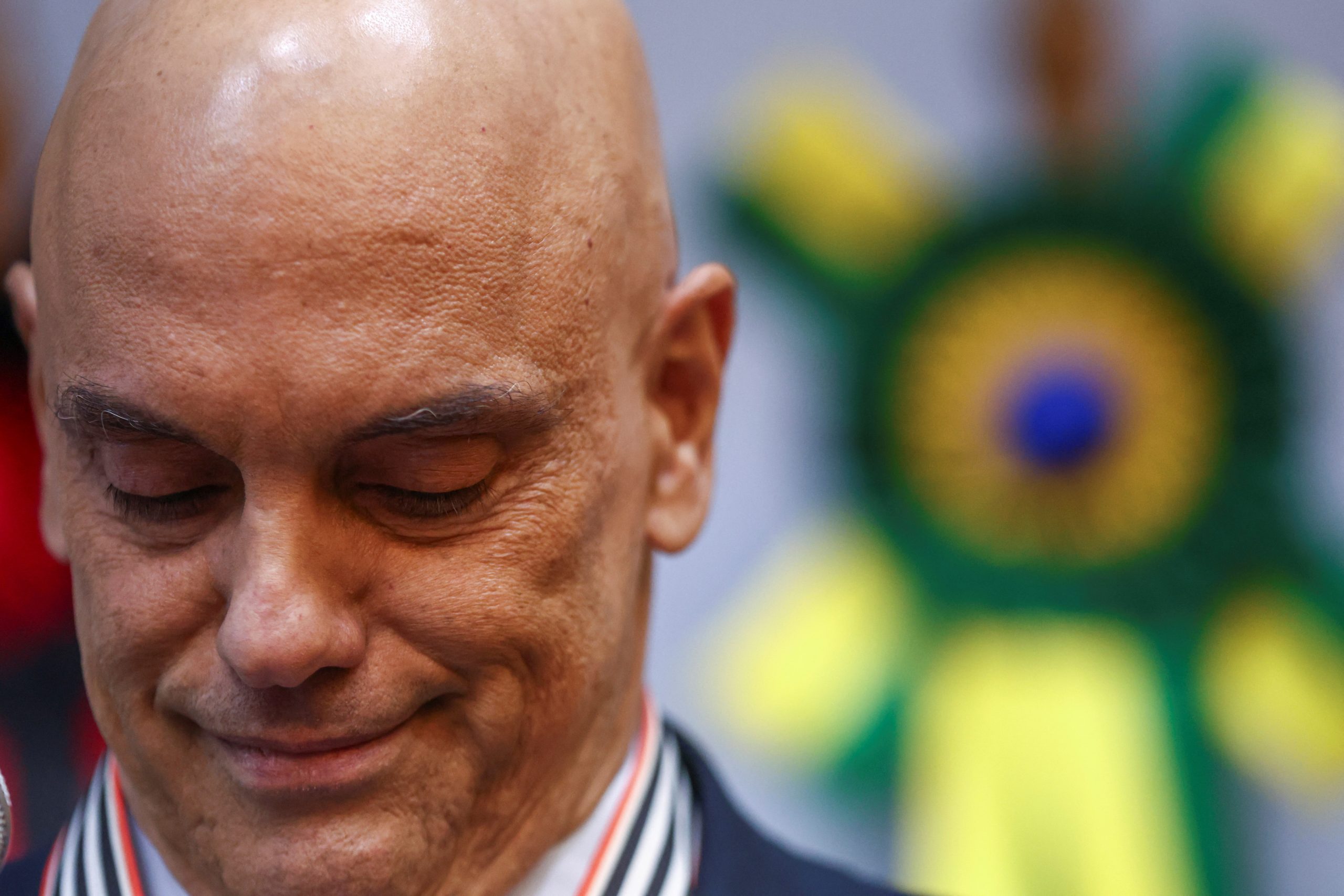
In the high-stakes world of international diplomacy, where alliances are forged and tyrants are exposed, a single tweet can ripple across borders like a thunderclap. That’s exactly what happened when Martin De Luca, a sharp-elbowed attorney closely tied to President Donald Trump’s inner circle, fired off a pointed jab at Brazil’s most notorious judicial enforcer, Supreme Court Justice Alexandre de Moraes. As Moraes prepares to jet off to Buenos Aires for what critics mock as a “Gilmar Palooza” – a gathering of left-leaning legal elites echoing the controversial antics of Brazil’s own judicial old guard – De Luca’s message was crystal clear: Argentina, under the bold leadership of President Javier Milei, should think twice before rolling out the red carpet for a man branded a human rights abuser by the United States.
De Luca’s quip, dripping with irony, cut straight to the bone: “I don’t know if the Argentine government is aware that Alexandre de Moraes, designated by OFAC and responsible for investigating those who oppose organized crime, plans to visit the country.” For those unfamiliar with the acronym, OFAC is the U.S. Treasury’s Office of Foreign Assets Control – the enforcer of America’s most potent economic weapons against global despots. And Moraes? He’s no mere bureaucrat. He’s the architect of Brazil’s descent into digital authoritarianism, a judge whose rulings have silenced conservatives, frozen bank accounts, and turned social media into a battlefield where dissent is treated as a crime.
To understand why De Luca – a legal warrior who’s defended Trump’s America First agenda against waves of establishment attacks – chose this moment to sound the alarm, one must grasp the gravity of the Global Magnitsky Human Rights Accountability Act. Enacted in 2016 and turbocharged under Trump’s first term, this law arms the U.S. with the power to sanction foreign officials for gross human rights violations and corruption. It’s named after Sergei Magnitsky, the Russian whistleblower who exposed a massive tax fraud scheme before being tortured and killed in a Moscow prison. The act’s effects are swift and merciless: asset freezes that cripple financial empires, visa bans that ground jet-setters, and a scarlet letter of international isolation that makes even sympathetic regimes think twice about hosting the sanctioned.
Moraes landed on OFAC’s Specially Designated Nationals list on July 30, 2025, courtesy of the Trump administration’s unyielding commitment to free speech and rule of law. The charges? A laundry list of abuses that would make any red-blooded conservative’s blood boil: arbitrary pre-trial detentions of political opponents, the revocation of passports to trap critics at home, and blanket bans on social media accounts that dared question the Lula regime’s grip on power. Under Moraes’ watchful eye, Brazil’s federal police have raided homes, seized devices, and hounded journalists – all in the name of combating “fake news” and “extremism.” Translation: crushing the voices of Bolsonaro supporters, evangelical leaders, and everyday patriots who refuse to swallow the socialist narrative.
The Magnitsky sanctions aren’t just paperwork; they’re a geopolitical gut punch. For Moraes, they mean his U.S. dollar-denominated assets – if any remain – are locked tighter than Fort Knox. Travel to America? Forget it; he’s persona non grata in the land of the free. But the ripple effects extend far beyond the Rio de Janeiro courthouse. Allied nations, especially those cozying up to Washington for trade deals or security pacts, face secondary sanctions if they facilitate his movements. Banks in Buenos Aires could hesitate to process his hotel bills, airlines might “lose” his reservation, and worst of all, the stigma clings like tar: associating with a Magnitsky target signals to the world that you’re soft on censorship and blind to authoritarian creep.
De Luca’s comment wasn’t born of idle chatter. As Trump’s point man in the legal trenches, he’s no stranger to using public platforms to advance the MAGA mission. With Trump back in the White House and Milei steering Argentina toward libertarian renewal – slashing regulations, courting Bitcoin, and thumbing his nose at the globalist elite – this was a masterstroke of conservative solidarity. Why now? Because Buenos Aires represents more than a photo op for Moraes; it’s a potential foothold for Lula’s influence in the Southern Cone, a region Trump views as ripe for anti-communist revival. By flagging the visit, De Luca is handing Milei a golden opportunity: deny entry to the censor-in-chief, and Argentina emerges as a bulwark against judicial overreach. It’s a low-cost way to burnish Milei’s credentials as Trump’s hemispheric ally, while humiliating the Brazilian left on the world stage.
Imagine the scene: Chain-wielding anarcho-capitalists in the streets of Buenos Aires, chanting “¡Libertad!” as Moraes is turned away at Ezeiza Airport. It would be poetic justice – a Magnitsky moment that echoes from the pampas to the Potomac. De Luca’s tweet isn’t just a warning; it’s a gauntlet thrown down to every leader watching from the sidelines. In an era where Big Tech colludes with rogue judges to muzzle the masses, the U.S. sanctions regime stands as a beacon of accountability. Moraes’ jaunt to Argentina tests that resolve. Will Milei, the lion of liberty, roar back? Or will he let the fox slip through?
The Right, worldwide should cheer this unfolding drama. It’s a reminder that Trump’s America doesn’t just talk tough – it sanctions tough. And in doing so, it gives freedom fighters like Milei the tools to build a hemisphere where speech is sacred, not sanctioned. De Moraes may fancy himself untouchable, but under the Magnitsky spotlight, even the mighty can be made to feel the chill. Buenos Aires, the ball’s in your court. Play it right.


