
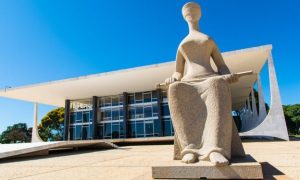

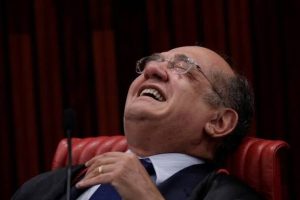


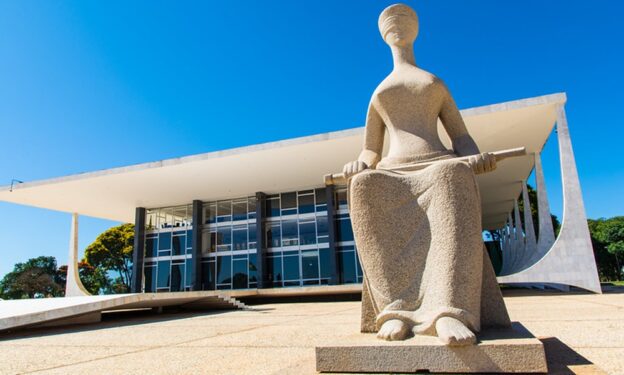
BRAZIL IS CONDEMNED TO A DARK REALITY BY THE SUPREME COURT
Brazil is not living through a normal institutional dispute. It is living through the slow conversion of the Supreme Federal Court into the most powerful and least trusted political actor in the country. That is the dark reality. Not a slogan. A description of what happens when a court stops being a court and starts acting as investigator, censor, prosecutor, and now, reluctantly, defendant of its own members.
The September 2026 spectacle made the point without needing interpretation. Justices issued contradictory orders over who runs the Federal Police within two days. One justice removed the director-general and the intelligence chief. Another put them back. The chief justice froze both rulings. Plenary sessions were canceled. Colleagues accused one another of abuse of authority in public. A vote on whether Alexandre de Moraes should even be investigated over Banco Master contacts and a multimillion-real contract with his wife’s firm was postponed after procedural combat and a request for more time. Datafolha recorded distrust in the STF at 48 percent — higher than Congress, parties, or the presidency. Sources: Datafolha poll of mid-September 2026; contemporaneous reporting by AP, Reuters, Folha, The Rio Times.
This is not an isolated accident. It is the logical endpoint of years in which the Court, and Moraes in particular through the Fake News inquiry and related probes, accumulated functions that a liberal constitution is supposed to keep separate. Investigate, order raids, block accounts, remove posts, jail people preventively, then sit in judgment. Supporters still say this was the price of stopping a coup after 2022 and January 8, 2023. That history is real. It does not authorize a permanent inquisitorial model. When the same institution that claims to defend democracy cannot apply consistent rules to its own members without shouting matches timed around an election, the defense collapses into self-protection.
The Banco Master collapse did not create the problem. It exposed it. A failed bank, alleged messages, a large legal contract, competing accusations between Moraes and André Mendonça, and a police force pulled into the justices’ personal war. The Court that spent years deciding which speech was too dangerous for Brazilians now cannot decide whether one of its own should face the same scrutiny it imposed on others. The Economist called it a court that once saved democracy and is now suffocating it. Brazilian editorials from O Estado de S. Paulo, O Globo and Folha demanded Moraes leave. International coverage from AP, Reuters and The New York Times documented the pattern years earlier: monocratic power, sealed inquiries, content removal, and a justice who became both sheriff and judge of the internet.
The political split is obvious and should not be denied. Voters aligned with Flávio Bolsonaro distrust the Court at far higher rates than Lula voters. That does not make the institutional critique a partisan talking point. An independent court that is feared more than respected, that postpones self-examination until after an election, and that treats its own conflicts as exceptional is a problem regardless of who wins in October 2026. Polarization did not invent judicial overreach. It made the overreach impossible to hide.
A dark reality is not military tanks in the street. It is quieter and more durable: speech chilled because a single justice can order platforms to act; investigations that never quite end; recusal rules that apply to everyone except the people who write them; and a public that no longer believes the last word of the Constitution is being spoken by referees rather than players. Brazil’s 1988 Constitution was written to prevent a return to concentrated power. Concentrating that power in an unelected court with lifetime tenure and weak internal ethics is not the opposite of authoritarianism. It is a different route to the same destination — unaccountable authority that answers to itself.
The Court still has defenders who argue that Congress and the presidency failed first, so the justices had no choice. There is partial truth there. Failure by elected branches does not grant the judiciary a blank check. Necessity is the oldest excuse for expanding power. Once expanded, the power rarely contracts on its own.
Brazil is not condemned by destiny. It is condemned by choices: the choice to let monocratic rulings become routine, the choice to treat criticism of the Court as an attack on democracy itself, and the choice to delay accountability for justices until the political calendar is convenient. Until the STF accepts limits it has spent years imposing on everyone else, the dark reality remains. Not because the opposition says so. Because the institution’s own behavior has made the claim plausible.
#STFcrise #BancoMaster #AlexandreDeMoraes #AndréMendonça #Eleições2026 #LiberdadeDeExpressão #SeparaçãoDePoderes
Sources named in text: Datafolha; AP News; Reuters; Folha de S.Paulo; The Rio Times; The Economist; O Estado de S. Paulo; O Globo; The New York Times; contemporaneous court reporting September 2026.


