



Brazilian Senators File Impeachment Request Against Supreme Court Minister Cármen Lúcia
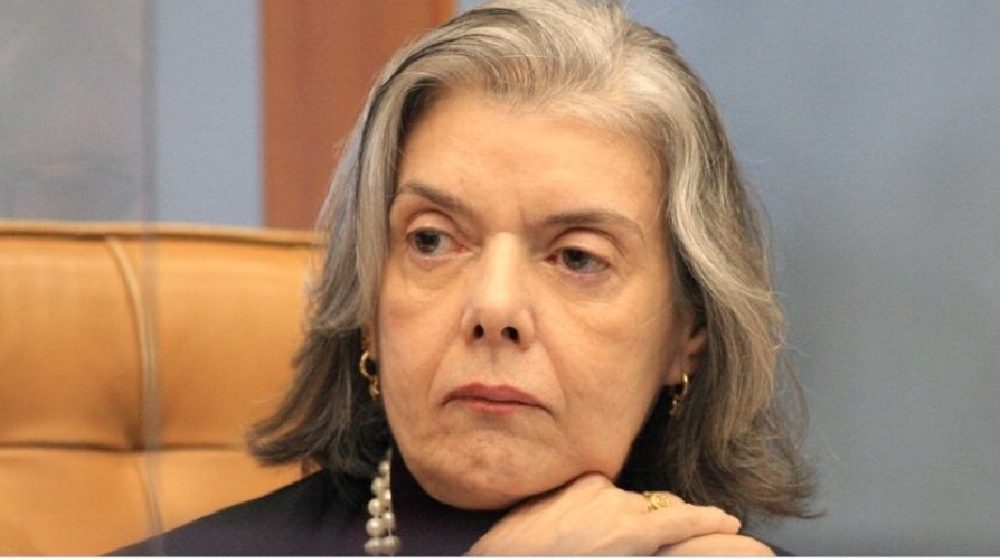
In a bold move, Brazilian Senators Eduardo Girão (Novo-CE), Magno Malta (PL-ES), and Carlos Portinho (PL-RJ) have filed a request for the impeachment of Supreme Federal Court (STF) Minister Cármen Lúcia, accusing her of actions incompatible with the dignity, honor, and decorum of her position. This development, rooted in the senators’ concerns over judicial overreach and censorship, signals a growing frustration with the STF’s influence in Brazilian politics and its perceived encroachment on individual liberties.
The impeachment request, grounded in Brazil’s Law 1.079/1950, which outlines crimes of responsibility for public officials, centers on two primary grievances. First, the senators point to statements allegedly made by Cármen Lúcia in 2022, where she reportedly referred to Brazilians as “213 million tyrants” and declared, “cala a boca já morreu” (“shut up, it’s over”). These remarks, according to the senators, reflect a lack of decorum and an inappropriate dismissal of the public’s right to free expression. Second, they accuse Cármen Lúcia of participating in a decision by the Superior Electoral Court (TSE), where she serves as president, to block the release of a documentary produced by Brasil Paralelo titled *Who Ordered the Killing of Jair Bolsonaro?*. The senators argue this action constitutes “blatant censorship” and a direct violation of constitutional guarantees to free speech and artistic expression.
The documentary’s ban, which occurred ahead of Brazil’s politically charged 2022 elections, has been a flashpoint for conservatives who view the TSE’s ruling as an attempt to suppress narratives favorable to former President Jair Bolsonaro. Senator Girão, leading the charge, described the decision as an “affront to democracy,” arguing that prohibiting the documentary’s release before its content could be fully evaluated amounts to prior restraint. “A country that claims to be a democracy cannot justify banning a film’s distribution,” Girão stated, emphasizing that the move undermines the principles of a free society.
The impeachment filing also reflects broader tensions between Brazil’s conservative factions and the judiciary. The STF and TSE have faced increasing scrutiny for decisions perceived as politically motivated, particularly those targeting conservative voices. The senators contend that Cármen Lúcia’s actions, both in her rhetoric and judicial rulings, demonstrate a pattern of bias that erodes public trust in the judiciary. They argue that the Senate has a constitutional duty to hold the judiciary accountable when it oversteps its bounds, a sentiment echoed by conservative commentators who see the STF as assuming a “moderating power” not granted by Brazil’s Constitution.
This is not the first time Senators Girão and Malta have pushed back against the STF. Just a week prior, they filed a similar impeachment request against STF Minister Gilmar Mendes, citing conflicts of interest and judicial activism. The consecutive filings suggest a coordinated effort by conservative lawmakers to challenge what they view as an overreaching judiciary that stifles dissent and undermines democratic principles.
Critics of the impeachment request, however, argue it is unlikely to succeed. The process requires significant political support in the Senate, which has historically been reluctant to act against STF ministers. Some dismiss the move as political posturing, unlikely to result in Cármen Lúcia’s removal but intended to rally conservative voters ahead of future elections. Nonetheless, the filing underscores a deepening divide between Brazil’s conservative base and its judicial institutions, with figures like Girão, Malta, and Portinho positioning themselves as defenders of free speech and constitutional limits.
For conservatives, this impeachment request is a stand against what they see as an emboldened judiciary that prioritizes ideological agendas over the rule of law. Whether it gains traction or not, the move highlights a critical moment in Brazil’s ongoing struggle to balance judicial authority with democratic freedoms.
*Source: Revista Oeste, Correio Braziliense, and posts on X*


