

Carnival Clash in the VIP Box: How Lula’s Family Meltdown Unmasked the Failed Father Behind Brazil’s Presidency
By Hotspotnews
In the glittering chaos of Rio’s Marquês de Sapucaí on February 15, 2026, the Acadêmicos de Niterói samba school paraded a carefully scripted homage to President Luiz Inácio Lula da Silva. Yet behind the drums and feathers, in a restricted private room inside the official city hall camarote, a raw family confrontation played out that no enredo could spin. Lula’s eldest daughter, Lurian da Silva, entered the tightly controlled space—accessible only with joint permission from both the president and first lady Janja da Silva—to speak with her father. What followed was no quiet greeting. Janja reportedly insisted the moment was not for conversation: a quick kiss and exit. Lurian pushed back. Voices rose. In front of Vice President Geraldo Alckmin and others, Lurian delivered the line now echoing across Brazil: “You don’t understand family structure. You don’t know what the relationship between parents and children is.”
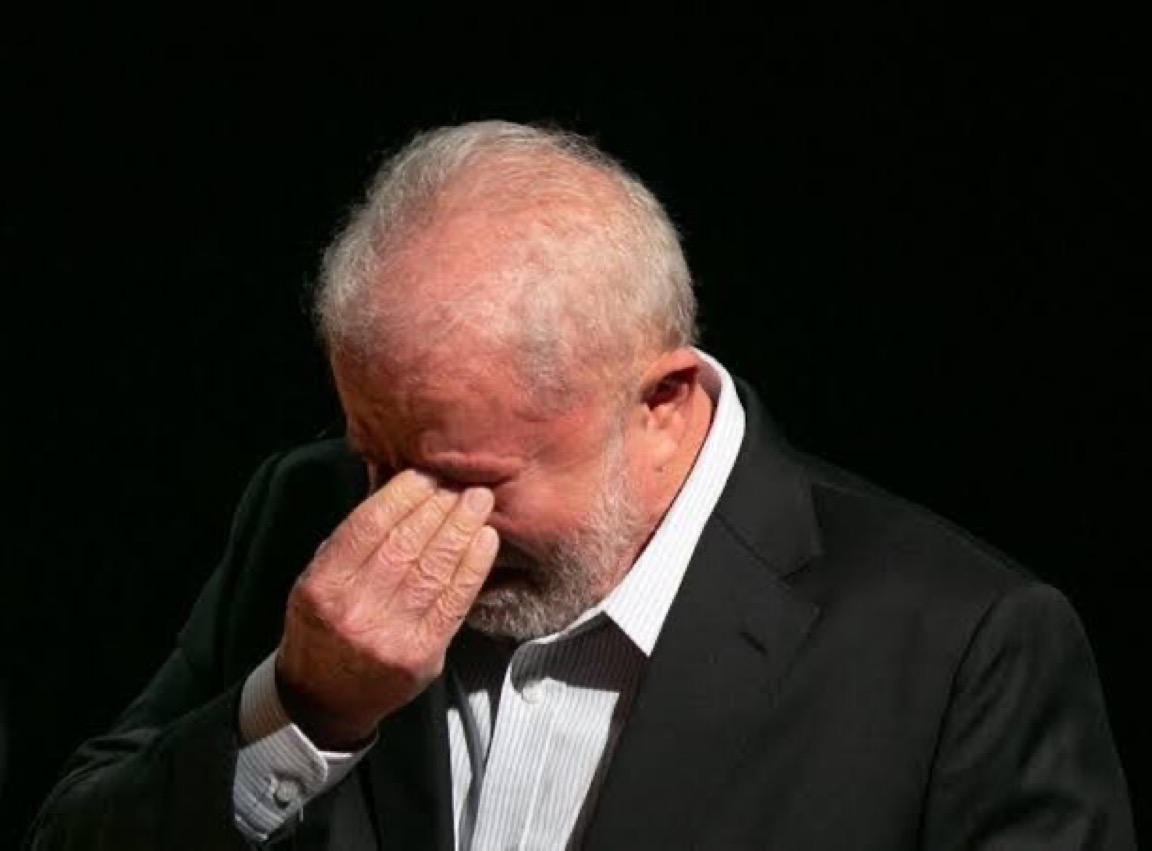
Lurian left the room upset. Lula, by multiple accounts, remained silent during the exchange, offering only a vague “I’ll talk to you later.” He did not step in. He did not defend. He watched. The man who positions himself as the paternal guardian of the nation—the eternal “pai dos pobres”—chose neutrality while his own daughter cried.
This is not mere gossip. It is a political parable.
The restricted camarote room functions as a perfect miniature of the Planalto Palace itself: access granted or denied by the first lady’s decree, ministers and allies held at arm’s length, family members treated as supplicants. Janja’s reported control over who may approach the president mirrors the informal power structure critics have long observed in this administration—where personal loyalty and gatekeeping often eclipse institutional norms. The political analogy writes itself: if the president cannot manage basic family access and respect inside his own VIP box, how does he steward the far larger, more complex “family” called Brazil?
Lula has built his entire political brand on empathy, on understanding the struggles of ordinary fathers and mothers. Yet his personal record tells a different story. Multiple marriages, children from different unions, and now this public spectacle of non-intervention reveal a pattern: biological fatherhood without the daily, protective substance of parenting. When his daughter invoked “estrutura familiar,” she struck at the heart of it. The woman who has no biological children of her own was lecturing—or being lectured—on family bonds in front of the man who helped create those bonds yet refused to defend them in the moment.
Brazil’s left-leaning platforms have long championed expansive state roles in education, gender, and social policy—often framed as “modernizing” the family. The same Carnival parade that honored Lula featured pointed mockery of traditional family structures. Yet here, in living color, the president’s own household fractures under the weight of those very modern dynamics: stepmother authority clashing with adult daughter, biological father passive. The contradiction is glaring. How can a government that claims moral authority to redefine family values govern effectively when its own first family cannot maintain basic respect and hierarchy?
Leadership is not abstract policy. It begins at home. A president who cannot assert gentle authority in a private room—protecting his daughter’s desire to speak with her father—signals a deeper abdication. If he yields so easily in the most intimate setting, surrounded by family and allies, what resolve does he bring to inflation, security, or sovereignty? The nation watches a man celebrated as “the people’s father” reduced to spectator in his own family drama.
The Sambódromo incident is not isolated. It crystallizes a truth many Brazilians have long suspected: Lula excels at campaigning as the warm patriarch of the poor, yet struggles to embody the steady, decisive father figure his own children—and by extension, the country—need. A failing father does not magically become a strong president when the lights dim and the samba stops. The tears in the camarote were not just Lurian’s. They were a mirror held up to the entire administration.
Brazil deserves leadership rooted in coherence, not contradiction. The Carnival curtain has fallen, but the real enredo continues: a president whose greatest political vulnerability may not be the economy or Congress, but the quiet, devastating proof that he cannot lead where it matters most—his own family.