
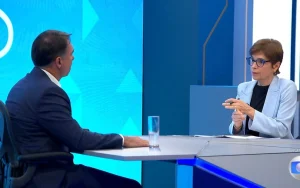



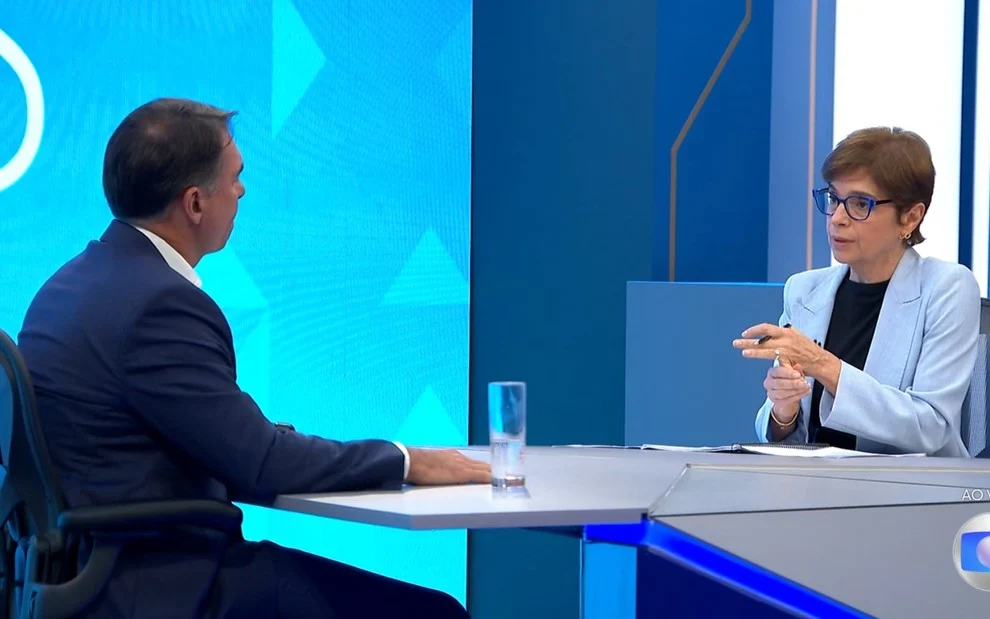
Flávio Bolsonaro Delivers Steady, Focused Performance in Globo Sabatina Amid Protests and Media Pressure
Flávio appeared calm and prepared throughout the roughly 40-minute session. He consistently redirected questions toward the core issues of his campaign: restoring fiscal responsibility, reducing the size of the federal government, and confronting organized crime. When pressed on economic concerns, he affirmed that he would maintain the policy of valorizing the minimum wage, keep pensions linked to that floor, and preserve constitutional minimum spending on health and education. He stated that the largest fiscal adjustment available to the country is simply removing Lula from office, while outlining plans to cut at least ten ministries from the current total of 39 and reduce commissioned positions.
On security, he reiterated a hard line against criminal factions, including the classification of groups such as the PCC and Comando Vermelho as narcoterrorists. He also reaffirmed his commitment to a single term, (I prefer more) declaring that he needs only one mandate and has no personal project of power. He pledged to advance a constitutional amendment ending reelection for presidents, governors, and mayors, with restrictions extending to family members of elected executives. Regarding the recently approved end of the 6×1 work scale, he explained that he voted in favor after listening to workers during the campaign and that he would respect the decision of Congress.
These commitments addressed concerns frequently raised by moderate and right-leaning voters. By contrast, the session was marked by frequent attempts from the interviewer to return to past controversies, including the financing of the film Dark Horse and questions about potential influence from former President Jair Bolsonaro. Flávio responded that a government post for his father was not under discussion and ruled out his brother Eduardo as foreign minister. When pressed on sensitive topics, he pivoted to criticisms of the current administration’s record on public security, federal police appointments, and campaign rhetoric that he described as fearmongering about cuts to social programs and state companies.
Outside the studio, the interview was preceded and accompanied by panelaços organized by Lula supporters in several cities, including São Paulo, Rio de Janeiro, and Brasília. Such protests underscored the polarized atmosphere but also highlighted the intensity of opposition efforts to disrupt the broadcast. Earlier that day, Flávio had participated in an institutional lunch with Grupo Globo leadership; the network later confirmed it as a routine courtesy visit with no involvement from the journalism division.
Post-interview analyses in outlets such as Valor Econômico emphasized what they viewed as evasions on certain topics and contrasted Flávio’s approach with Lula’s more presidential tone the previous evening. From a conservative perspective, however, the performance demonstrated discipline under pressure. Rather than allowing the interview to remain fixed on personal or historical disputes, Flávio used the platform to reinforce messages of limited government, public safety, and a single-term commitment—priorities that resonate with voters seeking a change of direction after the current administration.
With polls showing a technical tie or a narrow numerical edge for Flávio in valid votes, the sabatina provided usable material for the final campaign days. Clips emphasizing fiscal cuts, security, and the one-term pledge are likely to circulate among his base, while the clear statements on social-policy floors may help with voters who share anti-Lula sentiment but seek additional reassurances. The remaining debates will test both candidates further, but the October 16 appearance left Flávio’s supporters viewing the evening as a successful defense of his positions rather than a setback.
Sources: Coverage from Valor Econômico (columnists’ analyses of both sabatinas), Gazeta do Povo (summary of key proposals), Folha de S.Paulo (reports on panelaços), and contemporaneous poll data from institutes including CNT/MDA and Datafolha showing a close contest.
#FlavioBolsonaro #Eleicoes2026 #SabatinaGlobo #SegundoTurno #Brasil #PL #AntiPT #SegurancaPublica #AjusteFiscal #MandatoUnico


