


Flávio Bolsonaro Draws a Line on Dark Horse Scrutiny as Federal Police Seeks Production Records
By Hotspotnews
In the intensifying heat of Brazil’s 2026 presidential race, Senator Flávio Bolsonaro has moved to close the book on lingering questions surrounding the biographical film Dark Horse. On Thursday, while campaigning in São Paulo alongside Mayor Ricardo Nunes, the PL candidate declared that the matter of the film’s financing has already been addressed and now stands as a “página virada” — a turned page. He pointed to a forensic accounting report submitted by the production company in an ongoing civil inquiry, stating that the numbers checked out and that further demands for explanation should instead be directed at President Luiz Inácio Lula da Silva and his circle.
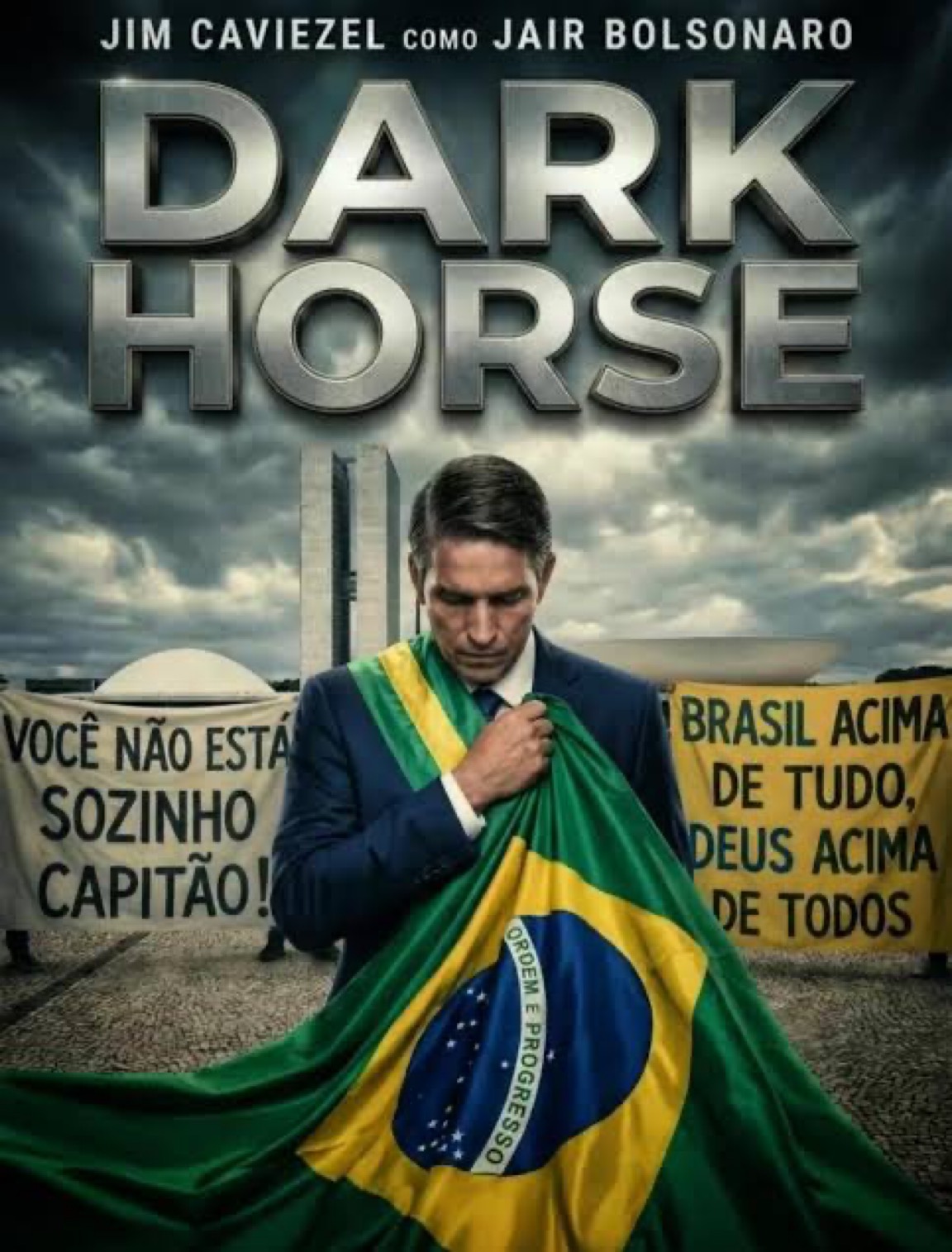
The timing of Flávio’s remarks coincides with fresh movement from the Federal Police. Investigators have requested detailed information from Ancine, Brazil’s film regulatory agency, regarding the production of Dark Horse. The agency has previously flagged that the English-language biopic, starring American actor Jim Caviezel as former President Jair Bolsonaro and directed by Cyrus Nowrasteh, was filmed in Brazil without the prior formal notification required for foreign works. Ancine opened an administrative process against the producer, Go Up Entertainment, and has indicated a possible fine ranging up to R$100,000. The Federal Police’s request appears aimed at obtaining official records on contracts, filming plans, personnel documentation, and cost structures to cross-check against the financial flows under examination.
Those flows center on transfers linked to Daniel Vorcaro, the former controller of Banco Master, who is himself facing serious fraud allegations. Reports have described negotiations in which Flávio sought substantial private backing for the film that chronicles his father’s dramatic 2018 rise and the stabbing attack he survived. Flávio has consistently maintained that the resources involved were entirely private, that no public money was used, and that the arrangement was a legitimate effort by a son to support a cinematic portrayal of his father’s story. He has rejected any suggestion of improper advantage or diversion of funds, including claims that money may have supported other family activities abroad.
From a conservative perspective, the persistent focus on Dark Horse raises legitimate questions about selective enforcement and political motivation. The film itself is a straightforward biopic celebrating a figure who remains a hero to millions of Brazilians who reject the progressive consensus that has dominated institutions for years. Attempts to frame private artistic projects as potential vehicles for hidden political financing or money laundering risk chilling legitimate expression and cultural production. When authorities and opposition voices demand exhaustive public accounting of private contracts while other high-profile financial relationships receive softer treatment, the appearance of uneven application of standards becomes difficult to ignore.
Flávio’s latest clarification is straightforward. He asserts that the producer’s forensic report, already placed in the record of a São Paulo police inquiry, demonstrates that expenditures aligned with the production and that the process has been transparent enough for those reviewing it to conclude the accounts were in order. By redirecting attention toward documented contacts between Lula’s orbit and Vorcaro, including discussions that allegedly touched on banking policy, Flávio is arguing that scrutiny should not stop at one side of the political spectrum. In a campaign season defined by competing narratives of corruption and integrity, that argument carries weight among voters skeptical of institutional overreach.
The Federal Police inquiry into the transfers, authorized by Supreme Court Justice André Mendonça, continues under seal. Ancine’s administrative process against the producer also remains active. Neither development has produced formal charges of criminal wrongdoing against Flávio or established that public funds financed the film. Private investment in cultural projects that celebrate national figures should not automatically trigger suspicion simply because the subject is politically polarizing. Brazilians of all backgrounds have the right to support artistic works that reflect their values without those works becoming permanent political footballs.
Dark Horse is scheduled for theatrical release later this year. Whether audiences ultimately embrace the portrayal of Jair Bolsonaro’s improbable ascent will be decided in theaters, not solely in police files or regulatory proceedings. Flávio Bolsonaro has stated his position clearly: the financial questions have been answered to the satisfaction of those who examined the available documentation, and the episode is closed from his side. In a democracy that values both accountability and the freedom to tell contested stories, that clarification deserves to be heard without immediate dismissal. The investigations will run their course. Voters, meanwhile, will weigh the full record when they head to the polls.
SOURCE;
Sources for the key facts in the article:
• Flávio Bolsonaro’s August 20, 2026 statements in São Paulo claiming the film’s accounts had already been provided via a producer forensic report, calling the matter a “página virada,” and redirecting scrutiny toward Lula: reported by G1, CNN Brasil, O Tempo, Band, and Brasil de Fato.
• Federal Police request for information from Ancine on the Dark Horse production, alongside Ancine’s administrative process against Go Up Entertainment for filming a foreign work in Brazil without prior required notification: covered in reporting tied to Malu Gaspar’s O Globo column space, G1, Folha de S.Paulo, Valor Econômico, and CNN Brasil.
• Context of the financing (negotiations involving Flávio Bolsonaro and Daniel Vorcaro, reported transfers of tens of millions of reais, private-funding claims, and ongoing PF inquiry authorized by STF Justice André Mendonça): originally detailed by The Intercept Brasil and subsequently reported by G1, Agência Brasil, Estadão, BBC Portuguese, and others.
• Producer-submitted forensic report and later comments on its limitations: referenced in G1 and detailed in Revista Fórum (August 21, 2026).
• Broader political context, including government Senate leader Teresa Leitão’s requests to the PF and PGR: CNN Brasil, O Globo (Lauro Jardim), and R7.
Suggested hashtags (neutral to conservative-leaning framing suitable for the article’s tone):
#DarkHorse
#FlavioBolsonaro
#Bolsonaro
#Ancine
#PoliciaFederal
#FilmeBolsonaro
#PaginaVirada
#Brasil2026
#Eleicoes2026
#LiberdadeDeExpressao


