


State-Owned Bank Scandal Erupts: Former BRB President Arrested in Massive Corruption Probe
By Hotspotnews
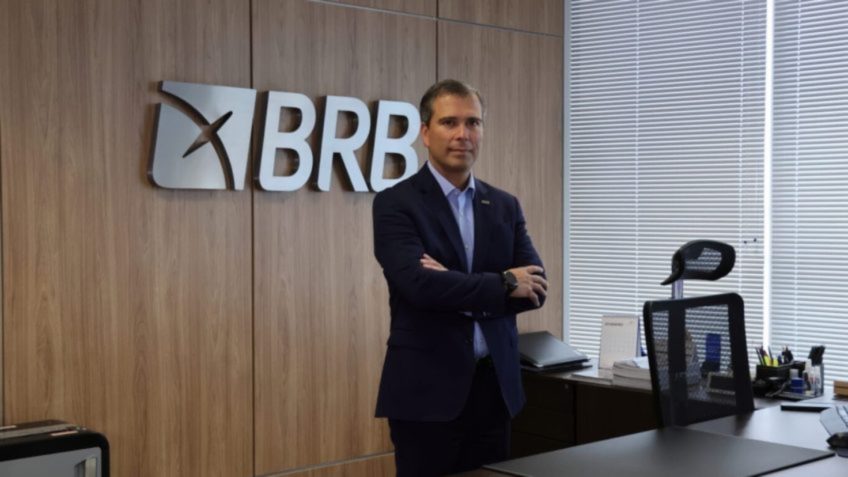
In a stark reminder of the dangers of unchecked government control over financial institutions, Paulo Henrique Costa, the former president of the state-owned Banco de Brasília (BRB), was taken into preventive custody by Brazil’s Federal Police on Thursday, April 16, 2026. This arrest marks the latest development in the ongoing “Caso Master” investigation, highlighting how political appointees can allegedly turn public banks into vehicles for personal enrichment and fraudulent schemes.
Costa, who led the BRB from 2019 until his suspension late last year, stands accused of passive corruption and money laundering. According to investigators, he acted as a key facilitator for Daniel Vorcaro, the embattled owner of the now-liquidated Banco Master. In exchange for his cooperation, Costa allegedly received or was promised six luxury properties valued at approximately R$146 million — with around R$74 million already transferred. These included high-end real estate in São Paulo and Brasília, funneled through arrangements that prosecutors describe as blatant bribes.
The scheme reportedly centered on irregular deals between the publicly funded BRB and Banco Master. Costa is said to have fast-tracked the purchase of fictitious or “worthless” credit portfolios — assets lacking real collateral or backing — exposing the state bank to massive potential losses. He also pushed aggressively for BRB to acquire Banco Master outright, a move ultimately blocked by Brazil’s Central Bank in 2025 due to serious governance red flags. WhatsApp messages uncovered by authorities reportedly reveal a cozy relationship, with discussions revolving around payments, property adjustments, and mutual business interests that prioritized private gain over public duty.
This is no isolated incident. Costa was originally appointed by the governor of the Federal District and operated at the helm of a bank backed by taxpayer resources. The case underscores a recurring problem in Brazil: when politicians and their allies gain influence over state financial entities, the temptation for cronyism and corruption often proves too great. Public banks, shielded from the full discipline of market forces and private shareholder oversight, become breeding grounds for exactly this kind of abuse. Billions in questionable assets were allegedly funneled through the system, threatening the stability of institutions meant to serve citizens, not enrich insiders.
Federal Police launched the fourth phase of “Operação Compliance Zero” early Thursday, executing arrest warrants and searches in Brasília and São Paulo. Costa’s detention was authorized by Supreme Federal Court Minister André Mendonça, who cited strong evidence of an illicit partnership and risks that the suspect might tamper with witnesses, hide assets, or continue obstructing justice. Vorcaro himself has been in custody since earlier this year, and the probe continues to unravel what appears to be a broader network involving fraudulent banking practices and the laundering of illicit advantages to public officials.
Conservatives have long warned that expansive government involvement in the economy — including ownership of banks — invites inefficiency, moral hazard, and outright graft. Free markets, transparent private enterprise, and strict limits on state power serve as the best safeguards against such scandals. When bureaucrats and political favorites manage billions in public funds with lax accountability, the results are predictable: rigged deals, hidden payoffs, and eventual taxpayer bailouts.
As the investigation deepens, questions will inevitably arise about how high the rot extends and whether adequate reforms will follow. For now, the arrest of Paulo Henrique Costa serves as a cautionary tale about the perils of big government finance. True economic integrity demands reducing the state’s footprint in banking, empowering genuine market competition, and holding public officials to the highest standards of transparency — standards that appear to have been sorely lacking at the BRB.
The Brazilian people deserve better than another chapter in the endless saga of state-sponsored corruption.


