


Hong Kong and Brazil: A look on Transnational Repression and the U.S. Response
By Hotspotorlando News
The erosion of free speech and political dissent in Hong Kong and Brazil presents a stark warning about the dangers of authoritarian overreach, with significant implications for U.S. businesses and global democratic values. Both regions, though distinct in their political systems and histories, are grappling with government actions that suppress fundamental freedoms, often extending their reach beyond borders. The United States, as a defender of individual liberty and sovereignty, has both the moral authority and strategic necessity to counter these affronts, particularly when they threaten American citizens and commercial interests.
In Hong Kong, the Chinese Communist Party’s (CCP) influence has systematically dismantled the autonomy promised under the 1997 handover agreement. The National Security Law (NSL) of 2020 and Article 23 legislation in 2024 have criminalized dissent with vague definitions of “sedition” and “external interference.” On July 25, 2025, Hong Kong announced arrest warrants and bounties targeting 15 overseas activists, including U.S.-based individuals, for exercising free speech—a clear act of transnational repression. This extraterritorial overreach not only violates international norms but also challenges U.S. sovereignty by seeking to intimidate Americans on American soil.
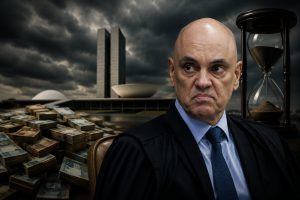
Brazil, while a democracy, is sliding toward its own form of speech suppression under the guise of combating “misinformation.” Judicial orders to censor political content on platforms like X and investigations targeting government critics reflect a troubling trend of democratic backsliding. These actions, often aimed at conservative figures, raise concerns about the impartiality of Brazil’s judiciary and its commitment to free expression. While less overt than Hong Kong’s bounties, Brazil’s censorship efforts similarly undermine open discourse and individual rights, creating a chilling effect on political speech.
The parallels between Hong Kong and Brazil lie in their governments’ willingness to overstep boundaries to control narratives, both domestically and abroad. Hong Kong’s actions stem from the CCP’s totalitarian ideology, seeking to crush any challenge to its authority, whether in Hong Kong or among diaspora communities. Brazil’s measures, cloaked in legalism, reflect a growing trend of state institutions silencing opposition under the pretext of protecting public order. Both threaten global norms of free speech and sovereignty, impacting not only political activists but also U.S. businesses operating in these regions.
### Impact on U.S. Businesses
The commercial relationship between the United States and Hong Kong is substantial, with $33.8 billion in bilateral goods trade in 2024 and a U.S. trade surplus of $21.9 billion, the largest with any partner. U.S. exports, including aircraft, machinery, and agricultural products, thrive due to Hong Kong’s role as a re-export hub to mainland China and Asia, with 3.9% of China’s exports to the U.S. and 7.4% of U.S. imports to China routed through Hong Kong in 2023. Over 1,400 U.S. firms, many using Hong Kong as a regional headquarters, benefit from its financial infrastructure, low-tax environment, and robust intellectual property protections. The presence of 10 U.S.-owned banks and 23 U.S.-controlled insurance companies as of 2023 underscores Hong Kong’s role as a financial hub, with U.S. services exports valued at $12.8 billion in 2018.
However, Hong Kong’s NSL and Article 23 create significant risks for U.S. businesses. The laws’ vague provisions mean that corporate communications, social media posts, or even routine business activities could be interpreted as “collusion” or “sedition,” exposing employees and executives to legal threats, even for actions taken outside Hong Kong. The July 2025 bounties targeting U.S.-based individuals heighten these concerns, as businesses face the prospect of their personnel being intimidated or targeted for perceived criticism of the Hong Kong or Chinese governments. This creates a chilling effect, forcing companies to navigate complex compliance burdens and potential reputational risks.
U.S. policy responses, such as the Hong Kong Autonomy Act (2020) and Executive Order 13936, further complicate the business environment. The requirement for “Made in China” labels on Hong Kong goods has sparked trade tensions, with Hong Kong’s February 2025 WTO complaint against U.S. tariffs and a temporary U.S. tariff pause in April 2025 introducing uncertainty. Potential future tariffs or sanctions could increase costs, disrupt supply chains, and reduce Hong Kong’s appeal as a stable business hub for U.S. firms.
In Brazil, U.S. businesses face different but related challenges. While Brazil’s market is less critical than Hong Kong’s for U.S. trade, American companies operating there—particularly in tech, agriculture, and manufacturing—rely on a stable regulatory environment. The growing use of judicial orders to censor content or target political opponents creates an unpredictable climate, where businesses risk being caught in legal crossfires or pressured to comply with censorship demands. This undermines confidence in Brazil as a reliable partner for U.S. investment and trade, potentially deterring expansion or prompting companies to relocate operations.
Why the U.S. Must Act
The United States has a compelling case to take measures against these violations. First, Hong Kong’s bounties and Brazil’s censorship directly challenge American values of free speech, especially when U.S. citizens or businesses are targeted. Defending these principles is a moral and strategic imperative to maintain America’s global leadership as a beacon of liberty. Second, transnational repression threatens U.S. sovereignty by attempting to enforce foreign laws or intimidate Americans on U.S. soil. Third, the economic stakes are high: disruptions in Hong Kong’s trade hub status or Brazil’s investment climate could harm U.S. businesses, impacting jobs and economic growth.The U.S. can respond through targeted sanctions, such as those under the Magnitsky Act, against officials responsible for these violations, signaling that attempts to suppress free speech will face consequences. Diplomatically, the U.S. should rally allies to condemn these actions, building a coalition to uphold international norms. For businesses, the U.S. can strengthen protections for American firms and employees in Hong Kong and Brazil, offering legal support and safe harbors against foreign intimidation. Enhanced trade agreements or incentives could also encourage compliance with free expression standards.
Critics may argue that intervening risks straining relations with Brazil, a democratic partner, or that Hong Kong’s situation is too entrenched under CCP control. However, inaction normalizes authoritarian tactics, emboldening other regimes and endangering U.S. interests. By acting decisively—through sanctions, diplomacy, and support for businesses—the U.S. can protect its citizens, safeguard its economic stakes, and uphold the principles that define it. Freedom of expression and sovereignty are non-negotiable, and America must lead the way in defending them.


