


Brazil’s Firm Stand: How Denying Entry to Trump Advisor Darren Beattie Shields the Integrity of 2026 Elections
By Hotspotnews
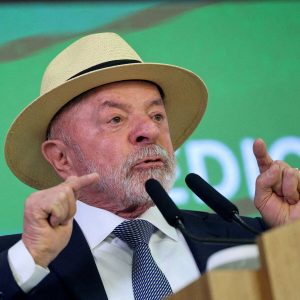
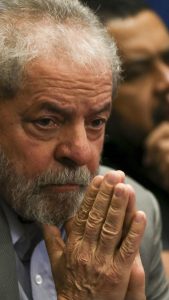
In a swift and decisive action on March 13, 2026, Brazilian President Luiz Inácio Lula da Silva revoked the visa of Darren Beattie, a senior advisor to U.S. President Donald Trump, preventing his entry into the country. What began as a planned visit tied to a forum on critical minerals quickly unraveled amid revelations of undisclosed intentions, highlighting a growing international flashpoint over foreign influence in domestic affairs. At its core, this episode represents far more than diplomatic tit-for-tat; it stands as a pivotal moment in Brazil’s ongoing effort to secure its electoral processes from external interference ahead of the high-stakes 2026 presidential elections.
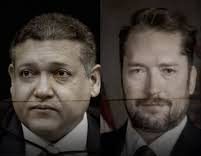
Beattie, known for his role in Trump-aligned circles and his connections to Brazil’s political opposition through figures like federal deputy Eduardo Bolsonaro, had arranged meetings that raised immediate red flags. Among them was a scheduled discussion with Supreme Federal Court (STF) Minister Kassio Nunes Marques, who also serves as vice-president of the Superior Electoral Court (TSE) and is poised to assume the TSE presidency in June 2026—placing him at the helm of overseeing the nation’s next general elections. Beattie also sought permission to visit former President Jair Bolsonaro, currently serving a sentence in a federal prison facility following convictions related to political and security matters.
Brazilian authorities acted decisively. Justice Alexandre de Moraes swiftly denied the prison visit, citing inconsistencies with Beattie’s visa application. Lula’s government went further, revoking the visa entirely after determining that Beattie had omitted the full scope of his agenda, which extended well beyond the official critical minerals forum. Officials framed the move explicitly as retaliation for recent U.S. decisions to revoke visas of Brazilian officials, including Health Minister Alexandre Padilha, but emphasized that the deeper concern lay in protecting national sovereignty.
The significance of this denial cannot be overstated when viewed through the lens of safe, sovereign elections. Brazil’s electoral system, managed by the independent TSE, has long been a cornerstone of the country’s democracy, praised globally for its electronic voting infrastructure and transparency mechanisms. Yet in recent years, it has faced intense scrutiny and unfounded claims of fraud from opposition voices—claims that echo similar narratives in other democracies. Allowing a foreign political operative with documented ties to those questioning Brazil’s institutions to engage directly with the justice who will lead the 2026 electoral oversight risked opening a channel for precisely the kind of subtle influence that undermines public trust.
By blocking the visit, Brazil sent a clear message: discussions about the nation’s electoral framework belong to Brazilians alone. Meeting with Nunes Marques could have facilitated exchanges on voting procedures, judicial oversight, or even strategic critiques that might later be leveraged in political campaigns. In an era where foreign actors increasingly attempt to shape outcomes through back-channel diplomacy, advisory sessions, or public pressure, this intervention preserves the TSE’s autonomy. It ensures that the official responsible for certifying candidates, managing campaigns, and declaring results operates without the shadow of external agendas—whether framed as “fact-finding” or otherwise.
Moreover, the episode reinforces a fundamental principle of international law: non-interference in internal affairs. Brazil’s constitution and democratic norms demand that elections remain insulated from outside meddling, a safeguard that becomes even more critical as the 2026 race approaches. With polarization still high following the 2022 contest and subsequent legal proceedings against key opposition figures, any perception of foreign involvement could erode voter confidence and destabilize the process. Lula’s government, by prioritizing this boundary, has taken a proactive step to fortify the “safety” of the vote—meaning not just technical security against hacking or fraud, but also protection against political manipulation from abroad.
Critics may argue the denial was politically motivated amid ongoing U.S.-Brazil tensions, especially given the reciprocal visa revocations. Yet the underlying facts—omitted purposes, alignment with opposition networks, and direct targeting of the future TSE leader—underscore a legitimate national security concern in the democratic sphere. This is not about silencing debate; it is about ensuring that Brazil’s institutions, particularly those guarding the ballot box, remain answerable solely to the Brazilian people and their elected representatives.
As the world watches democracies grapple with hybrid threats ranging from disinformation to influence operations, Brazil’s action offers a model of resolve. It demonstrates that protecting safe elections requires vigilance not only against domestic challenges but also against those who might seek to internationalize them. With Kassio Nunes Marques set to guide the 2026 process, the denial of Beattie’s entry helps guarantee that Brazil’s democratic machinery runs on its own terms—free, fair, and uncompromised by foreign hands. In doing so, it strengthens not just one nation’s vote, but the global standard for electoral sovereignty in an interconnected age.


