
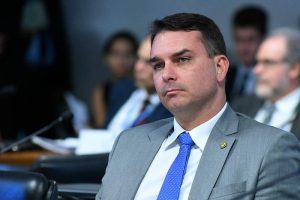



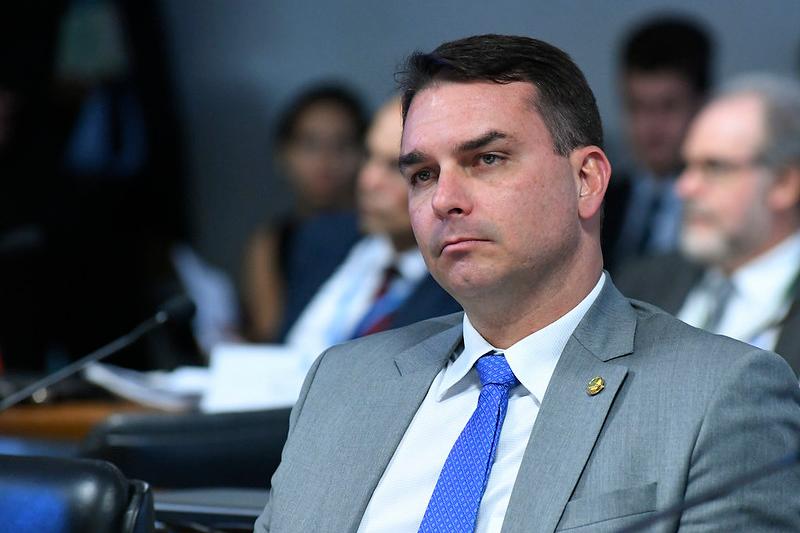
URGENTE: Judicial Overreach Strikes Again: PF Concludes Flávio Bolsonaro “Caluniated” Lula Over Maduro Comments
In a move that reeks of selective prosecution and political weaponization of Brazil’s justice system, the Federal Police has wrapped up its investigation and declared that Senator Flávio Bolsonaro committed the crime of calúnia (slander) against President Lula. The target? A January 3, 2026, social media post in which Flávio connected dots that many Brazilians have long suspected.
Following the U.S. arrest of Venezuelan strongman Nicolás Maduro on drug trafficking charges, Flávio posted that “Lula will be denounced. It is the end of the Foro de São Paulo: international drug and arms trafficking, money laundering, support for terrorists and dictatorships, fraudulent elections…” He paired the text with images linking Lula to the Maduro regime. The PF now claims this constitutes a false public imputation of crimes, complete with the aggravating factor of targeting the President of the Republic.
The Context They Want You to Ignore
This was not a random smear. It was a political commentary made in the heat of breaking international news. Maduro’s capture by American forces raised immediate questions about who in the region might be exposed by any cooperation or testimony. The Foro de São Paulo — the leftist network long championed by Lula and his allies — has for decades been accused by conservatives of facilitating alliances with authoritarian regimes, narco-traffickers, and anti-democratic forces.
Flávio exercised classic political speech: highlighting potential consequences of Maduro’s downfall for Lula’s circle. In a healthy democracy, this is protected expression, robust debate, and accountability. In today’s Brazil, under a Supreme Court and Federal Police increasingly viewed as extensions of the ruling Workers’ Party apparatus, it becomes grounds for criminal investigation.
What Happens Next
The PF’s final report has been sent to the Supreme Federal Court (STF), under the watchful eye of Minister Alexandre de Moraes. Next, the case lands on the desk of the Prosecutor General’s Office (PGR). Given the current political alignment, few expect the PGR to recommend archiving the case. A formal denúncia (criminal complaint) against Flávio is the most likely outcome.
If accepted by the STF, Flávio would face a criminal trial. Conviction for calúnia carries penalties that include fines and, more importantly in the Brazilian context, potential suspension of political rights. Legal experts have already noted that a criminal conviction — even for a crime against honor — can jeopardize a candidate’s eligibility. Flávio, positioned as the leading conservative contender for the 2026 presidential race after his father Jair Bolsonaro was declared ineligible, now faces a direct threat to his political future.
Further delays, appeals, and procedural maneuvers are almost guaranteed. The process itself becomes the punishment.
The Real Consequences
This case is not isolated. It fits a clear pattern: relentless legal pressure on the Bolsonaro family and conservative leaders through investigations, inquiries, and restrictions that critics rightly label as lawfare. While left-leaning politicians and activists routinely make far more inflammatory accusations against conservatives with little to no consequence, opposition voices face swift institutional retaliation.
The broader damage is to free speech and democratic norms. If a senator and presidential pre-candidate can be criminally investigated for suggesting that a foreign dictator’s arrest might expose compromising ties involving the Brazilian president, what ordinary citizen or commentator is safe? Political discourse shrinks. Self-censorship spreads. Institutions lose legitimacy when they appear to serve one side of the political spectrum.
For the conservative movement, the stakes are high. A conviction or even prolonged legal entanglement could sideline a strong 2026 contender at a critical moment. It reinforces the narrative — already resonant among millions of Brazilians — that the system is rigged against those who challenge the establishment.
Internationally, cases like this fuel skepticism about Brazil’s democratic credentials. Allies watching the erosion of due process and equal application of the law will take note.
Flávio Bolsonaro has consistently defended his right to speak openly about corruption, foreign policy failures, and the alliances that harm Brazil. This latest chapter shows that telling uncomfortable truths about power carries a heavy price under the current regime.
The fight is far from over. Conservatives must continue exposing these tactics, defending free expression, and preparing for the battles ahead — in the courts, in the court of public opinion, and at the ballot box in 2026. The Brazilian people deserve better than a justice system that criminalizes political opposition while shielding those in power.


