



LULA AND HIS BIG MOUTH. A TRAIL OF EMBARRASSMENT
By Hotspotnews
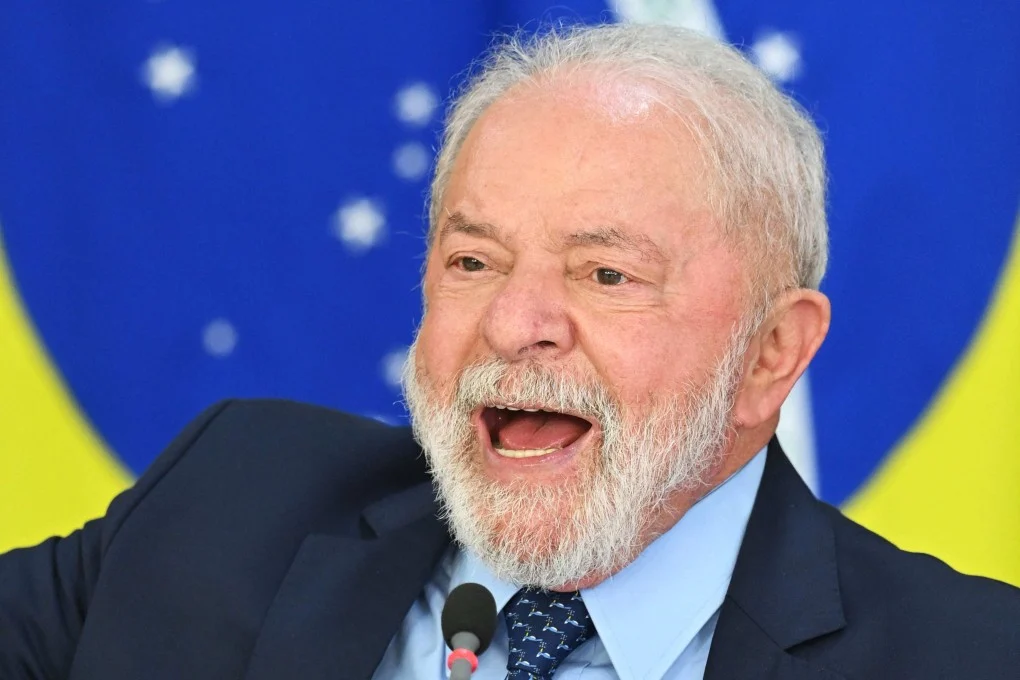
Lula’s Itajaí speech (June 26, 2026) took place during a visit to the Detroit Brasil shipyard in Santa Catarina, focused on Petrobras-contracted offshore support vessels and federal infrastructure projects (e.g., highway works like BR-470). It blended promotion of federal investments with sharp political criticism of Governor Jorginho Mello (PL, opposition-aligned) and a broader social message on racism and equality.
Key Elements and Quotes from the Speech
Lula criticized Mello for not attending federal events in the state and resisting partnerships on major projects worth billions of reais (references to R$24 billion+ in works). He called the absence a “lack of respect,” questioned the governor’s engagement (“Qual é o tamanho da cabeça desse cidadão, qual a qualidade da massa encefálica que ele tem na cabeça?”), and positioned himself as investing in SC regardless of their differences: “Eu não jogo rasteiro… Santa Catarina é um Estado de gente trabalhadora, de gente de bem.”
On social themes, he urged action against racism prevailing in SC (“Vocês não podem permitir que prevaleça em Santa Catarina o racismo… Está chegando o momento de a onça beber água”) and warned against a “síndrome de grandeza” (superiority complex) tied to the state’s wealth: “Não podem permitir que aqui em Santa Catarina as pessoas sejam tomadas da síndrome de grandeza porque esse estado é muito rico, não é pobre.” He stressed national equality (“A gente tem um estado brasileiro e todo mundo tem que ser tratado igual”) and rejected hierarchies by race or region (“Não tem um cara que é branco é melhor do que o que é negro, o cara que é nordestino é pior do que o do sul do país”).
He invoked Adolf Hitler: “Que história que é essa? Hitler tentou fazer isso e acabou do jeito que acabou.” He rejected “hegemonia branca” (white hegemony) over the rest of the country, reframing it as “hegemonia da ignorância” (hegemony of ignorance) that requires courage to debate. He proudly identified as a Northeasterner (Pernambucano) and claimed his federal government had done significant work for SC.
Context and Background
The speech occurred amid political rivalry. Mello, from the opposition PL party (aligned with Bolsonarism), has criticized federal policies and was absent from some events. Lula framed his visit as delivering investments (naval industry jobs, infrastructure via Novo PAC, etc.) while calling out what he saw as obstruction or lack of partnership.
Santa Catarina’s demographics add resonance: Per the 2022 IBGE census, it has one of Brazil’s highest proportions of self-identified White population (~76.3%), with lower Black (~4.1%) and mixed (~19.2%) shares compared to national averages. The state has strong European immigrant heritage (German, Italian, Polish, etc.), regional pride in economic success, low crime rates in many areas, and a more conservative political lean in recent years. This makes references to “white hegemony” or superiority complexes particularly charged for critics.
Reactions
-
Governor Jorginho Mello: Strongly condemned it as xenophobia targeting catarinenses collectively. He distinguished legitimate political criticism from attacking the people’s honor, calling it “criminoso, preconceituoso” and announced plans to file a complaint with the PGR (Procuradoria-Geral da República).
-
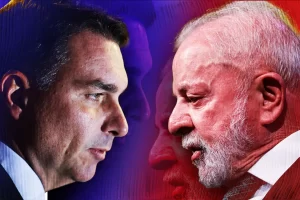
Opposition figures (e.g., Flávio Bolsonaro): Defended SC residents as “hard workers, honest and love Brazilians,” accusing Lula of dividing Brazilians (South vs. Northeast, race-based) and lacking knowledge of the country.
-
Supporters/left-leaning views: Framed it as a necessary confrontation with racism, inequality, and resistance to affirmative policies (e.g., racial quotas), consistent with Lula’s long-standing emphasis on social inclusion.
-
Broader media/political response: Amplified as inflammatory, with debates on whether it was principled anti-racism advocacy or divisive stereotyping. It quickly fueled accusations of xenophobia and entered the pre-2026 election discourse.
Analytical Perspectives
Strengths/Intent: Lula positioned the remarks as defending equality and national unity against supremacist ideas, using historical analogy (Hitler/Nazism) to highlight dangers of hierarchy. It aligns with his emphasis on combating discrimination and promoting federal investments across regions. Brazil does face ongoing issues of racial inequality, colorism, and disparities in access to opportunities, even in wealthier states.
Criticisms: The language risks generalizing to an entire state and its people rather than targeting specific policies or incidents. Equating regional pride, resistance to certain federal approaches, or demographic realities with “hegemonia branca” or Nazi-like supremacy struck many as hyperbolic and inflammatory. The Hitler reference was widely seen as poorly chosen or disproportionate. Critics argue it reflects identity politics that prioritizes race over class, merit, or regional differences, potentially alienating voters in high-performing states. Political timing (criticizing an opposition governor during a federal event) raised questions of partisanship over governance.
Broader Context in Brazil: Race in Brazil is fluid and intertwined with class, region, and history (slavery, European immigration waves, etc.). Debates over affirmative action (cot as raciais) are deeply divisive—supporters see them as redress for historical injustice; opponents view them as divisive or reverse discrimination. SC’s success (strong economy, human development indicators) is often attributed by locals to culture, work ethic, and institutions rather than solely demographics. Lula’s speech taps into national vs. regional tensions and \federalism debates.
Implications: It has escalated political polarization, with immediate fallout including the governor’s PGR move and opposition mobilization. It reinforces narratives of Lula as confrontational on social issues (potentially energizing his base while alienating moderates or Southern voters). With the 2026 presidential election approaching (Lula seeking re-election amid a tight race, likely vs. a PL/Bolsonaro-aligned candidate), such rhetoric could influence turnout, regional voting patterns (South often leans more conservative), and framing around identity vs. economic/security priorities. It also highlights ongoing challenges in Brazilian discourse: balancing calls for equality with avoiding collective stigmatization.
Overall, the speech exemplifies Lula’s direct, combative style on social justice but has been polarizing, illustrating how race, regional identity, and politics intersect in contemporary Brazil. Reactions largely split along partisan lines, with limited neutral ground on the framing. For primary sources, video clips from the event circulate widely on platforms like YouTube and X.


