





Milei’s Anxious Await for Change: Why Conservatives See Brazil 2026 as a Defining Battle
Argentine President Javier Milei did not mince words. In recent public remarks, the outspoken libertarian leader stated he is “eagerly” awaiting the defeat of Brazil’s President Lula da Silva in the October 2026 presidential elections. Far from diplomatic nicety, Milei’s comments reflect a deep ideological divide: one side champions individual freedom, sound money, and limited government; the other clings to expansive state control, wealth redistribution, and alliances with regimes widely criticized for authoritarian tendencies.
Milei’s frustration with Lula is longstanding. He has repeatedly called out the Brazilian leader’s socialist policies for stifling growth, tolerating corruption, and aligning Brazil with leftist governments in Venezuela, Cuba, and Nicaragua. Under Lula’s Workers’ Party (PT), critics argue Brazil has endured rising public debt, persistent inflation pressures, and weakened law-and-order policies that emboldened crime in major cities. Milei, who inherited a devastated Argentine economy and began implementing drastic spending cuts and deregulation, sees Lula’s approach as the very model he is fighting to dismantle at home.
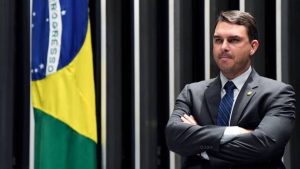
The Argentine president has made his preference explicit: he favors a “solution with the Bolsonaros” for Brazil. Senator Flávio Bolsonaro, seen by many as carrying forward his father Jair Bolsonaro’s legacy, represents the conservative alternative. Supporters highlight Jair Bolsonaro’s prior term for stronger border controls, pro-family policies, economic reforms that attracted investment before the pandemic, and a firm anti-corruption stance that challenged entrenched elites. Conservatives believe a return to these principles could restore Brazil’s potential as a powerhouse of agriculture, energy, and responsible resource development.
Regionally, the stakes are high. A conservative victory in Brazil would create a powerful axis of market-oriented governments alongside Milei’s Argentina, potentially isolating socialist holdouts and opening doors for freer trade, joint security efforts against narco-trafficking, and energy partnerships. Milei has argued this shift represents a “new dawn” for Latin America, where ideas of liberty replace decades of populist failure that delivered poverty and emigration.
For Brazilian voters and observers across the ideological spectrum, the choice in 2026 is becoming clearer. On one hand, continuity with PT governance promises more of the same: expanded welfare programs funded by higher taxes and borrowing, diplomatic coziness with adversarial powers, and resistance to structural reforms. On the other, a conservative resurgence offers promises of fiscal discipline, merit-based opportunity, protection of traditional institutions, and economic policies aimed at unleashing private enterprise.
Milei’s open anxiety is shared by millions who have watched leftist experiments deliver disappointing results across the continent. As Brazil heads to the polls, his words serve as a reminder that elections have consequences—not just for one nation, but for the future of freedom in South America. Conservatives see this moment as an opportunity to reject decline and rebuild on the proven foundations of liberty, responsibility, and national pride. The coming months will test whether Brazilian voters are ready to join that momentum.


