



Operation “Anula Tudo” Null Everything!
The STF’s Latest Attempt to Shield Itself from Scrutiny
By Hotspotnews
On February 17, 2026, the Federal Police launched yet another high-profile operation that critics have already dubbed “Operação ANULA Tudo.”
Four search warrants were executed across São Paulo, Rio de Janeiro, and Bahia targeting public servants — mostly from the Receita Federal — accused of illegally accessing and leaking tax and banking data belonging to Supreme Federal Court (STF) ministers, their families, and even the Prosecutor General.
The operation was authorized by Minister **Alexandre de Moraes**, who also imposed heavy restrictions on the suspects: electronic ankle monitors, suspension from duties, passport cancellation, and travel bans. On paper, it looks like a legitimate crackdown on breaches of secrecy. In practice, it has been widely interpreted as a defensive maneuver by the very institution that claims to stand above politics.
### Can They Really “Null Everything”?
The short answer is **no** — not automatically, not magically, and not without limits.
Brazilian law recognizes the “fruit of the poisonous tree” doctrine. Evidence obtained through illegal means can be declared inadmissible, and any further evidence derived solely from it may also be thrown out. But courts require proof that the tainted source was the **only** path to the information. Investigations involving bank records, contracts, or public spending usually rest on multiple independent foundations: congressional inquiries, audits, journalistic investigations, and legally authorized judicial breaks of secrecy. Declaring one leak “illicit” does not erase years of documented dealings or wipe out parallel probes.
Still, the timing is impossible to ignore. The move comes just as uncomfortable questions swirl around lucrative contracts linked to families of STF members and as public pressure grows for transparency in cases long shielded from ordinary accountability. The sarcastic nickname “ANULA Tudo” was born precisely from this perception: whenever sunlight threatens to reach the highest levels of the judiciary, a new operation appears to slam the shutters closed.
### The Pretentious Play by Moraes and Toffoli
What stands out is the breathtaking arrogance on display.
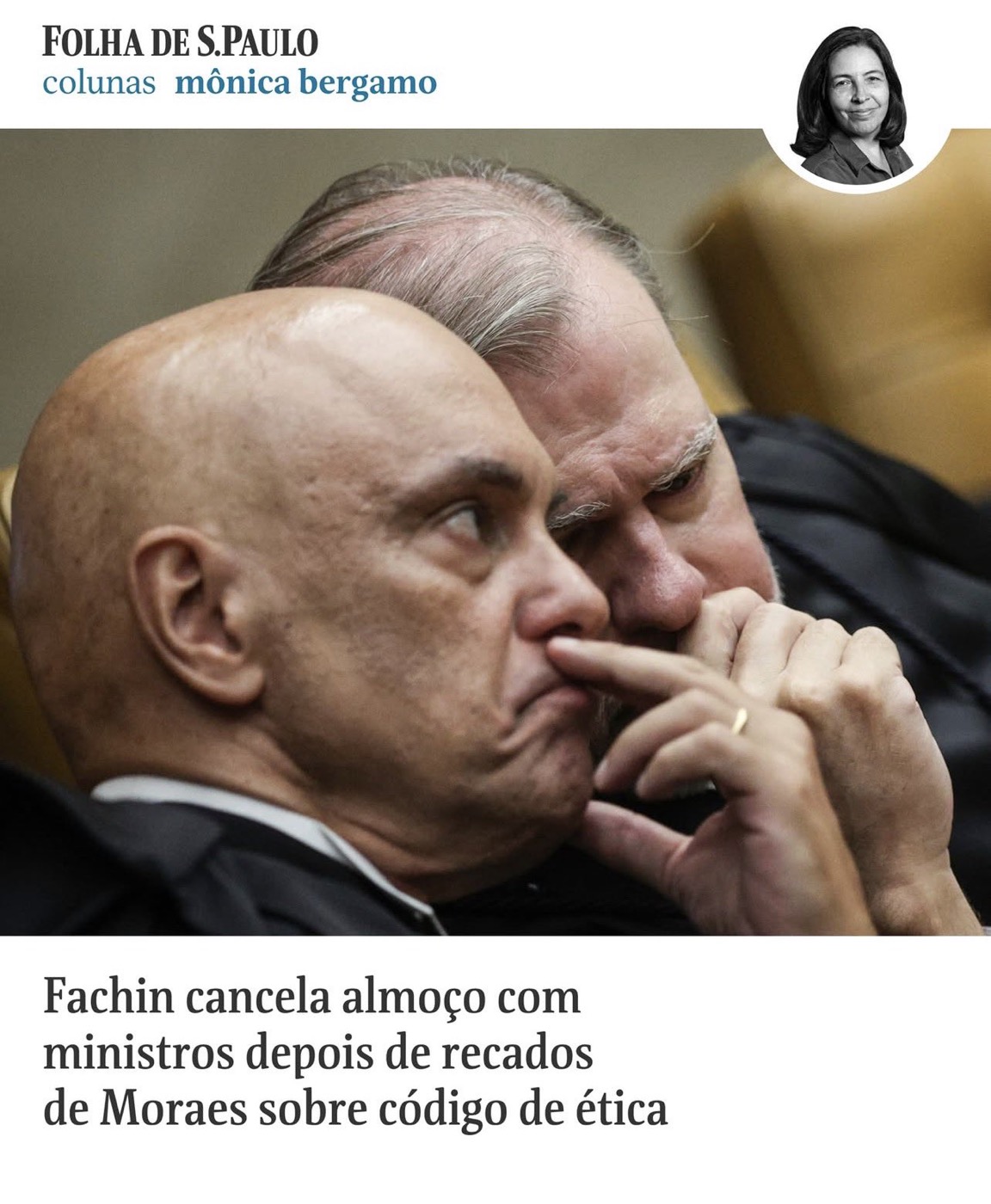
**Alexandre de Moraes** — the same minister who has spent years expanding the boundaries of what constitutes “threat to democracy,” who single-handedly manages sprawling inquiries, and who has ordered blocks, arrests, and asset freezes with minimal oversight — now positions himself as the guardian of secrecy when the data in question might expose his own circle. The man who lectures the country daily about the rule of law sees no conflict in being both judge and interested party when the spotlight turns inward.
**Dias Toffoli**, another veteran of the court’s activist wing, fits perfectly into this picture. His tenure has been marked by decisions that consistently expanded judicial power while shielding allies and institutions from external scrutiny. Together, they embody a mindset that treats the STF not as one co-equal branch among others, but as the final, untouchable arbiter — one that can investigate everyone else but reacts with outrage and swift retaliation the moment anyone dares investigate it.
This is the core pretension: the belief that ministers of the Supreme Court are somehow above the very laws and transparency standards they impose on presidents, governors, businessmen, and ordinary citizens. When public servants allegedly peek behind the curtain to reveal possible irregularities involving the powerful, the response is not “let’s investigate the substance,” but “arrest the peekers and declare everything derived from them null and void.”
### A Pattern, Not an Isolated Incident
This is not the first time the strategy has been attempted. Critics have watched similar maneuvers for years: inconvenient leaks are branded criminal, sources are persecuted, and any downstream revelations are preemptively discredited. Meanwhile, the original questions — about contracts, family businesses, influence peddling, or selective enforcement of the law — somehow never receive the same aggressive judicial energy.
The Brazilian public is not stupid. When the same court that celebrates “democratic resistance” rushes to protect its own from sunlight, the contradiction is glaring. The servers now targeted are being portrayed as villains for doing what many see as exposing potential abuse of power. The real scandal, in the eyes of millions, remains the refusal of the STF to submit itself to the same accountability it demands from everyone else.
“Operação ANULA Tudo” may succeed in tying up a few low-level bureaucrats and generating intimidating headlines. But it will not erase public memory, nor will it restore trust in an institution that increasingly behaves as if its own prestige matters more than the Constitution it claims to defend.
The Brazilian people have seen enough. The question is no longer whether the STF can “anular tudo.” The real question is how much longer the country will tolerate a Supreme Court that acts as if it can.


