





The Dawn of Giant Machines: When Science Fiction Becomes Steel and Fire
By Hotspotnews
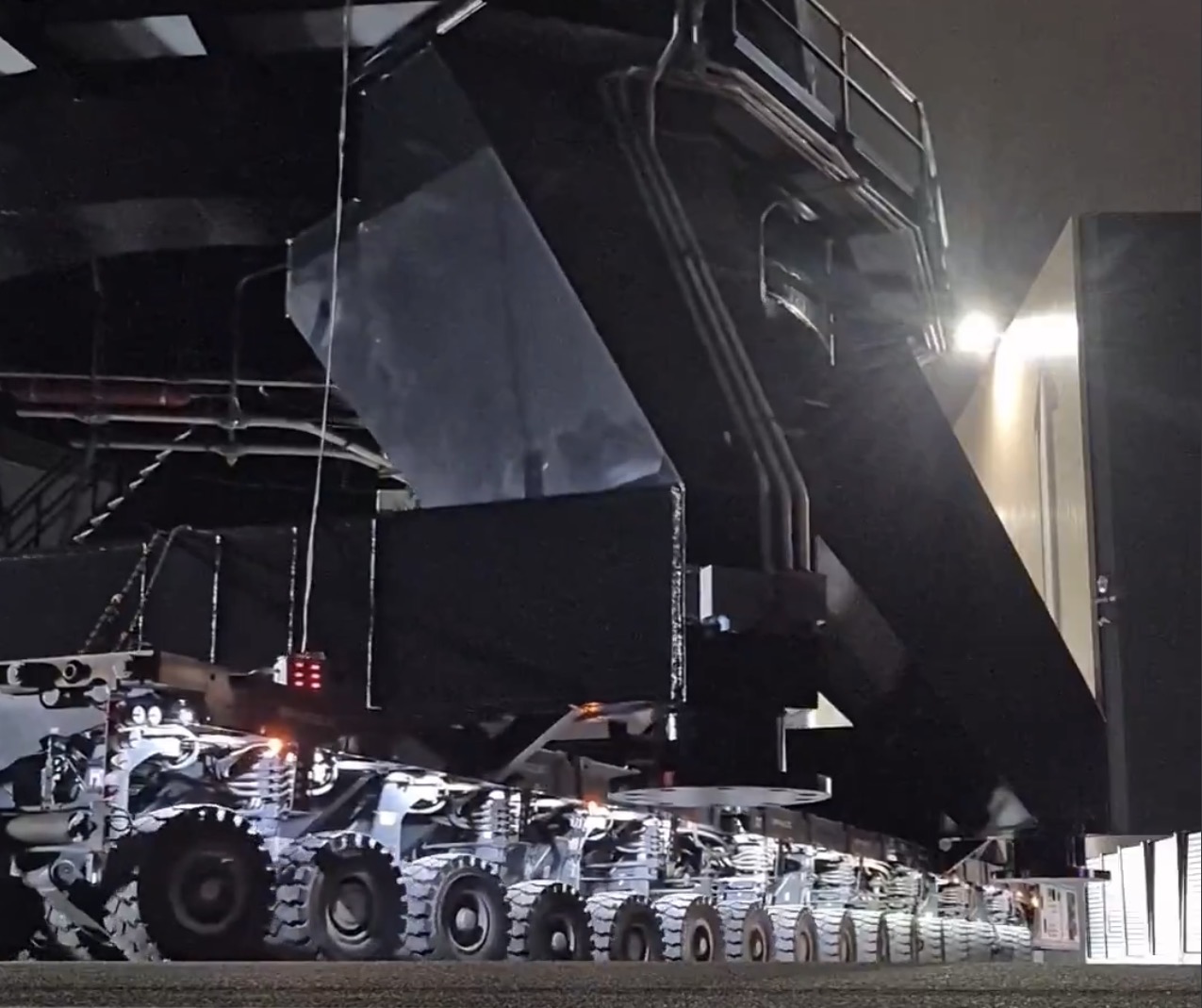
Picture this: night has fallen over the Texas coast. Floodlights pierce the darkness, casting long shadows across cracked concrete. From a low angle, the camera looks up in awe as a black steel colossus—towering like a skyscraper laid on its side—begins to move. Dozens of massive wheels, each taller than a person, turn in perfect synchronization beneath a transporter that looks engineered for another world. The structure inches forward with deliberate power, chains swaying gently, red and white lights blinking in rhythm. Its sheer height and girth dominate the frame, making nearby buildings seem small and the ground tremble under invisible weight. This is no cinematic effect. This is Starship, alive and in motion—the very video that has millions spellbound.
We have entered the age of giant machines, where the boundary between imagination and engineering has dissolved. For decades, science fiction painted futures of towering starships, orbital cities, and humanity reaching beyond Earth’s cradle. Today, those visions roll out of the factory on crawlers strong enough to carry the weight of dreams. Starship is not merely a rocket; it is a statement. Fully stacked, it stands taller than the Statue of Liberty and possesses the power to lift more than a hundred tons into orbit. Its sheer scale forces the eye—and the mind—to recalibrate what is possible.
https://x.com/elonmusk/status/2050863428412313740?s=61
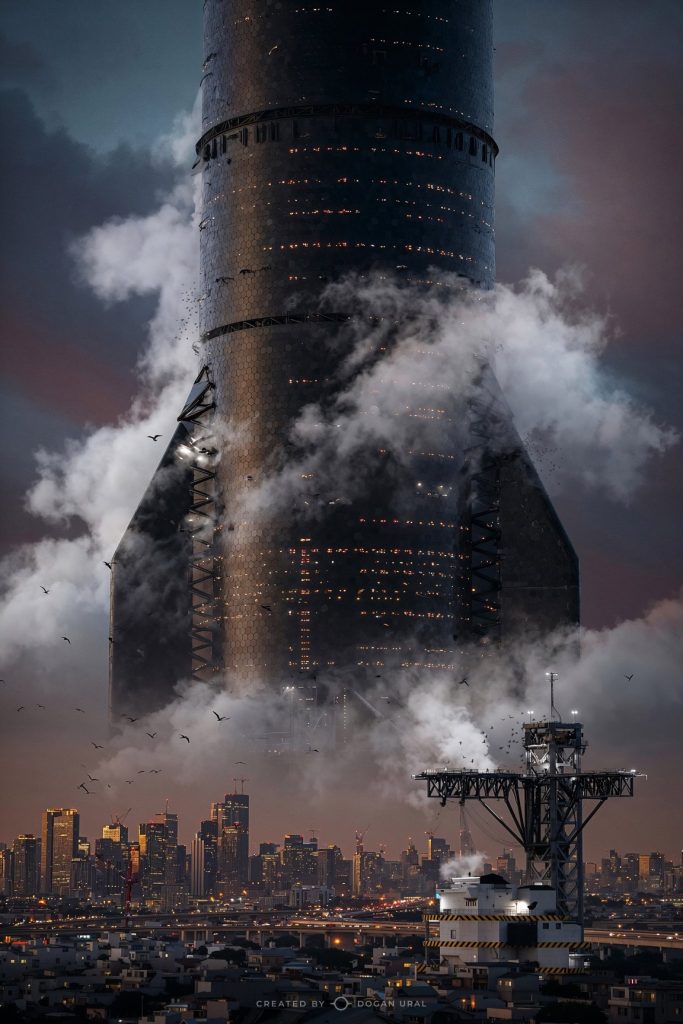

Watch that nighttime procession and you feel it: the same awe our ancestors must have felt seeing the pyramids rise or the first ironclad ships slice through waves. This is civilization-level engineering. The kind that reshapes economies, inspires generations, and expands the reachable frontier. While the world debates small steps and incremental gains, a different mindset builds machines that dwarf cathedrals and carry the promise of new worlds.
The implications stretch far beyond spectacle. Starship’s capacity could unlock routine access to the Moon, enabling permanent bases where resources are harvested and fuel is produced. It opens the path to Mars—not as a flag-and-footprints mission, but as a foothold for self-sustaining cities. Giant machines demand giant thinking: full-flow staged combustion engines, autonomous flight systems, and manufacturing at unprecedented scales. They force us to solve problems once dismissed as science fiction—atmospheric entry at hypersonic speeds, propellant depots in orbit, rapid turnaround between flights.
Critics will always question the cost, the risk, the focus. Yet history shows that the greatest leaps—splitting the atom, reaching the Moon, mapping the human genome—came from those willing to dream audaciously and build accordingly. Visionaries like Elon Musk do not merely iterate on yesterday’s limits; they redefine the possible. They remind us that stagnation is a choice, and expansion is our species’ birthright.
As that steel giant rolls forward in the dark, engines silent but potential roaring, one truth echoes louder than any engine test: humanity is no longer bound to this single world. The machines are here. The vision is alive. The only question left is how far—and how fast—we are willing to go.
The age of giant machines has begun. And the stars have never felt closer.
video and photo: #ElonMusk


