


THE GREED OF THE RICH EMPOWERED THE POOR CRIMINAL WHO NOW DEMANDS THE BILL – AND LULA CARRIES HIS SHARE OF THE BLAME
By Hotspotnews
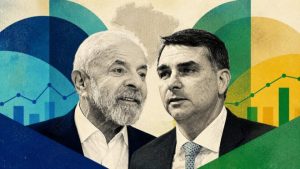
The collapse of Banco Master was not just another bank failure—it marked a perverse power reversal in Brazil. The unchecked greed of bankers and tycoons built a multi-billion-dollar house of cards that has now turned against them, while organized crime—once used as fuel for the scheme—now stands at the door demanding its money back with real threats. At the political center of this storm stands President Lula, linked to the scandal through discreet meetings, million-dollar contracts paid to close allies, and a government that many accuse of turning a blind eye for too long.
Daniel Vorcaro, the bank’s controlling shareholder, constructed an illusion of success: offering CDBs yielding an impossible 140% of the CDI, selling fake credit portfolios worth R$ 12–17 billion to Banco de Brasília (BRB), and using Reag-managed funds to launder money and hide massive losses. The total hole is estimated between R$ 12 billion and figures as high as R$ 50 billion, forcing the Credit Guarantee Fund (FGC) to cover tens of billions for ordinary depositors. Organized crime entered the game lured by sky-high returns and the appearance of legitimacy in the formal financial system. After the Central Bank’s liquidation in November 2025, those same groups now demand restitution—flipping the traditional hierarchy: the white-collar schemer who exploited the system has become hostage to the street-level criminal he once fed.
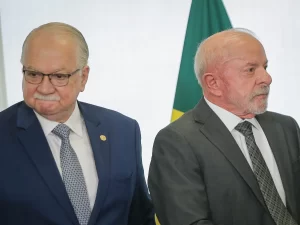
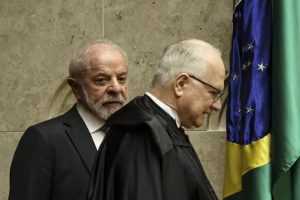
Lula’s responsibility surfaces through several uncomfortable channels. Reports point to an off-schedule meeting between Vorcaro and the president in December 2024, arranged by former Finance Minister Guido Mantega—who was hired by the bank on a monthly salary of roughly R$ 1 million to lobby for its interests, including the attempted sale to BRB. Mantega moved freely around the Planalto Palace, bringing the banker into discussions, reportedly with the endorsement of Senator Jaques Wagner (PT-BA), the government leader in the Senate. Another former minister, Ricardo Lewandowski (ex-Justice), received millions in legal consulting fees from Master after leaving the Supreme Court and before joining the administration.
President Lula has publicly insisted the matter is “technical” and not governmental, stating that “the Master guy pulled off a R$ 40 billion scam” and criticizing attempts to politicize the case. Yet opposition figures and parts of the press see either negligence or complicity: the bank’s explosive growth occurred during Lula’s third term, and individuals very close to the government acted as well-paid lobbyists. The Workers’ Party (PT) has resisted signing onto the broad CPMI (mixed congressional inquiry commission) demanded by the opposition (which already collected hundreds of signatures), instead supporting narrower versions in the Chamber of Deputies—no PT deputy has signed the main request so far, feeding suspicions of protection.
While Bolsonaro-aligned governors such as Cláudio Castro (RJ) appear on lists of public funds invested in Master, the scandal does not spare Lula’s inner circle: former ministers collecting fortunes, discreet high-level meetings, and attempts to rescue the institution through public banks. The greed of the elite opened the door for organized crime to climb the ladder, but political power—including that of the current administration—supplied the oxygen that kept the scheme alive far longer than it should have been.
The poor criminal now collects his lost share with blood-level interest. The rich banker mourns the ruin of his empire. And Brasília, with Lula at the eye of the hurricane, tries to confine the scandal to the courts or the “promiscuous market.” The bill, however, belongs to everyone—and it is far too large to be paid with speeches alone. Brazil watches in shock as layer after layer of rot is exposed.


