



The Hypocrisy of Brazil’s “Democratic” Elite: Felipe Santa Cruz’s Bullet-for-Bolsonaro Rhetoric and the Banco Master Millions
By Hotspotnews
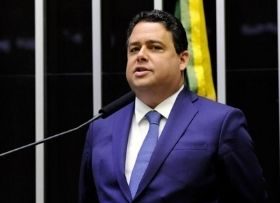
In the theater of Brazilian politics, few performances are more predictable than self-proclaimed guardians of democracy cashing fat checks while calling for their opponents’ heads. Enter Felipe Santa Cruz, former president of the Ordem dos Advogados do Brasil (OAB) and current secretary in Rio de Janeiro’s left-wing government under Mayor Eduardo Paes. In August 2025, as Jair Bolsonaro faced house arrest, Santa Cruz took to social media with venomous glee. He didn’t just criticize the former president—he suggested that in his ideal world, Bolsonaro deserved a “bala na nuca,” a bullet to the nape of the neck, for supposedly betraying democratic principles.
This wasn’t subtle disagreement. It was eliminationist fantasy from a man who once led Brazil’s premier lawyers’ association, the very institution tasked with upholding the rule of law. Santa Cruz positioned himself as a moral authority, a defender of institutions against the “threat” of Bolsonarismo. Yet behind the fiery rhetoric, a more mundane and familiar story was unfolding: large sums of money flowing from troubled financial interests into his law firm’s accounts.
Tax records revealed in 2025 and 2026 show Santa Cruz’s office received approximately R$1.55 million from Banco Master, controlled by businessman Daniel Vorcaro. These were not small consulting fees—two payments of around R$776,000 each. For context, the same bank directed a staggering R$27.5 million to the firm of another former OAB president, Marcus Vinicius Coelho. Vorcaro’s empire soon collapsed under federal investigations for alleged billion-real fraud schemes. The Central Bank liquidated the institution, and Vorcaro himself was arrested in November 2025. Hundreds of millions in total flowed from this troubled bank to various law firms during this period.
The timing is damning. While Santa Cruz was publicly baying for Bolsonaro’s blood and championing institutional purity, his professional network was enriched by a client swimming in legal trouble. Conservatives have long argued that Brazil’s legal-political class operates as a protected cartel: harsh on right-wing populists, remarkably accommodating when money and connections are involved. This case fits the pattern perfectly. A vocal critic of “authoritarianism” apparently had no qualms about substantial payments from a bank under scrutiny for serious financial misconduct.
This is not mere coincidence. It reflects a deeper rot in Brazil’s elite circles, where “defense of democracy” often serves as a lucrative brand. During his time at the OAB, Santa Cruz was already no stranger to controversy, including past accusations of influence peddling in internal elections. Now, as a member of Paes’ administration in Rio, he embodies the revolving door between institutional power, political activism, and private enrichment. Meanwhile, Bolsonaro—despite winning millions of votes and exposing real concerns about judicial overreach and electoral integrity—receives treatment that feels closer to political persecution than impartial justice, culminating in a 27-year sentence many on the right view as lawfare.
The left’s outrage machine never tires when targeting conservatives, yet falls strangely silent when their own are caught in similar webs. Where are the calls for investigations into these payments? Where is the media scrutiny that would blanket any equivalent conservative figure? Instead, we see the usual excuses: “standard legal work,” “no proven illegality,” “context matters.” Context does matter—especially when the same circles that demand Bolsonaro’s head profit handsomely from clients facing their own accountability crises.
Brazil deserves better than this two-tiered system. The public is weary of elites who preach institutionalism by day and navigate lucrative gray zones by night. Felipe Santa Cruz’s episode is a textbook example of why trust in Brazil’s institutions remains fractured. When those who shout loudest about democracy have the most to hide financially, ordinary citizens are right to question whose interests are truly being served.
The revelations about Banco Master are not the end of the story—they are a window into how power really works in Brasília and Rio. True democrats should welcome sunlight on all sides, not just when it burns their political enemies. Until that standard applies evenly, skepticism toward figures like Santa Cruz isn’t cynicism. It’s common sense.


