

The UN’s Financial Meltdown: A Long-Overdue Reckoning for a Bloated, Politicized Bureaucracy
By Hotspotnews
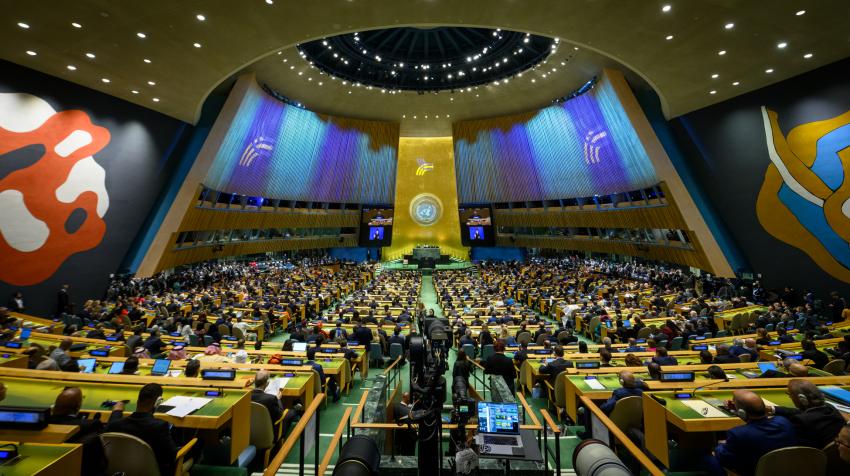
The United Nations is staring down the barrel of financial collapse, and the irony is delicious. In May 2026, UN officials openly admitted the organization teeters on the edge of insolvency because member states—chiefly the United States—refuse to hand over billions in assessed dues. Record arrears exceeding $1.5 billion, a Kafkaesque rule requiring the return of “unspent” funds that were never paid in the first place, and depleted cash reserves have forced hiring freezes, sharp budget cuts, and warnings that operations could grind to a halt by mid-year. Far from a tragedy, this crisis exposes the UN for what it has become: an inefficient, ideologically driven talking shop that prioritizes endless conferences, expansive mandates, and selective outrage over tangible results.
For decades, the UN has operated on an entitlement model. Wealthier nations, particularly the United States (assessed at about 22% of the regular budget), are expected to foot the bill while the General Assembly—where small states and authoritarian regimes hold equal voting power—expands programs, inflates bureaucracy, and pursues agendas often at odds with Western interests. The result? A sprawling system plagued by duplication, waste, and politicization. Administrative overhead consumes a massive share of resources, with personnel costs dominating budgets. Peacekeeping missions drag on for years with questionable outcomes, while agencies churn out reports on climate alarmism, gender initiatives, and human rights critiques that disproportionately target Israel and democratic nations while giving passes to major abusers.
The current crunch didn’t emerge in a vacuum. Chronic late payments and non-payments have plagued the UN for years, but the scale escalated under shifting U.S. policy. The Trump administration has withheld full payments, slashed voluntary contributions, withdrawn from dozens of agencies and programs deemed contrary to American interests, and conditioned remaining funds on real reforms: deeper staff cuts, pension modernization, reduced travel perks, curbs on certain influences, and fewer ineffective missions. Partial payments have trickled in, but the leverage is clear—paying full freight without accountability rewards failure. UN leaders decry this as a threat to “multilateralism,” yet they rarely acknowledge how their own inertia invited the pressure.
Critics have long warned of this trajectory. The UN’s post-WWII structure, designed for a bipolar world, now reflects outdated power dynamics and one-vote egalitarianism that empowers bloc voting by developing nations and autocracies. The Human Rights Council has repeatedly elected serial violators while obsessing over certain democracies. Development and humanitarian arms suffer from fragmentation, with overlapping mandates wasting donor money on bureaucracy rather than delivery. Even self-proclaimed reform efforts like “UN80” amount to modest trims—7-15% budget reductions and a few thousand job cuts—only after liquidity evaporated. These are symptoms of a deeper rot: an organization that grew comfortable with mission creep, weak oversight, and unaccountable expansion.
This isn’t mere fiscal haggling. It’s a philosophical clash. Defenders portray the UN as indispensable for global cooperation, peacekeeping, and aid. In practice, it has failed spectacularly on core mandates—preventing major conflicts, enforcing accountability, or fostering genuine prosperity—while excelling at symbolic gestures and self-perpetuation. Billions spent over eight decades have yielded mixed returns at best: some useful technical work in health or refugees, but overshadowed by scandals, inefficiency, and irrelevance in crises where great-power interests collide.
The celebratory reaction to the UN’s admission of weakness, complete with emojis in social media circles, reflects pent-up frustration among taxpayers weary of subsidizing dysfunction. Withholding funds isn’t isolationism; it’s prudent stewardship. It forces prioritization: cut the waste, streamline overlapping agencies, refocus on verifiable security and humanitarian delivery, and reduce ideological bloat. True reform would demand enforceable payment rules, performance-based budgeting, and a Security Council or governance structure matching 21st-century realities—not endless pleas for more unconditional cash.
The UN’s near-collapse should serve as a wake-up call. Institutions that lose touch with results and accountability eventually face consequences. If the organization adapts through genuine efficiency, transparency, and depoliticization, it may justify continued support. If not, this crisis could mark the beginning of a necessary downsizing—or irrelevance. Either way, the era of blank checks for globalist dreams is ending. Sovereign nations, starting with the largest contributor, are right to demand better. The UN’s survival depends on proving it can deliver value, not just demand deference.