




Trump’s Tariff Leverage and Brazil’s Election Offer a Critical Window to Counter BRICS Dollar Assault
By Hotspotnews
As BRICS nations accelerate their push for local-currency payment systems designed to sidestep the U.S. dollar, the stakes for American economic dominance and national security have never been clearer. At the heart of this challenge sits Brazil, a key emerging power whose leftist government under President Luiz Inácio Lula da Silva has eagerly aligned with China and Russia to erode Washington’s global financial leverage. Yet with Brazil’s presidential election looming in October and President Donald Trump’s proven willingness to wield tariffs as a weapon, conservatives see a narrow but vital opportunity to blunt this threat before it entrenches further.
The BRICS bloc—now expanded and increasingly dominated by Beijing’s agenda—is advancing frameworks to link central bank digital currencies and settle trade directly in national monies like the real, yuan, and ruble. Proponents frame it as “immunity” against Western sanctions, but in practice it represents a deliberate effort to diminish the dollar’s role as the world’s reserve currency. For decades, the greenback’s supremacy has underwritten American prosperity, enforced sanctions on adversaries, and allowed the U.S. to borrow at low costs. Any successful dilution invites higher inflation, reduced U.S. influence, and emboldens regimes that seek to reshape the international order on authoritarian terms.
Brazil under Lula has been an enthusiastic participant. His administration has deepened trade ties with China—now Brazil’s top partner—and endorsed de-dollarization rhetoric that aligns perfectly with Xi Jinping’s long-term strategy. This isn’t harmless multilateralism; it’s a vehicle for adversaries to insulate themselves from accountability while expanding their own clout in Latin America. Lula’s Brazil has hosted BRICS expansion and backed initiatives that critics rightly view as steps toward a parallel financial architecture hostile to U.S. interests.
Enter President Trump. His repeated warnings of steep tariffs—up to 100 percent on nations actively undermining the dollar—have already forced caution among several BRICS members. India’s recent interim trade concessions with Washington demonstrate the power of this approach: facing potential market losses, pragmatic voices in New Delhi dialed back aggressive posturing. Applied consistently to Brazil, Trump’s economic pressure could extract similar restraint. Higher tariffs on Brazilian exports like soy, iron ore, and steel would hit Lula’s political base hard, reminding Brasilia that cozying up to Beijing carries tangible costs. Unlike multilateral talk shops or ineffective diplomacy, Trump’s method delivers immediate leverage rooted in America’s unmatched consumer market.
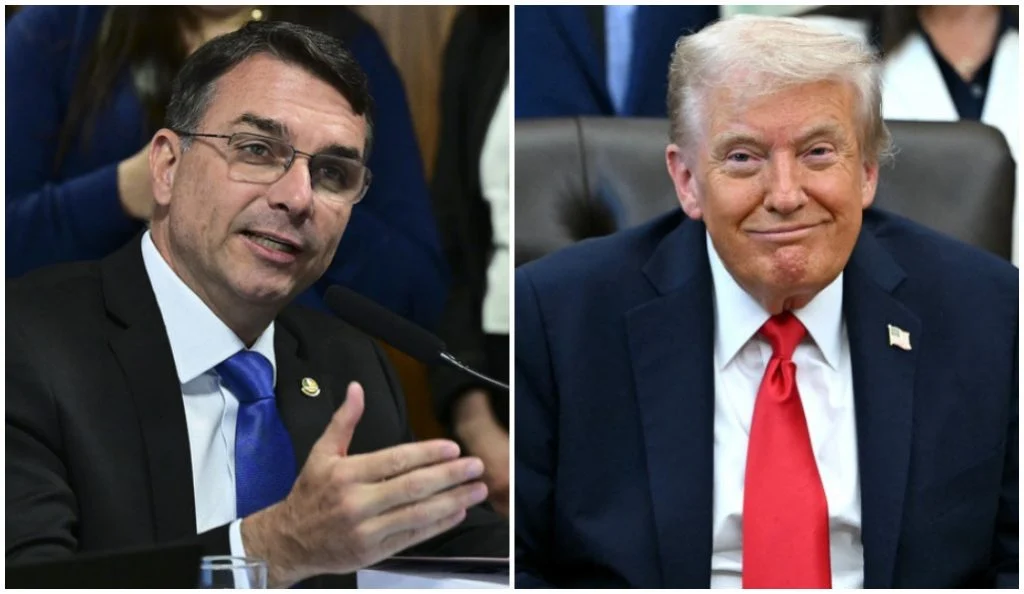
The timing matters enormously. BRICS meetings scheduled for May and September 2026 under Indian chairmanship aim to formalize these payment mechanisms. A new Brazilian government with Flavio Bolsonaro taking office only in January 2027 would inherit any commitments locked in beforehand. This makes the October election pivotal. Senator Flávio Bolsonaro, representing the conservative resurgence against Lula’s socialism, offers voters a chance to reject the drift toward anti-American blocs. A Bolsonaro-led Brazil would likely prioritize sovereignty, stronger U.S. partnerships, and realistic trade policies over ideological experiments that empower Communist China at the expense of Brazilian workers and farmers.
Critics on the left dismiss tariff threats as reckless, but history tells a different story. Trump’s first-term pressure on trading partners delivered renegotiated deals that protected American industries without sparking the predicted global collapse. Economic nationalists understand that preserving dollar dominance isn’t isolationism—it’s prudent stewardship of the system that has lifted billions while anchoring freedom and prosperity. Allowing BRICS to build parallel rails unchallenged would reward the very nations weaponizing economic interdependence against the United States.
Brazil’s choice is stark: continue Lula’s path toward greater entanglement with America’s strategic competitors, or realign with pragmatic conservatism that values bilateral strength with Washington. For U.S. policymakers, the message should be equally clear. Trump has the tools to slow this process and buy time for allies like a potential future Brazilian government to reverse course. Deploying them forcefully isn’t confrontation for its own sake; it is the responsible defense of American primacy against a coordinated challenge. The alternative—passive acceptance of creeping de-dollarization—risks a weaker economy, diminished security, and a more dangerous world. Conservatives rightly demand leadership that puts America first, and in this hemisphere, that starts with holding the line on Brazil.


