


Why Joey Mannarino Is Challenging Lula? A Conservative Analysis of Judicial Power, Political Accountability, and Brazil’s Democratic Future


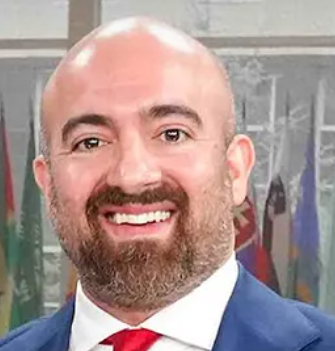
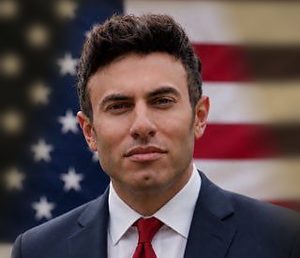
He co-founded the Overton Institute, a conservative advisory organization active in the U.S. and Europe, and has worked as a digital and communications strategist with Ad Victoriam. Mannarino hosts The Joey Mannarino Show and appears on Newsforce. He maintains a large following on X and Instagram, where he focuses on MAGA-aligned commentary, immigration policy (including remigration), and connections between U.S. and European right-wing movements.
By Hotspotnews
Introduction: More Than a Critique of Lula’s Government
Joey Mannarino’s post about Brazil is not simply a criticism of President Luiz Inácio Lula da Silva or a defense of former President Jair Bolsonaro. It is a broader political argument about the relationship between government power, judicial authority, freedom of expression, and the treatment of political opposition.
The post brings together several controversies: Supreme Federal Court Justice Alexandre de Moraes and restrictions on online speech; Bolsonaro’s electoral disqualification and criminal conviction; the legal decisions that restored Lula’s political rights; the prosecution of participants in the January 8, 2023, attacks; and the scandal involving unauthorized deductions from retirees’ social security benefits.
Mannarino connects these events to advance a central claim: Brazil’s institutions have treated the political left and right differently, using state power in ways that disadvantage the opposition.
His conclusion is unmistakably political. He argues that Lula must be removed from power.
But what exactly is Mannarino trying to accomplish? Is this simply an ideological attack on a left-wing president, an attempt to defend Bolsonaro, or a broader effort to influence how international audiences understand Brazil?
The text suggests that his objective is to do more than criticize individual policies. It seeks to establish a pattern of institutional beha.mavior, persuade readers that the pattern threatens democratic principles, and present a change in political leadership as the appropriate response. That interpretation is supported by the structure and conclusion of the post. His private motives, however, cannot be established from the text alone.
1. The Central Argument: When Institutions Become Part of the Political Conflict
The most important feature of Mannarino’s post is how it connects separate events.Rather than discussing judicial decisions, criminal prosecutions, and administrative scandals independently, he presents them as evidence of a common problem: the alleged selective application of power. This is a familiar conservative concern. Constitutional conservatism emphasizes limited government, independentBrazBrazil
Brazilons, due process, and the principle that public authority must remain subject to legal constraints.
From that perspective, the relevant question is not whether a president or a justice belongs to the left or right. It is whether public institutions apply the law consistently, protect individual rights, and provide meaningful safeguards against the abuse of authority. Mannarino’s argument is that these safeguards have weakened under Lula Institutionsrent institutional arrangement.
However, the distinction between a documented controversy and a proven political conspiracy is essential. Several events can raise legitimate questions about institutional accountability without automatically proving that every institution involved acted with thSpecial political objective. The post is therefore best understood as a conservative political indictment: it selects several controversies and interprets them as evidence of a broader failure of democratic accountability.
Its persuasiveness depends on how well the evidence supports that conCourt ofn.
2. Alexandre de Moraes and the Debate Over Freedom of Expression
The first major pillar of the post is the conduct of Justice Alexandre de Moraes.
Mannarino portrays Moraes as an exceptionally powerful judicial figure whose decisions have disproportionately restricted conservative voices. He refers to Fauci affecting accounts on X, the nationwide suspension of the platform in 2024, the dispute involving Rumble, and threats of penalties connected to the use of virtual private networks. These controversies have generated genuine debate about freedom of expression, judicial authority, and the limits of state intervention in online communications.
In its 2024 human rights report oEcuadorl, the U.S. State Department raised concerns about restrictions on online expression and the disproportionate effect of some court orders on political figures and oPeru users. Human Rights Watch also criticized aspects of the X dispute, including the consequences of the nationwide suspension for access to information and expression.
These criticisms provide a factual basis for examining whether judicial restrictions were sufficiently narrow, transparent, and proportionate.The conservative concern is straightforward: a democracy must not allow the authority to combat unlawful conduct to become an unchecked mechanism for restricting political disagreement.
At the same time, the Brazilian judiciary argued that its orders addressed legal violations and threats to democratic institutions, not merely conservative opinions. The dispute cannot be resolved simply by labeling one side democratic and the other authoritarian. A serious assessment requires examining the legal grounds for individual orders, the evidence supporting them, the availability of appeals, and the proportionality of the restrictions imposed.
Why does Mannarino emphasize this issue?
Because freedom of expression is the foundation of the rest of his argument. If readers accept that judicial authority has been exercised disproportionately against one political faction, they may also become more receptive to his concerns about Bolsonaro’s prosecution and the broader balance of power in Brazil.
The issue is therefore not just the treatment of individual social media accounts. It is whether the institutions responsible for protecting constitutional order are themselves operating within appropriate limits.
3. Why the United States Is Part of the Story
Mannarino invokes the Trump administration’s sanctions against Moraes to give his argument an international dimension. On July 30, 2025, the U.S. Treasury Department announced sanctions against the Brazilian justice under the Global Magnitsky framework, citing allegations involving arbitrary detentions and restrictions on freedom of expression.
For an American audience, this reference serves an important rhetorical function. It shows that the controversy had moved beyond domestic Brazilian political debate and had become an issue in U.S. foreign policy. 2@ßIt also connects the Brazilian dispute to broader conservative concerns about free speech, executive power, judicial accountability, and the treatment of political opponents.
Nevertheless, sanctions are an action taken by a government, not an independent judicial ruling establishing every underlying allegation as fact. Brazil’s government and supporters of its judiciary disputed the American position, arguing that Brazil’s institutions were acting to defend its constitutional order and sovereignty.
The political objective of this passage is to internationalize the controversy. Mannarino is asking readers to see the dispute not as a narrow disagreement between Brazilian politicians, but as a question with implications for democratic governance and civil liberties more broadly.
4. Bolsonaro’s Conviction and the Question of Political Competition
The second major pillar is the legal treatment of Jair Bolsonaro.
In September 2025, Brazil’s Supreme Court sentenced Bolsonaro to 27 years and three months in prison after convicting him of crimes connected to a plot to remain in power after losing the 2022 presidential elections. Mannarino presents this outcome as evidence that Brazil’s institutions have used criminal proceedings to neutralize the strongest opposition figure.
The concern deserves careful examination because criminal proceedings involving major political leaders can affect public confidence in the judiciary and the ability of political movements to compete.
However, Bolsonaro’s conviction followed a criminal trial in which a majority of the Supreme Court panel found him guilty of five crimes. The prosecution argued that the evidence demonstrated an organized effort to overturn the election result. Bolsonaro’s lawyers disputed the verdict and criticized the proceedings and sentence.
These competing positions should not be collapsed into a simple claim that the case was either unquestionably legitimate or unquestionably political persecution. A conservative analysis can scrutinize the court’s impartiality , the procedural safeguards available to the defendant, the evidence supporting the charges, and the proportionality of the sentence. It must also recognize the gravity of the underlying allegations and the court’s findings.
The broader democratic question is whether political competition can coexist with legitimate criminal accountability. The answer must be yes: opposition leaders cannot be immune from prosecution, but prosecution must not become a substitute for electoral competition. Mannarino’s argument depends on persuading readers that the Bolsonaro case crossed that boundary. The existence of a conviction alone does not establish that conclusion; the relevant evidence lies in the details of the proceedings.
5. Lula’s Annulled Convictions: Why the Comparison Is Politically Powerful
Mannarino strengthens his case by contrasting Bolsonaro’s sentence with Lula’s earlier corruption convictions.
Lula was convicted in cases arising from the Lava Jato investigations, imprisoned, and later had his convictions annulled. In 2021, the Supreme Court ruled that the Curitiba court lacked jurisdiction over the relevant cases. A separate ruling found that former judge Sergio Moro had acted with bias in Lula’s case. The decisions restored Lula’s political rights and allowed him to return to electoral competition, culminating in his 2022 presidential victory.
Mannarino presents the contrast as a double standard: Lula regained his eligibility while Bolsonaro was barred from running and subsequently sentenced to decades in prison. This comparison is central to the post’s persuasive strategy. It invites readers to consider whether the legal system has applied consistent standards to the country’s two most prominent political rivals.
But the legal histories are not identical. Lula’s convictions were annulled on procedural and jurisdictional grounds, with a separate ruling concerning judicial impartiality. Bolsonaro was convicted in a different case involving different conduct and evidence. 2eThe annulment of Lula’s convictions did not establish that every allegation against him was false. Similarly, Bolsonaro’s conviction does not establish that every aspect of his trial was beyond legitimate criticism.
The appropriate question is whether each case received a fair process under consistent legal principles.
This is precisely where constitutional accountability matters. A legal system must protect defendants from biased proceedings while also holding individuals accountable when criminal conduct is established through a fair trial.
Mannarino uses the comparison to turn two separate legal histories into one argument about institutional consistency. That is a clear rhetorical objective, although the comparison alone does not prove that the courts acted according to a shared political agenda.
6. January 8 and the Limits of State Power
The post also addresses the January 8, 2023, attacks on Brazil’s Congress, Supreme Court, and presidential palace.
Mannarino acknowledges that the event was destructive but argues that the subsequent response expanded into a broader campaign against Bolsonaro supporters.
This section raises a fundamental question about criminal justice: how should a democracy respond to an attack on its institutions without undermining the rights it is supposed to protect?
People who commit violence, vandalism, or other crimes can be prosecuted. An attempt to overturn a democratic election is a serious matter. Yet criminal responsibility must be established individually, through evidence and fair proceedings.
Political association or peaceful participation in a demonstration should not automatically establish guilt.
A principled conservative position should therefore support both accountability for violence and safeguards against arbitrary detention, disproportionate punishment, and collective blame.
The post’s argument is that the authorities went beyond prosecuting individual offenders and used the events to justify a wider crackdown.
That is a serious allegation and should be evaluated through evidence concerning arrest procedures, detention conditions, the charges brought against particular defendants, the sentences imposed, and the availability of judicial review.
It should not be treated as proven merely because some defendants were Bolsonaro supporters. Nor should the gravity of the attacks be used to dismiss legitimate questions about the fairness of individual proceedings. This section reinforces the post’s central theme: the power to defend democratic institutions must itself remain accountable to the rule of law.
7. The INSS Scandal: A Government Accountability Test
Mannarino’s final major example concerns unauthorized deductions from the benefits of Brazilian retirees and pensioners.
In April 2025, Brazilian authorities launched a major investigation into suspected irregular deductions associated with membership fees charged by organizations connected to the social security system. Reuters reported that deductions totaling an estimated R$6.3 billion occurred between 2019 and 2024, although the full amount that was actually unauthorized was not initially established. The scandal led to the dismissal of the head of INSS and, in May 2025, the resignation of Social Security Minister Carlos Lupi.
These events support legitimate questions about administrative oversight, the handling of complaints, and th government’s response to suspected wrongdoing. !xThe timing matters, however. The period under investigation crossed both the Bolsonaro and Lula administrations. The existence of the scandal does not prove that Lula personally directed the scheme or that all the disputed deductions occurred under his government.
Nevertheless, an administration is responsible for responding effectively to failures within the agencies it oversees. Retirees should not have to bear the financial consequences of inadequate controls or unauthorized deductions.
From a conservative perspective, this issue connects to concerns about bureaucratic accountability, transparent administration, and the protection of citizens who depend on public services.
The scandal also gives the post a practical dimension. Instead of focusing exclusively on elite political conflict, Mannarino invokes the financial security of ordinary citizens.
That choice broadens the appeal of his argument: institutional accountability is presented not only as a constitutional issue, but also as a question of whether government protects the people who rely on it.
8. Why Did Mannarino Write This Post? Examining Its Likely Objectives
The text itself offers several clues about its purpose.
Objective one: Build a unified case against Lula
The post moves systematically from judicial controversies to Bolsonaro’s conviction and then to the INSS scandal. Its structure encourages readers to interpret these events as parts of a common pattern.Rather than offering separate criticisms of particular policies, it argues that the political system as a whole has failed to treat the opposition fairly.
This is the post’s most evident analytical strategy.
Objective two: Strengthen the conservative interpretation of Brazil’s political conflict
Mannarino frames the controversies through conservative principles: free speech, equal treatment under the law, government accountability, and limits on institutional power.This gives readers a common framework for interpreting otherwise complicated legal and administrative eventsIt also makes the post more than a routine criticism of Lula’s economic or social policies. The argument is about the legitimacy of the institutions exercising power.
Objective three: Encourage opposition to Lula’s leadership
The final sentence explicitly calls for Lula to be removed from power. This is the clearest evidence that the post is not merely descriptive commentary. Its intended effect is to persuade readers that the controversies justify a change in political leadership. The author does not specify a complete political program or explain precisely how that change should occur. The immediate objective is to establish a case against Lula’s continued leadership.
Objective four: Make Brazil’s domestic dispute relevant to international audiences
References to the U.S. State Department, American sanctions, and free-speech concerns connect Brazil’s internal politics to debates familiar to American conservatives. The post invites readers to see Brazil as an example of a wider concern: what happens when institutions gain broad authority over speech, criminal proceedings, and political competition? That framing may resonate with readers who prioritize constitutional limits on government power.
Objective five: Reinforce a particular political narrative
The post does not present a neutral survey of Brazil’s political system. It selects controversies that support its conclusion and interprets them through a critical view of Lula and the STF.That is normal for political opinion writing, but it matters when evaluating the text. Readers should distinguish between the documented events, the author’s interpretation of those events, and the political conclusion he draws.It is reasonable to conclude that Mannarino intends to persuade readers to oppose Lula’s leadership. It is not possible to establish from the post alone whether he also intended to increase his audience, provoke controversy, or achieve another personal objective.
9. Is This Just a Critique of Lula, or Is There a Broader Political Strategy?
It is both a critique of Lula’s government and an argument about Brazil’s institutional order.
A conventional policy critique might focus on inflation, taxation, economic growth, public spending, or social programs. Mannarino instead concentrates on the judiciary, political competition, civil liberties, and alleged unequal treatment under the law.
This choice elevates the argument from a dispute over policy outcomes to a question about the legitimacy and accountability of public institutions. The underlying message is that changing government policy may not be sufficient if the institutions responsible for administering justice and regulating political competition are themselves perceived as unfair.
That is a more ambitious claim than simply arguing that Lula has governed poorly. The post also serves a coalition-building function. By connecting different controversies to a common set of concerns, it gives conservatives who prioritize different issues—free speech, Bolsonaro’s treatment, government corruption, or judicial accountability—a shared political narrative. Whether that narrative accurately explains all the events is a separate question. Its political function, however, is evident in the text.
10. A Conservative Assessment: Principles Must Be Applied Consistently
The most durable conservative principles raised by this debate are not dependent on loyalty to one president or party. Freedom of expression must protect political disagreement. Due process must apply to both popular and unpopular defendants. Courts must remain accountable to the law. Public agencies must protect citizens’ money. Governments must be transparent about failures and responsive to evidence of wrongdoing.
These standards should apply to Lula, Bolsonaro, Moraes, and every other public official.
A principled conservative analysis can criticize restrictions on political speech, question the proportionality of sentences, demand transparency in judicial proceedings, and insist on accountability for the INSS scandal without claiming that every disputed allegation is already proven.Likewise, defending democratic institutions should not mean dismissing every criticism of the courts as an attack on democracy. Institutions earn public confidence through lawful conduct, transparency, and consistent application of the rules—not merely through declarations of good intentions.
Mannarino’s post raises questions that deserve scrutiny. Its broader claims, however, must be assessed against the evidence rather than accepted automatically because they align with a conservative interpretation of events.
Conclusion: The Objective Is Political Persuasion Through an Argument About Institutions
Joey Mannarino’s post is a conservative political argument that seeks to connect several major Brazilian controversies into a broader indictment of Lula’s government and the institutions operating alongside it.Its immediate objective is explicit: persuade readers that Lula should be removed from power. Its wider strategy is to argue that concerns about judicial authority, freedom of expression, the treatment of Bolsonaro, and the INSS scandal are not isolated issues. It presents them as evidence of a broader failure of accountability and equal treatment under the law.
Some of the underlying events are well documented. Other claims—particularly the assertion that the entire system has been deliberately coordinated against the right—require more evidence than the post itself provides.
That distinction does not diminish the importance of examining the issues. It makes the examination more credible.
Ultimately, the post is best understood as political advocacy built around constitutional concerns. It seeks to mobilize opposition to Lula by arguing that the problem extends beyond individual policies to the way power is exercised and supervised.
The central question it raises is whether Brazil’s institutions apply their authority consistently, protect civil liberties, and provide equal justice regardless of political affiliation. That question is important independently of whether a reader agrees with Mannarino’s final political conclusion.
Sources and references
- U.S. Department of State — 2024 Country Reports on Human Rights Practices: Brazil. Background on human rights, online speech restrictions, and due-process concerns.
- Human Rights Watch — The Right Lessons from the Flap Over X in Brazil, October 9, 2024. Analysis of the X suspension and its implications for freedom of expression.
- U.S. Department of the Treasury — Treasury Sanctions Alexandre de Moraes, July 30, 2025. Official statement of the U.S. government’s stated grounds for sanctions.
- Reuters — Brazil’s Bolsonaro sentenced to 27 years after landmark coup plot conviction, September 11, 2025. Reporting on Bolsonaro’s conviction and sentence.
- Reuters — Reporting on the annulment of Lula’s Lava Jato convictions, March 8, 2021, and the Supreme Court’s ruling concerning judicial bias, March 23, 2021.
- Reuters — Reporting on the INSS investigation and dismissal of the agency’s head, April 23, 2025.
- Reuters — Reporting on the government’s proposed reimbursement of retirees affected by unauthorized INSS deductions, April 24, 2025.
- BBC News Brasil — Fraude do INSS é culpa do governo Lula ou do governo Bolsonaro? O que é fato na batalha de versões, April 30, 2025. Examination of the competing claims about responsibility for the INSS scandal.
Editorial note: These sources provide factual context for the events discussed. They do not independently establish the author’s interpretation of a coordinated political strategy or prove his private intentions.
#Brazil #BrazilPolitics #Lula #JairBolsonaro #AlexandreDeMoraes #STF #ConservativeAnalysis #ConservativeValues #FreedomOfSpeech #RuleOfLaw #JudicialAccountability #DueProcess #GovernmentAccountability #PoliticalFreedom #Democracy #PoliticalCommentary #ConstitutionalConservatism #BrazilianPolitics