




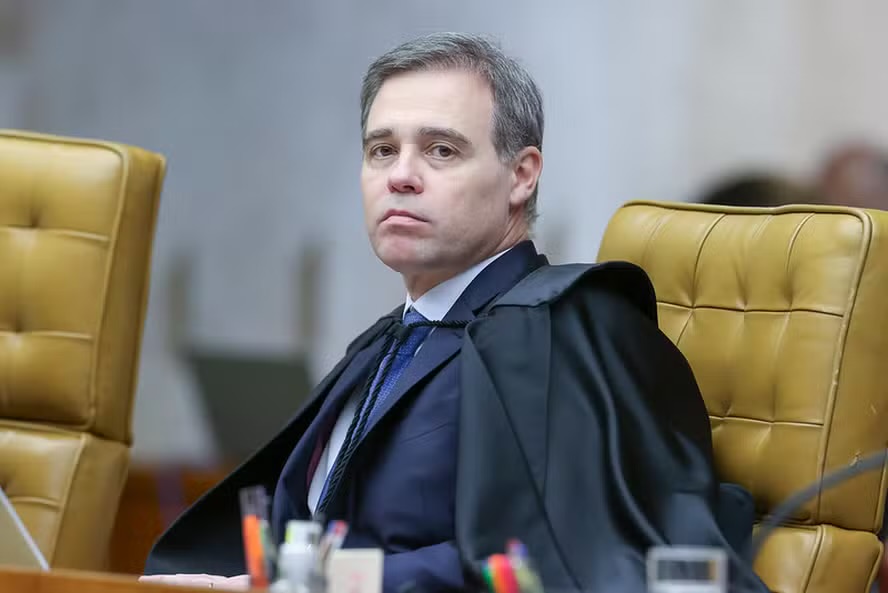
A Divine Intervention: How Justice is Finally Dawning in Brazil Through André Mendonça
By Hotspotnews
In the labyrinth of Brazilian politics, where power often eclipses principle, a quiet revolution is unfolding within the hallowed halls of the Supreme Federal Court (STF). For too long, the court has been perceived as a shield for the powerful, bending to the whims of administrations and insulating allies from accountability. But recent fractures within the STF—marked by internal divisions and a loss of its once-unified front—are cracking open the door to genuine justice. At the heart of this shift stands Justice André Mendonça, a man whose steadfast independence feels nothing short of God-sent, offering Brazil a rare opportunity to reclaim the rule of law from the clutches of cronyism.
The STF’s internal crisis, exacerbated by scandals like the Banco Master investigation, has exposed the fragility of a system that once operated as a seamless extension of executive influence. Under previous alignments, particularly during the Lula administration’s tenure, the court often resolved matters in ways that favored the government, quelling probes before they could unearth uncomfortable truths. Ministers, bound by invisible threads of loyalty and political expediency, prioritized stability over scrutiny. Yet, as distrust simmers among the justices—fueled by suspicions that even the president has abandoned his protective role—the court’s ability to “fix” problems for the elite has evaporated. This disarray, far from being a weakness, is a blessing in disguise. It disrupts the status quo, forcing cases to proceed on merit rather than manipulation.
Enter André Mendonça, the Bolsonaro-appointed justice who has emerged as an unyielding force in this drama. Taking the reins as rapporteur in the Banco Master probe—a sprawling inquiry into money laundering, illicit financing, and ties to influential figures—Mendonça has refused to play the game of deference. Unlike predecessors who might have imposed restrictions to contain the fallout, he has greenlit the Federal Police’s resumption of investigations, granting them the autonomy to follow leads without undue interference. His decisions to share evidence across related probes and lift prior barriers signal a commitment to transparency that has sent shockwaves through Brasília. Politicians accustomed to impunity now face the uncomfortable glare of accountability, and the Centrão’s grip loosens as Mendonça stands firm against pressures from figures like Senate President Davi Alcolumbre, who once opposed his very nomination.
From a conservative vantage, Mendonça’s role is providential. Appointed amid controversy, he embodies the values of integrity, faith, and moral clarity that Brazil desperately needs. In a nation scarred by corruption scandals—from Mensalão to Lava Jato—his evangelical background and principled conservatism serve as a moral compass, guiding the judiciary away from partisan pitfalls. He is not swayed by the allure of alliances or the threats of political retribution; instead, he upholds the Constitution as a sacred duty. This is no accident of history—it is divine orchestration, placing a man of conviction at the helm when the republic teeters on the edge of ethical collapse. Mendonça’s independence revives the conservative ideal that justice must be blind, not beholden to the left-leaning establishment that has dominated the narrative for decades.
This moment offers Brazil a pivotal chance to witness true justice. As the STF’s cohesion crumbles, it inadvertently levels the playing field, allowing investigations like Banco Master to advance without the heavy hand of favoritism. No longer can the powerful rely on judicial acrobatics to evade scrutiny; the fractures force a reckoning. For conservatives, this is a vindication: proof that appointing judges based on character, not ideology alone, can restore balance. It challenges the notion that the court should act as a governmental troubleshooter, reminding us that its true purpose is to safeguard democracy through impartiality.
Yet, this opportunity is fragile. If Brazil seizes it, embracing Mendonça’s example, we could see a judiciary reborn—one that prioritizes the people over the privileged. The scandals plaguing the current administration underscore the urgency: without such interventions, corruption festers, eroding public trust and national progress. Mendonça, as God’s instrument in this arena, inspires hope that justice isn’t just a distant dream but a tangible reality emerging from the chaos.
In the end, Brazil stands at a crossroads. Will we allow this divine spark to ignite lasting reform, or squander it in the name of short-term political expediency? The answer lies in supporting figures like Mendonça, who remind us that true conservatism isn’t about power—it’s about principle. Let this be the dawn of a just Brazil, where the law reigns supreme.


