




The Interlocking Cases: A False U.S. Entry Record, a Brazilian Police Delegate, a Deputy’s Speech, and Parallel Proceedings in Brasília and Orlando
A False U.S. Entry Record connects Filipe Martins and Van Hatten as defendants
By Hotspotnews
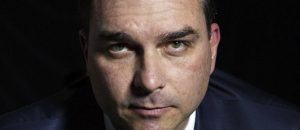
That contested record became part of the factual basis for a preventive detention request. Federal Police Delegate Fábio Alvarez Shor signed materials in early 2024 that treated the Orlando entry as indicative of flight risk. Alexandre de Moraes of the Supreme Federal Court ordered Martins detained in February 2024. He remained in custody for roughly six months before release in August 2024. Shor later testified that the alleged trip was not the sole foundation for the request; he described a broader “contextualization of evidence” and noted other elements concerning Martins’ location and conduct. Mauro Cid, a former aide, acknowledged that Martins’ name had appeared on a provisional passenger list for the presidential flight but that Martins had not boarded.
The episode sits inside larger investigations into events after the 2022 election, including the acts of 8 January 2023 and the so-called “trama golpista.” Shor, a specialist in counterintelligence, had a central role in several of those inquiries. He collected statements in the Mauro Cid collaboration, participated in work on the Saudi jewels case and the vaccination-card matter, and later headed a division within the Federal Police’s intelligence directorate. In March 2026 he was appointed an adviser to Moraes’ chambers at the Supreme Federal Court, a commission-level post supporting the justice’s criminal docket.
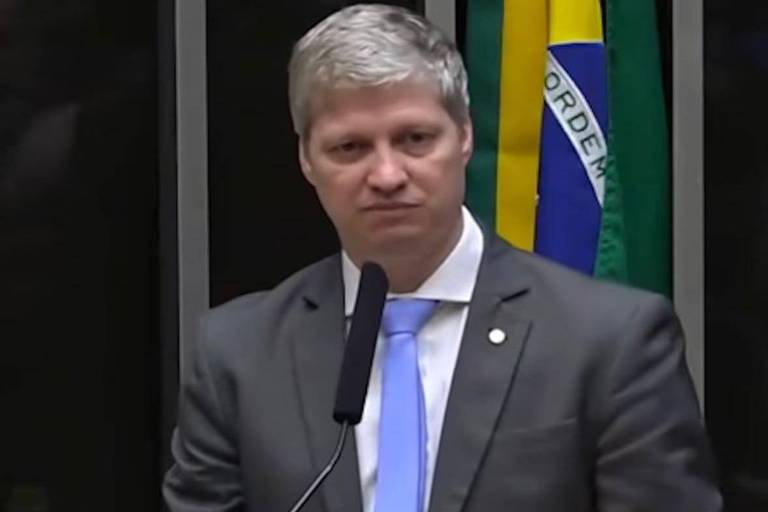
In August 2024, while Martins was still detained or shortly after his release, federal deputy Marcel van Hattem rose in the Chamber of Deputies. He displayed a photograph of Shor and stated that the delegate had produced “relatórios absolutamente fraudulentos contra pessoas inocentes, inclusive contra Filipe Martins.” He described Shor as an “abusador de autoridade” and said the officer had acted like a bandit. Additional remarks followed in later sessions and were shared online. The Federal Police opened an inquiry. In 2026 the Prosecutor-General’s Office filed a criminal complaint charging van Hattem with calúnia and injúria. The case reached the First Panel of the Supreme Federal Court under Justice Flávio Dino. On 20 November 2026 Dino voted to accept the complaint, which would place van Hattem in the status of defendant if the majority follows. The defense invokes Article 53 of the Constitution, which grants parliamentary inviolability for opinions, words, and votes. Prosecutors and the relator argue that the statements crossed into unprotected criminal accusations against a named public servant and were amplified outside the chamber. The Federal Council of the Brazilian Bar Association requested that the virtual judgment be converted to an in-person session.
Parallel to these Brazilian proceedings is a Freedom of Information Act action in the United States. In January 2025 Martins filed Martins Pereira v. United States Department of Homeland Security et al., Case No. 6:25-cv-00104, in the U.S. District Court for the Middle District of Florida, Orlando Division, before Judge Gregory A. Presnell. The suit seeks internal DHS and CBP documents and communications concerning the creation of the false entry record. At a March 2026 hearing, Presnell treated the record as false, noted that the U.S. government acknowledged both its falsity and its gravity, and stated that the person harmed by it has a right to know how the entry was made and who caused it. He ordered expanded searches of internal materials. Summary-judgment briefing concluded in late October 2026. As of mid-November 2026 the case remained active, with Martins’ Brazilian counsel stating that a decision capable of authorizing disclosure of names and related materials was expected in the near term. The defense has said it already knows the identities of those involved and certain internal messages but is constrained from public release while the litigation is pending. Public reports have not confirmed that Shor or any other specific Brazilian official appears among those names.
The threads connect at the use of the contested U.S. record. Shor’s materials cited it in support of a flight-risk finding that underpinned months of detention. Van Hattem’s chamber speech treated that reliance, and other aspects of Shor’s reporting, as evidence of fraudulent conduct. The resulting complaint against the deputy now tests the boundary of parliamentary immunity before the same court that oversaw the original investigations. The Florida FOIA case is the only formal U.S. proceeding examining the origin of the false entry itself. Any disclosure of names would remain a product of civil FOIA litigation; it would not constitute a criminal finding. It could, however, supply new factual material for Brazilian challenges to the earlier detention decision and to the reliability of reports that relied on the record. Shor’s subsequent appointment as an adviser in Moraes’ chambers places him inside the institution whose proceedings are directly implicated by the same facts.
Martins was later convicted by the First Panel in the broader “coup-plot” case and sentenced to more than twenty years; that conviction rests on other evidence and is distinct from the preventive detention that used the Orlando record. The Florida action does not adjudicate guilt or innocence in Brazil. What it can clarify is the provenance of a single piece of U.S. government data that Brazilian authorities treated as significant for a period of months. Whether Brazilian officials participated in the creation or transmission of that data remains an open question that the Orlando proceedings are structured to illuminate. Until any names are unsealed or further evidence is produced, the precise role of any individual Brazilian actor stays unconfirmed in the public record. The overlapping timelines—Shor’s reports, Martins’ detention and release, van Hattem’s speeches, the U.S. judicial scrutiny, and Shor’s later institutional role—nonetheless form a single chain of events that continues to shape both criminal proceedings in Brasília and a transparency action in Florida.
Here are the principal sources that underpin the facts in the article, followed by suggested hashtags.
sources
- Flávio Dino’s vote accepting the complaint against Marcel van Hattem (20 November 2026).
- Background of the PGR complaint and the August 2024 Chamber speech.
- Judge Gregory A. Presnell’s statements that the CBP entry was false and that Martins has a right to know its origin (March 2026 hearing transcript, made public later).
- Status of the FOIA case Martins Pereira v. DHS et al., 6:25-cv-00104 (Middle District of Florida, Orlando Division) and the expectation of imminent disclosure.
- Official CBP confirmation that Martins did not enter the United States on 30 December 2022 and condemnation of any misuse of the false record.
- Defense statements that the names of those involved in the false record are already known but remain sealed.
- Fábio Alvarez Shor’s appointment as adviser to Justice Alexandre de Moraes (March 2026).
- Shor’s testimony that the alleged Orlando entry was not the sole basis for the detention request.
- Earlier reporting linking the false CBP record to Martins’ preventive detention and U.S. involvement.
#FilipeMartins #FabioShor #MarcelVanHattem #STF #ImunidadeParlamentar #CBP #FloridaFOIA #TramaGolpista #AlexandreDeMoraes #FlavioDino #RegistroFalso #PoliciaFederal #Orlando #MiddleDistrictFlorida #JusticaBrasileira #USBrazil #Bolsonaro #8deJaneiro


