



Access for Hire at the Supreme Court
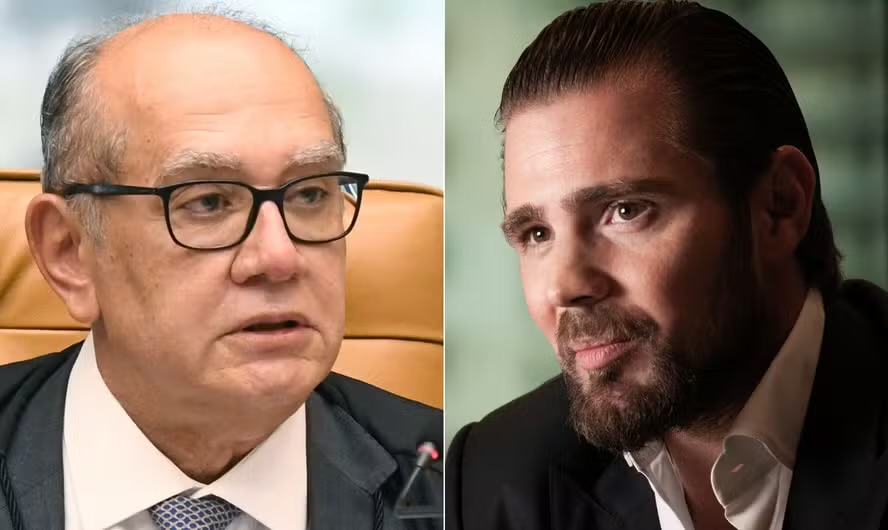
Daniel Vorcaro did not need a secret dinner to reach Gilmar Mendes. He needed a family door.
In April 2024 the then-controller of Banco Master sat in the minister’s office at the Supreme Federal Court. The subject was not abstract doctrine. It was a cluster of lawsuits by sugar-alcohol mills against the Union over old price controls. Those mills had generated court-ordered debts — precatórios — that Master held in bulk. If the Court narrowed or reopened the claims, the paper on Master’s books would shrink. If the mills prevailed across the sector, the bill to the public purse has been estimated in the range of R$ 145 billion. That is the real scale of the meeting: not a courtesy call, a balance-sheet event.
The path to the room mattered as much as the room. Francisco Feitosa, known as Chiquinho, was then Gilmar Mendes’s brother-in-law. He also held a contract on the order of R$ 500,000 a month with Vorcaro’s group and worked Brasília as an interlocutor. Messages later recovered from Vorcaro’s phone show Feitosa urging a “direct relationship” with the minister and helping lock the appointment. Gilmar’s account is that the audience was institutional, held at the Court with Master’s lawyers present, and that he did not know of his then-relative’s private contract. Those two statements can both be true and still leave the ethical problem intact. A justice does not have to pocket the fee for the fee to buy the calendar.
What happened after the meeting is the part the outrage machine usually drops. When the concrete cases were judged, Gilmar voted against the thesis Master needed. He was not alone in that minority; André Mendonça voted the same way on the leading mill case and they lost. Access was obtained. The vote was not. That is not exoneration. It is a narrower, more serious finding: the Court can be approached through family and retainers even when the approached justice later rules the other way. Influence and outcome are not the same thing. Both are newsworthy.
Vorcaro did not stop at one chambers. In March 2025 he met Mendonça at the minister’s institute in São Paulo, before Mendonça became rapporteur of the Master liquidation case. Mendonça has said it happened once, that he listened, and that the topic was a precatório stay already under deliberation. The settings differ — STF office versus private institute — and the later roles differ. The pattern does not. A banker with a collapsing book of public credits kept finding ministers in the months when those credits, and then the bank itself, were moving through the Court.
That pattern is why the demand that Gilmar “declare himself suspect” is politically easy and legally incomplete. Brazilian recusal rules turn on impediment and suspicion: a direct interest, a family stake, a reason to doubt impartiality. A meeting with a litigant, arranged by a relative on that litigant’s payroll, is enough to raise the question. It is not, by itself, a verdict. The same Court has treated similar contacts unevenly. One minister recuses. Another issues a note. A third attacks the investigation. If suspicion is a principle, it cannot be a weapon used only against the justice one already dislikes. The honest article asks whether the standard is the meeting, the family contract, the later vote, or the political utility of the target.
The public should care less about the nickname “paladin of justice” and more about the asset. Precatórios are not a private hobby. They are claims on taxes already collected or still to be collected. A bank that warehouses those claims has a reason to sit in a minister’s office. A relative on a six-figure monthly retainer has a reason to get him there.
The Court now wants this treated as a closed courtesy. It is not. A man whose bank lived off public debts bought a monthly line to a minister’s family and used it to walk into the Court. The justice says he did not know. The vote later went the other way. Neither fact restores the distance that was sold. If the Supreme Court cannot say, in public and in the same language for every robe, that this kind of corridor is forbidden — not regrettable, not “institutional,” forbidden — then the public is not watching a tribunal. It is watching a market with better furniture. The robes can argue about who must step aside. The country is entitled to an answer first: how many more family contracts does it take before the highest court admits the door was never locked?
Sources
Primary reporting
• Mônica Bergamo, Folha de S. Paulo — “Vorcaro se reuniu com Gilmar Mendes no STF e pediu apoio em causa bilionária” (17 Sept 2026). Meeting date 11 April 2024; Feitosa as intermediary; R$ 500k/month contract; Master’s precatório book; AGU figure up to R$ 145 billion.
• Teo Cury, CNN Brasil — “Vorcaro procurou Gilmar por apoio a pauta bilionária; ministro votou contra” (18 Sept 2026). CNN confirmation; Gilmar’s note that the audience was at the STF with Master lawyers; later votes against Master.
• Metrópoles — “Vorcaro esteve com Gilmar, quis apoio em causa bilionária e foi contrariado” (17–18 Sept 2026). Messages scheduling the slot; Feitosa advice to build a “direct relationship.”
• CBN — “Vorcaro se reuniu com Gilmar Mendes em gabinete de ministro do STF, mostram mensagens obtidas pela PF” (18 Sept 2026). PF phone messages; ~15-minute meeting; Destilaria Alcídia vote split.
• VEJA — “Gilmar reconhece reunião com Vorcaro, mas votou contra Master” (18 Sept 2026). Gilmar’s statement: institutional setting; same line in other sugar-sector cases; no knowledge of Feitosa–Vorcaro dealings.
• Folha — “Vorcaro contratou ex-cunhado de Gilmar Mendes…” (17–18 Sept 2026). Feitosa contract and education-lobby track.
• Estadão — Feitosa/Master messages and the separate Mendonça meeting thread.
• G1 / Estadão / BBC Brasil / O Tempo — André Mendonça confirms one meeting with Vorcaro in March 2025 at his São Paulo institute, before he became Master rapporteur; subject described as STP 976 (precatórios).
What each source actually establishes
• Meeting happened: Folha, CNN, CBN, VEJA, Metrópoles, Gilmar’s own note.
• Intermediary + contract: Folha, Metrópoles, Estadão.
• Gilmar voted against Master on the mill cases: CNN, VEJA, Revista Fórum, O Tempo.
• Second meeting (Mendonça): minister’s own confirmation, March 2025.
#STF #GilmarMendes #DanielVorcaro #BancoMaster #Precatórios