




Accountability at the Top of Brazil’s Prosecution Service Cannot Be Optional
By Hotspotnews
Brazil’s Procurador-Geral da República occupies one of the most powerful posts in the republic. The office decides what the federal prosecution service pursues, how it pursues it, and whether powerful defendants receive the same treatment as ordinary citizens. When the person holding that office appears in messages connected to a billion-real banking scandal, the public is entitled to more than a shrug and a denial.
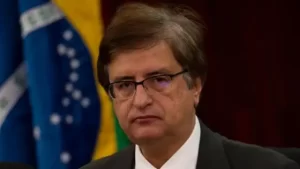
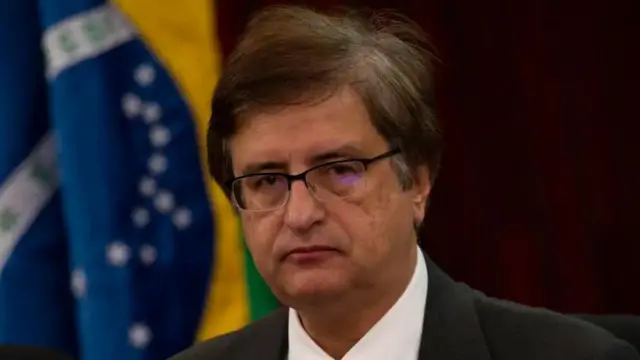
That is the situation facing Paulo Gonet. A police report produced in the Banco Master investigation contains references to the PGR in communications involving Daniel Vorcaro, the former banker now at the center of Operation Compliance Zero. Those references prompted opposition lawmakers to ask the Conselho Superior do Ministério Público Federal to examine whether Gonet’s impartiality is compromised. The council opened an internal procedure and scheduled a session for 25 September.
Gonet has responded that he has no friendship with Vorcaro, that their only in-person meeting was a brief public encounter in London in 2024, and that a short telephone contact was arranged by a lawyer. He insists he remains fully able to act without inhibition in the Master-related cases.
Those explanations may prove sufficient. They may not. What matters is that they are now being tested inside the institution Gonet himself leads. An internal review of the country’s top prosecutor is not a routine personnel matter. It is a test of whether the Ministério Público Federal will apply the same standards of independence it demands of everyone else.
Conservative Brazilians have long argued that institutions lose legitimacy when they appear to protect their own. The PGR is appointed by the president and confirmed by the Senate. That political origin already creates an appearance problem. When the same official is then named in messages tied to a high-profile financial investigation, the appearance problem grows. The proper response is not to denounce every critic as an enemy of the republic. The proper response is a transparent examination of the facts and, if necessary, recusal or replacement.
The Conselho Superior’s decision to take the matter up is itself significant. It shows that at least some members of the prosecution service believe the questions cannot be dismissed out of hand. That is how institutions are supposed to work. Whether the session produces a serious inquiry or a quiet burial will tell the public a great deal about the current state of the MPF.
Brazilians who value limited government and equal application of the law should watch the 25 September meeting closely. The issue is not one politician’s reputation. It is whether the country’s chief prosecutor can credibly investigate cases in which his own name has already appeared. If the answer is uncertain, the office itself is weakened. Accountability at that level is not optional. It is the minimum the public should expect.


