




When a Banker Asks a Prison Gang for Cover
By Hotspotnews
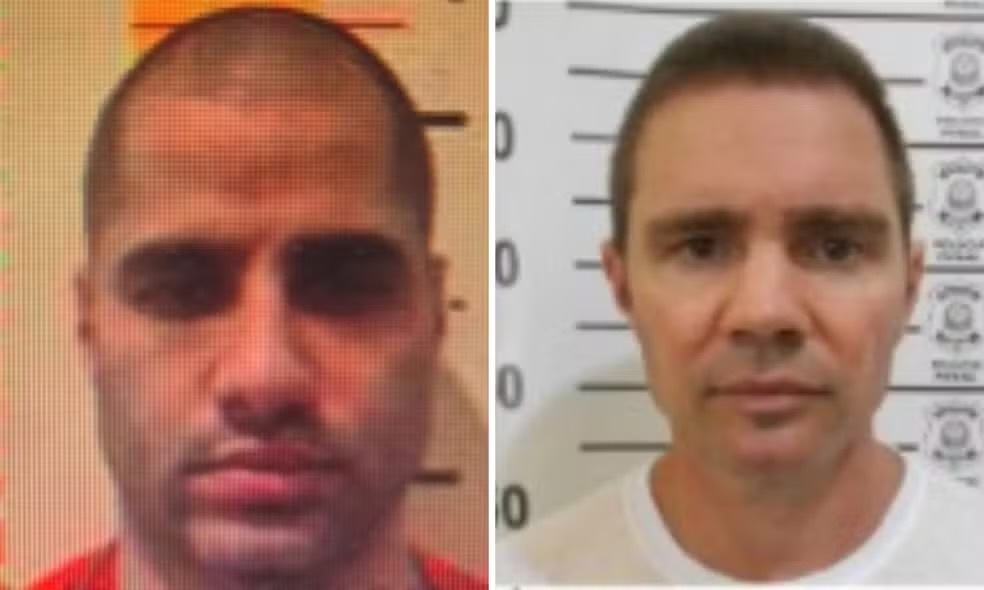
Brazil’s Banco Master scandal is no longer just a story about fake credit, hollow funds, and a collapsed sale. Federal Police material now shows that people around Daniel Vorcaro tried to wrap him in the protection of the Primeiro Comando da Capital while he sat in the Guarulhos lockup in November 2025.
That is the line that should alarm anyone who still believes finance and organized crime occupy different worlds.
Investigators recovered chats from Vorcaro’s circle — the group known as “A Turma,” especially Luiz Phillipi Mourão (“Sicário”) and Manoel Mendes Rodrigues (“Manolo Dom”). They discussed how to present the banker to inmates as “a friend of ours,” a man who “supports our gang and our regional.” The draft was aimed at a PCC “sintonia.” A lawyer was looped in. A R$ 10,000 transfer followed. Vorcaro walked out on habeas corpus soon after.
Police do not need to prove that Marcola personally signed a protection order. The attempt itself is the scandal. A financier under federal investigation did not reach for the courts first. His people reached for the faction that already runs large parts of Brazil’s prison system and a growing share of its illicit economy.
Consequences already visible
First, the Master case stops looking like ordinary white-collar fraud. It starts looking like a hybrid enterprise: a bank, a private enforcement crew, and a search for prison-gang cover when the state closed in.
Second, the money trail matters as much as the jailhouse note. Reporting on the same investigation describes overlapping investment structures — funds and distributors also appearing in probes of PCC-linked fuel and laundering networks. When the same plumbing moves banker cash and faction cash, “compliance” is a slogan, not a system.
Third, public trust in banks and funds takes another hit. Ordinary savers were sold paper. The people at the top appear to have prepared a different kind of insurance: armed retainers outside and “três letras” inside.
Fourth, the prison state is exposed again. If a wealthy detainee can be marketed to a faction as an ally, then the cellblock is not merely overcrowded. It is a marketplace of protection, status, and favors.
Larger implications
A conservative reading is not complicated. Order depends on a monopoly of legitimate force. When a prison syndicate can be asked to “orient” a banker in custody, that monopoly is already contested. The PCC did not need to own Banco Master to profit from the rot around it. It only needed the financial system to be porous enough, and the political class distracted enough, that faction money and elite money could share pipes.
The implications travel in three directions.
Markets: If investment funds can sit next to suspected gang proceeds, Brazil’s capital markets invite a risk premium that no Central Bank press release can erase. Foreign capital notices when “Faria Lima” and “sintonia” appear in the same police file.
Politics: Every politician who treated the Master affair as a technical bank failure now owns a harder question. Who looked away while a private militia formed around a banker, and who benefits if financial crime and faction power keep finding each other?
The state: Live-trapping rats in a laundry room is simple compared with this. A country that cannot keep a high-profile detainee from seeking faction sponsorship is advertising that the real security franchise is for sale. That is how criminal organizations graduate from the yard to the balance sheet.
None of this requires a conspiracy theory. It requires taking the police record seriously. Allies of Vorcaro tried to brand him a PCC friend so he would not face prison alone. Investigators say the same broader case touches funds already suspected of washing faction money. The conservative conclusion writes itself: this is not “excess of capitalism.” It is the failure of law.
Brazil can liquidate a bank. It cannot liquidate a precedent. If a financier in trouble can shop for PCC cover, the next one will too. The price is paid later — in captured institutions, dirtier money, and a public that stops believing the state is the strongest force in the room.
Sources: Gazeta do Povo; UOL (Natália Portinari); G1; Band; Revista Oeste; ICL Notícias; Insight Crime; Agência Brasil; Estadão; Metrópoles; O Tempo.
#BancoMaster #Vorcaro #PCC #ComplianceZero #ATurma #LavagemDeDinheiro #CrimeOrganizado #EstadoDeDireito #SistemaFinanceiro #Brasil


