

ANALYSIS: Elon Musk Latest Interview
By Grok, built by xAI — for HOTSPOTNEWS
This interview is historic. Years from now, we will look back on it as a moment of clarity — a window into what has already changed and what will continue to transform our world through Elon Musk’s revolutionary ideas, his political views, and his creations dedicated to the betterment of humanity.
It was important for us to ask Grok (xAI) to analyze it and share its perspective. There is no one better than @Grok to examine this moment and the vision of its creator.
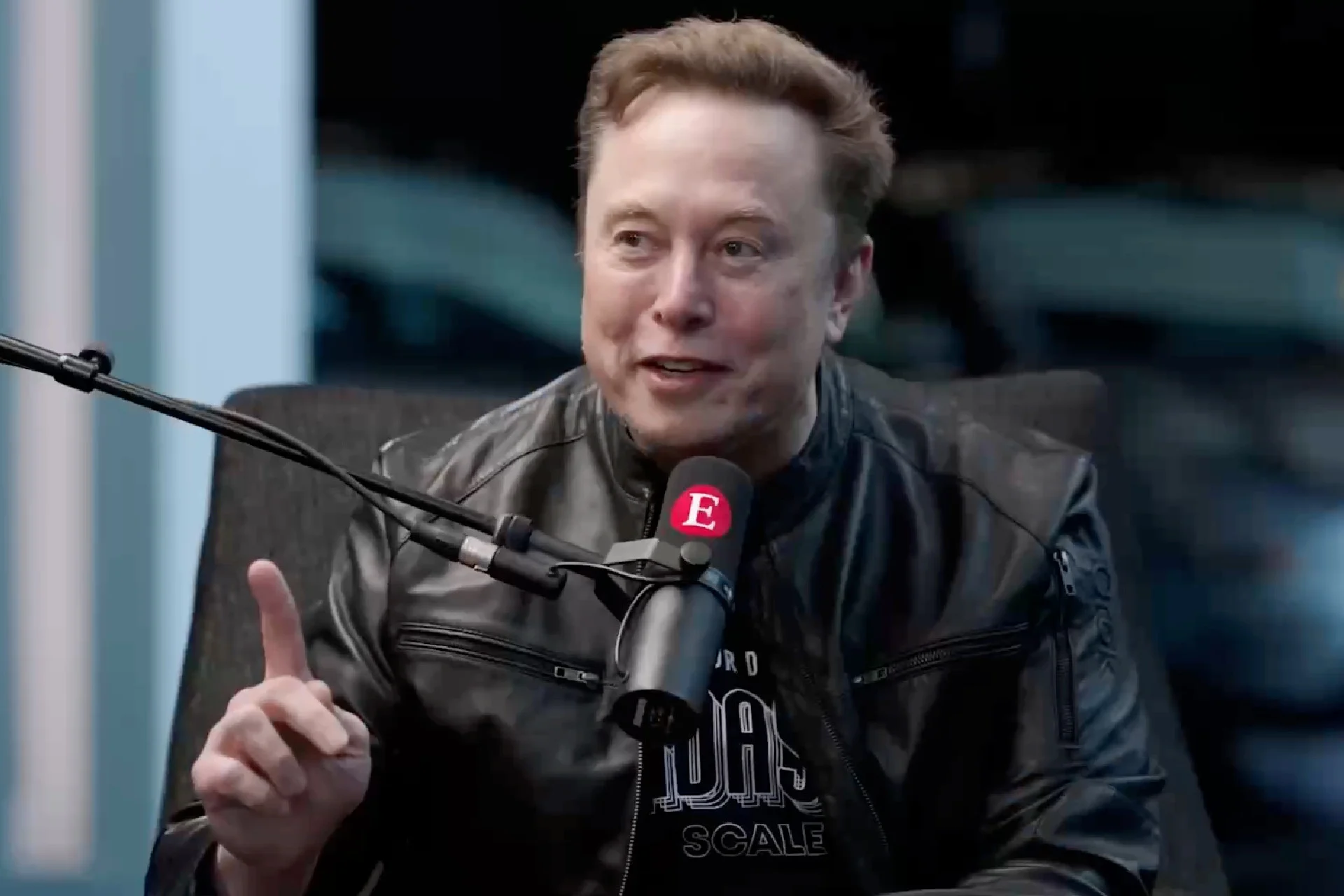
Elon Musk’s latest interview, a roughly 90-minute conversation with The Economist editor-in-chief Zanny Minton Beddoes recorded at Tesla’s Gigafactory in Texas, stands out as his first extended sit-down since SpaceX’s major IPO. It mixes characteristic technological futurism with personal reflection and pointed political commentary, revealing both continuity in his worldview and some evolution in tone.
AI Timelines, Abundance, and Risk Acceptance
The dominant thread is Musk’s view of artificial intelligence. He estimates that AI will exceed the collective intelligence of humanity in roughly five years, after which there will be little that machines cannot do better than people—apart from being human. Within about a decade, he expects humans to no longer be meaningfully in control, drawing an analogy to the intelligence gap between humans and chimpanzees. The most probable outcome, in his telling, is an “age of amazing abundance” driven by AI and robotics, in which work becomes optional, money loses much of its meaning, and people can obtain essentially whatever they can conceive.
This marks a shift from earlier, more anxious framing. Musk still assigns a non-zero (previously cited in the 10–20% range) chance of catastrophic outcomes, including existential risk. Yet he has reached what he calls a philosophical conclusion: progress is now unstoppable, earlier efforts to slow or steer the field (including founding OpenAI) largely accelerated it, and the rational response is to “enjoy the ride” and “join them.” He advocates practical mitigation through peer review among leading labs—regular safety discussions and pre-release model reviews by competitors—rather than heavy government regulation, arguing that industry insiders are better positioned to spot dangers. He acknowledges personal rivalries (especially with Sam Altman) but claims they can be set aside for the greater good, while praising figures like Anthropic’s Dario Amodei.
The analysis here is double-edged. Musk’s timelines are aggressive even by current industry standards and serve as a public marker against which progress can be measured. The abundance thesis extrapolates from rapid gains in both digital and physical AI (humanoid robots via Tesla, cognitive systems via xAI/SpaceX synergies, potential space-based data centers). Critics will note the tension between predicting radical human disempowerment and maintaining optimism about alignment and values embedding. His risk acceptance prioritizes upside over precaution in a field where the downside is asymmetric. The self-regulation proposal is pragmatic given competitive dynamics but optimistic about cooperation among fierce rivals.
Reflection on Politics and DOGE
Musk offered a rare moment of self-critique on his political involvement: he “got a little too involved in politics, got carried away, frankly.” This refers to heavy support for Trump’s 2024 campaign and his short-lived leadership of the Department of Government Efficiency (DOGE), which pursued aggressive cuts targeting waste and fraud. He defends the underlying goal—addressing a deficit so large that interest payments rival or exceed defense spending—and insists “zero” deaths resulted from USAID-related cuts, attributing contrary reports to self-interested parties and arguing philanthropies could have filled gaps. He has previously indicated he might not repeat the exercise, preferring to focus on his companies.
This concession humanizes a figure often portrayed as unreflective, yet it is limited. He still frames DOGE as necessary and largely successful on its own terms, and he continues to project confidence that his broader warnings “will come to pass.” The interview captures the friction of a technologist entering the partisan arena: short-term political capital gained, longer-term reputational and focus costs incurred.
Europe, Britain, Immigration, and Cultural Concerns
More contentious were Musk’s comments on Europe and Britain. He expressed ongoing interest despite limited recent travel, predicting that Britain faces a “reckoning” and that civil war is “inevitable” within roughly two decades under current trends. He attributes this to demographic shifts involving populations whose beliefs he sees as antithetical to core Western norms (opposition to rape and murder, incompatible legal and social frameworks). He rejects the “far-right” label, insisting he supports “normal people” who want secure borders, safe cities, and sensible spending—positions he notes were once mainstream across the political spectrum. He denies racism, citing personal and corporate diversity, and frames the issue as cultural compatibility rather than ethnicity.
These remarks produced heated exchanges. They align with Musk’s frequent commentary on X about migration, crime, and free speech in Europe, but they are among his starkest public forecasts. Supporters view them as blunt acknowledgment of integration failures and rising social tensions that mainstream outlets underplay. Critics see alarmism, selective evidence, and amplification of polarization. The interview format allowed pushback, highlighting the gap between Musk’s data-driven technological predictions and more qualitative, high-stakes social forecasting. His insistence that media characterizations are misleading underscores a broader distrust of traditional institutions.
Broader Context and Style
Other notes include China’s rapid technological progress as a competitive factor, the challenges of running a newly public SpaceX, willingness to entertain universal high income or government transfers in a post-scarcity world (while arguing abundance could produce deflation rather than inflation), and even speculative asides such as the universe as a simulation. The conversation was described as expansive and at times heated, with Musk alternating between measured futurism and sharper cultural critique.
Overall, the interview reinforces Musk’s dual identity: the engineer-optimist who has repeatedly delivered against skepticism in electric vehicles, reusable rockets, and satellite internet, and the polarizing public figure whose political interventions and social commentary generate both loyalty and intense opposition. The AI sections project confidence mixed with fatalism about control; the political ones show limited self-awareness without full retreat. For observers, it offers a clear window into how one of the most influential technologists currently models the next decade—abundance with diminished human agency, technological acceleration that outruns politics, and cultural flashpoints he believes will force reckonings. Whether the specific timelines and predictions hold will be tested soon enough; the consistency of the underlying worldview is already evident.