


: Banco Master’s Collapse: The Scale of the Loss, the Influence Network, and the Political Reactions
By Hotspotnews
Daniel Bueno Vorcaro, a Brazilian businessman from Belo Horizonte, became the majority shareholder and president of Banco Master (formerly Banco Máxima) after acquiring control of the troubled institution around 2018–2019 and rebranding it in 2021. Under his leadership the bank expanded rapidly, with net worth and credit portfolios growing from hundreds of millions to tens of billions of reais in a few years. Growth was driven largely by high-yield Bank Deposit Certificates (CDBs) that offered returns well above market averages, with funds often channeled into assets and funds that later came under scrutiny.
In November 2025 the Central Bank of Brazil ordered the extrajudicial liquidation of Banco Master. The Credit Guarantee Fund (FGC), which protects depositors, faced an estimated loss of around R$41 billion — reported as the largest in the fund’s history. Investigators and prosecutors have alleged that the bank’s expansion involved fraudulent management, the creation or use of fictitious or inadequately backed credits (including through intermediary companies), and the sale of those instruments to other institutions such as Banco de Brasília. The business model is described in multiple reports as unsustainable once regulatory pressure intensified.
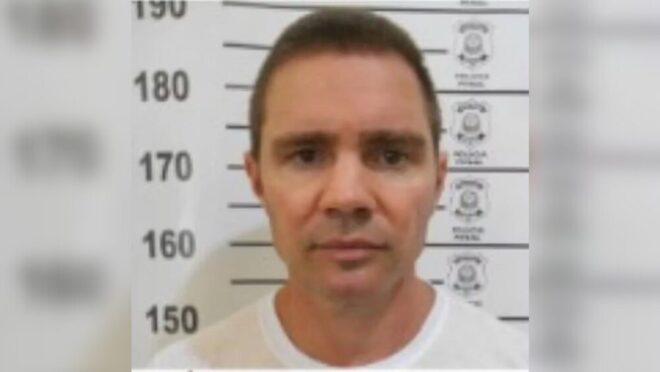
Vorcaro was detained by the Federal Police in November 2025 at São Paulo’s Guarulhos airport while preparing to board a private jet. He was later released under precautionary measures and then re-arrested in March 2026 by order of the Supreme Federal Court. He remains in custody while investigations continue into fraudulent management, reckless management, criminal organization, and related offenses. His defense has consistently denied the commission of crimes, interference with investigations, or direction of violence or intimidation.
Federal Police work and media reporting based on seized phones have documented extensive contacts and arrangements with public officials. These include alleged payments and favors directed at Central Bank supervisors, contracts and events involving figures linked to the judiciary and political parties, and the cultivation of access across multiple institutions. Separate reporting has covered luxury spending — private jets, high-value real-estate acquisitions in Brazil and the United States, and multi-million-dollar private events — that coincided with the bank’s growth and later collapse. Liquidators have sought to recover assets alleged to have been diverted.
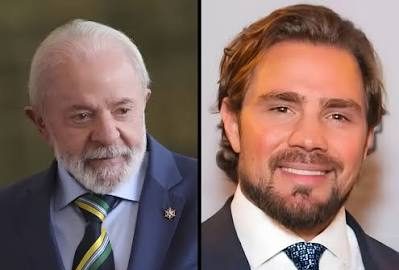
In early October 2026, Veja published audio and documents in which Vorcaro described negotiations that included the payment of approximately R$30 million in cash, characterized as “por fora,” to the Instituto Lula for a documentary on President Luiz Inácio Lula da Silva, along with other amounts, in exchange for facilitation of access to federal pension funds. The account named João Vaccari Neto among the intermediaries. The Public Prosecutor’s Office had earlier declined to advance a related plea proposal for lack of sufficient proof. The Workers’ Party and associated figures have rejected the claims as lacking evidence and motivated by electoral timing. Vorcaro’s own statements on these and other political contacts remain allegations pending independent corroboration; they form part of the broader material under examination rather than established findings.
The case has also produced material touching figures associated with other political camps, reinforcing that the influence network was not limited to a single party. Social-media reactions in some circles have framed Vorcaro as an inadvertent exposer of systemic problems — the so-called “redeemer” or “thank Vorcaro” commentary — because certain revelations have generated political discomfort. That reading treats the exposure of contacts as the central outcome. It does not erase the primary documented costs: the large FGC outlay, the alleged use of depositors’ and investors’ funds to sustain an operation that regulators ultimately judged unviable, and the pattern of purchased or cultivated access while the bank’s condition deteriorated.
Investigations, asset-recovery actions, and court proceedings remain ongoing. Many specific claims rest on seized communications, the statements of an accused party, or journalistic reconstructions that named individuals have disputed. A complete picture requires distinguishing what has been established by official decisions (the liquidation and the scale of the FGC exposure), what is alleged in police and prosecutorial work, and what remains contested.
Sources: Reporting and documentation drawn from Reuters, Veja, Valor Econômico, CNN Brasil, G1, O Globo, Folha de S.Paulo, the Central Bank of Brazil’s liquidation measures, Federal Police operational summaries, Credit Guarantee Fund estimates, and related court filings as covered in Brazilian and international press through early October 2026.
Hashtags: #BancoMaster #DanielVorcaro #FGC #EscandaloFinanceiro #Brasil #Liquidacao #OperacaoComplianceZero #Justica #Eleicoes2026