





The Erosion of Constitutional Boundaries: A Conservative Critique of Judicial Overreach
By Hotspotorlando News~
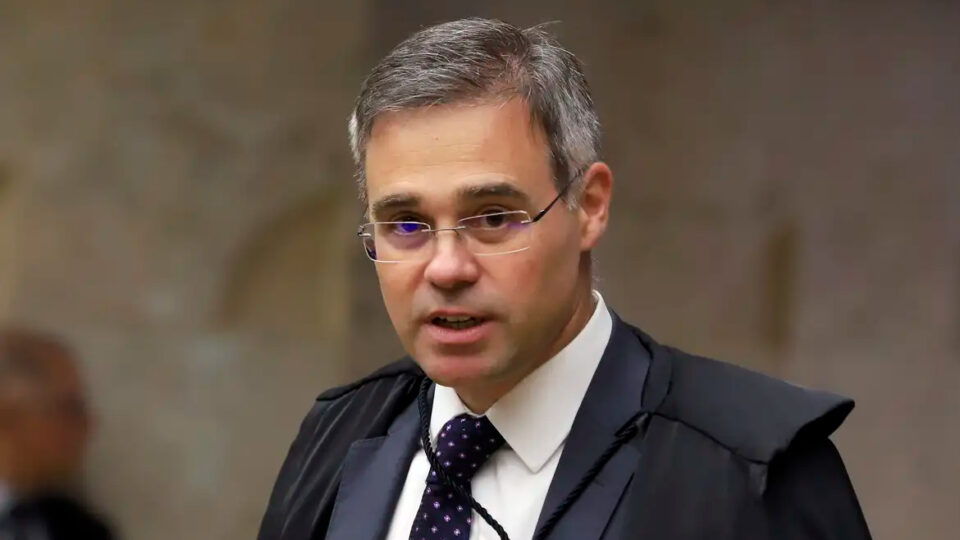
In recent weeks, the Brazilian political landscape has been marked by a growing concern over the balance of power among its branches of government. At the heart of this debate is the Supreme Federal Court (STF), whose actions have increasingly been perceived as encroaching upon the domains traditionally reserved for the legislative and executive branches. This concern was poignantly articulated by André Mendonça, a respected legal scholar, former Minister of Justice, and current STF Justice, who has publicly criticized the court for “invading competencies” that rightfully belong to the legislative branch.
Mendonça’s critique is not an isolated opinion but part of a broader discourse on the role of the judiciary in a democratic society. His background, marked by a deep understanding of public law and a commitment to constitutional principles, lends significant weight to his arguments. Having served as Attorney General and Minister of Justice under President Jair Bolsonaro, Mendonça brings a unique perspective to the table, one that is informed by both practical governance and academic rigor. His doctoral thesis on “Rechtsstaat and Global Governance” at the University of Salamanca further underscores his expertise in maintaining the rule of law within a structured governmental framework.
The specific catalyst for Mendonça’s comments appears to be the STF’s recent decision to declare the partial unconstitutionality of Article 19 of the Internet Civil Framework, thereby holding social media platforms accountable for user content. This ruling, supported by a 9-3 vote, has been seen by many as an example of judicial activism, where the court steps beyond its role of interpreting the law to effectively legislating from the bench. Such actions raise fundamental questions about the separation of powers, a cornerstone of democratic governance that ensures no single branch becomes overly dominant.
From a conservative standpoint, this judicial overreach is particularly alarming. Conservatism traditionally advocates for a limited government, where each branch operates within its constitutionally defined sphere. The STF’s intervention in areas like social media regulation, which inherently involve complex policy decisions better suited to legislative debate, undermines this principle. It suggests a court that is not merely adjudicating but actively shaping policy, a role that risks alienating public trust and destabilizing the democratic process.
Moreover, this trend is not without precedent. Historical analyses, such as those discussing the Vargas dictatorship, highlight the dangers of concentrated power, even when vested in judicial hands. The current scenario, while far from authoritarian, echoes concerns about the potential for judicial supremacy to stifle majority agendas and favor dominant political interests. This is particularly pertinent in Brazil, where the political climate remains polarized, and the need for institutional balance is paramount.
Mendonça’s call for restraint is thus a reminder of the inherent tensions within judicial review itself. While courts play a crucial role in protecting minority rights and ensuring constitutional compliance, they must do so without overstepping their bounds. The “counter-majoritarian difficulty,” as it is often termed, requires a delicate balance where judicial decisions do not obstruct the will of the people as expressed through their elected representatives.
In conclusion, the conservative perspective on this issue is clear: the STF must recalibrate its approach to respect the constitutional boundaries that define its role. André Mendonça’s critique is a clarion call for a return to these principles, urging a judiciary that interprets rather than legislates, and a government where power is shared, not seized. As Brazil navigates these turbulent waters, the preservation of its democratic institutions depends on adhering to the very foundations that sustain them.
**Sources:**
– Public statements by André Mendonça regarding the STF’s actions.
– Academic work and professional history of André Mendonça, including his roles as Attorney General and Minister of Justice.
– Recent STF rulings, particularly on social media content liability.
– Historical and theoretical discussions on judicial review and separation of powers in democratic systems.


