




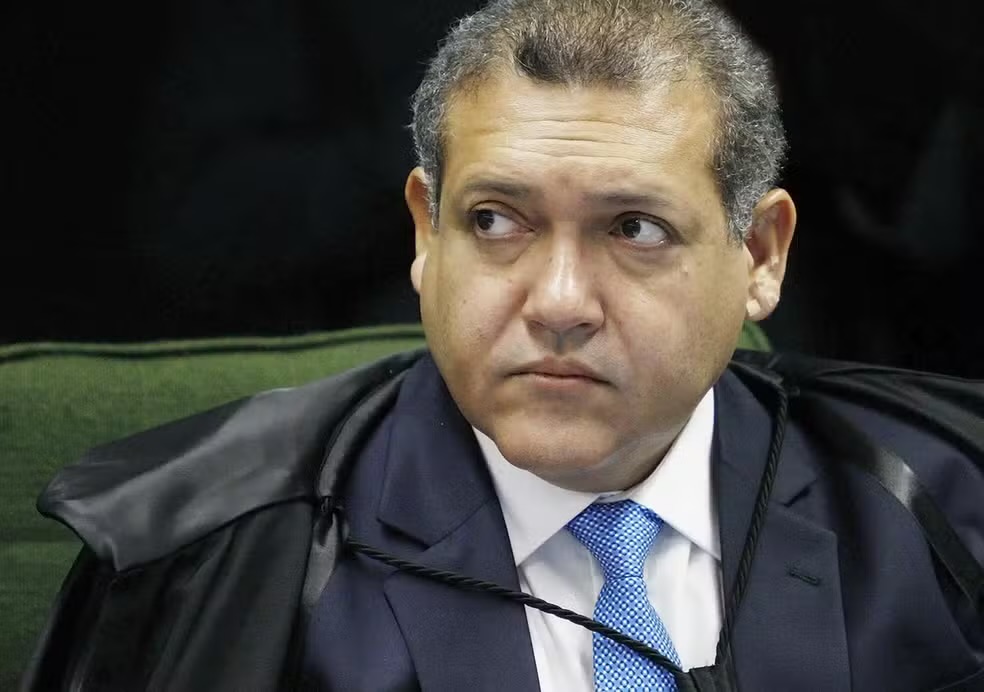
TSE Chief Warns of “Institutional Capture” as STF Decisions Overlap Electoral Court Ahead of Brazil Vote By Hotspotnews
By Hotspotnews
The letter was triggered by a decision from Justice Flávio Dino that reversed a TSE order issued by Justice André Mendonça. Mendonça had directed the removal of social-media posts repeating a false claim that presidential candidate Flávio Bolsonaro planned to strip Nossa Senhora Aparecida of her status as Brazil’s patron saint. Dino restored the posts by extending an earlier STF case that originally concerned unrelated content.
Nunes Marques treats the episode as part of a broader pattern. Litigants, he writes, file petitions that invoke generic STF precedents in order to steer urgent electoral requests toward preferred rapporteurs. Those monocratic orders are then treated as a standing review mechanism over TSE acts. The Constitution, he notes, gives the Justiça Eleitoral exclusive competence over the normality and legitimacy of elections, including digital propaganda. The ordinary path of STF review is the recurso extraordinário. Using a reclamação as a substitute, and extending its effects to unidentified future publications, alters that architecture.
The result, the letter says, is a risk of “institutional capture”: functional subordination of the TSE to isolated decisions taken outside the electoral-court structure. That subordination, Nunes Marques argues, empties both the specialization the Constitution designed and the collegiality that legitimates both courts. In a period of short deadlines and hard-to-reverse effects, the instability produces legal uncertainty, encourages forum-shopping toward “the instance perceived as more favorable,” and incrementally weakens the institutions charged with protecting the integrity of the vote.
He asked Fachin to impose a pre-distribution filter on urgent election petitions, including those filed inside already-pending cases, so they do not automatically land with particular ministers. The letter ends with a reminder that “it is the people who produce the show and sign the direction,” not the judiciary.
A widely shared sentence claiming the STF would leave “no reason to keep the TSE standing” and that elections would be decided “in the silence of a chamber” does not appear in the official text. It is a condensed paraphrase of the capture and diffuse-review passages.
The document was issued six days before the first round of the 2026 presidential election. It is an institutional warning, not a court ruling, and sits inside a longer history of friction between the two courts.
#BrazilElection2026 #TSE #STF #NunesMarques #Fachin #ElectoralJustice #InstitutionalCapture
Source: Official Ofício GAB-SPR/GAB-PRES nº 4307/2026, Tribunal Superior Eleitoral, 28 September 2026; contemporaneous reporting by CNN Brasil, G1, Gazeta do Povo and Poder360.


