

Brazilian Supreme Court Justice Admits Censorship Regime is Chilling Free Speech
By Hotspotnews
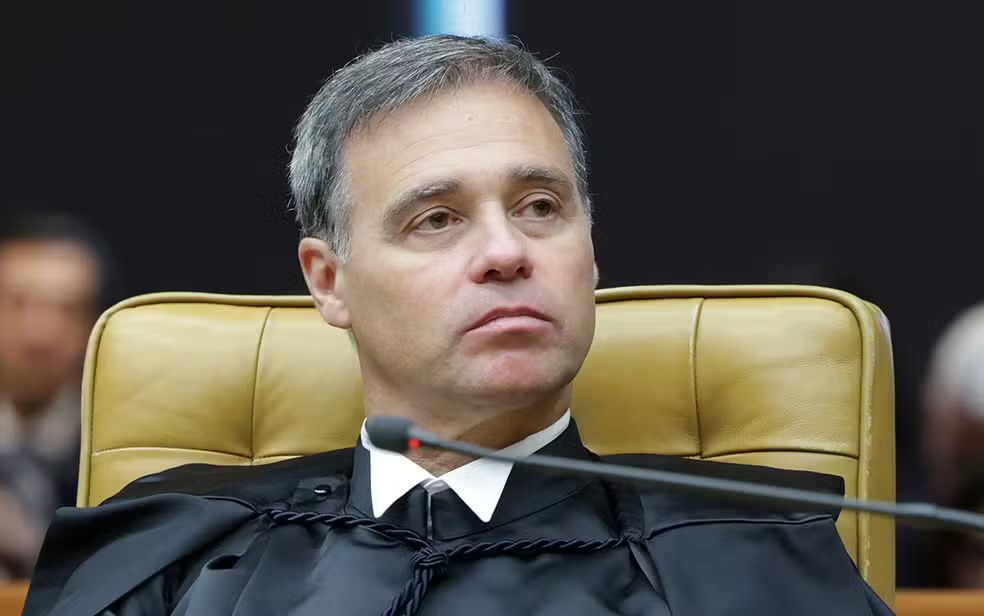
In a rare moment of candor from Brazil’s highest court, Supreme Federal Tribunal (STF) Minister André Mendonça has confirmed what free speech advocates have warned about for years: aggressive new judicial rules on social media platforms are creating a dangerous chilling effect that leads to widespread preemptive censorship.
The admission came during discussions on the Marco Civil da Internet, Brazil’s framework for online regulation. Mendonça acknowledged that vague interpretations of “joint responsibility” for content—coupled with the threat of heavy fines—push platforms to remove even doubtful or borderline material rather than risk punishment. Instead of waiting for clear violations, companies now err on the side of deletion to protect themselves from Brazil’s activist judiciary.
This is not abstract legal theory. It is the practical outcome of a court that has repeatedly flexed its muscles against dissenting voices, suspending accounts, blocking platforms, and imposing outsized penalties on those who dare challenge the prevailing narrative. Conservative lawmakers like federal deputy Gil Diniz have long sounded the alarm on this overreach, highlighting how it stifles legitimate public debate on issues ranging from government policy to cultural matters. Diniz rightly framed Mendonça’s comments as validation of those concerns: when courts weaponize regulatory uncertainty, fear replaces freedom.
From a conservative standpoint, this should surprise no one. Brazil’s STF, under the influence of the Lula administration’s allies, has transformed itself into an unelected super-legislature. It has targeted conservative voices, journalists, and ordinary citizens who question official orthodoxies on topics like elections, public health mandates, or economic failures. X (formerly Twitter) has been a particular flashpoint, with demands for content moderation that often align neatly with left-wing priorities while ignoring threats from the other side.
Mendonça’s statement exposes the core problem with “platform liability” schemes pushed by progressives worldwide: they sound reasonable on paper (“hold big tech accountable!”) but in practice hand enormous power to ideologically driven regulators and judges. Platforms, facing existential financial risks, become extensions of the state—deleting posts, shadow-banning users, and suppressing stories that might offend the regime. The result is not safety or civility, but a sanitized public square where only approved opinions thrive.
This episode underscores a broader truth: true liberalism requires robust free expression, even for ideas elites dislike. Conservatives in Brazil and across the globe have argued that the solution lies in clear, narrow laws protecting individual rights—not vague “hate speech” or “misinformation” standards that invite abuse. When judges admit their own rulings foster over-censorship, it is time to roll them back, not double down.
Brazil’s experience serves as a cautionary tale for every democracy. Once courts prioritize control over constitutional protections, the slide toward authoritarianism accelerates. Citizens deserve platforms where ideas compete openly, not where ministers and bureaucrats decide what may be said. Mendonça’s admission is a crack in the facade—now is the moment for lawmakers and the public to demand real reform and restore free speech as the foundation of democratic society.