


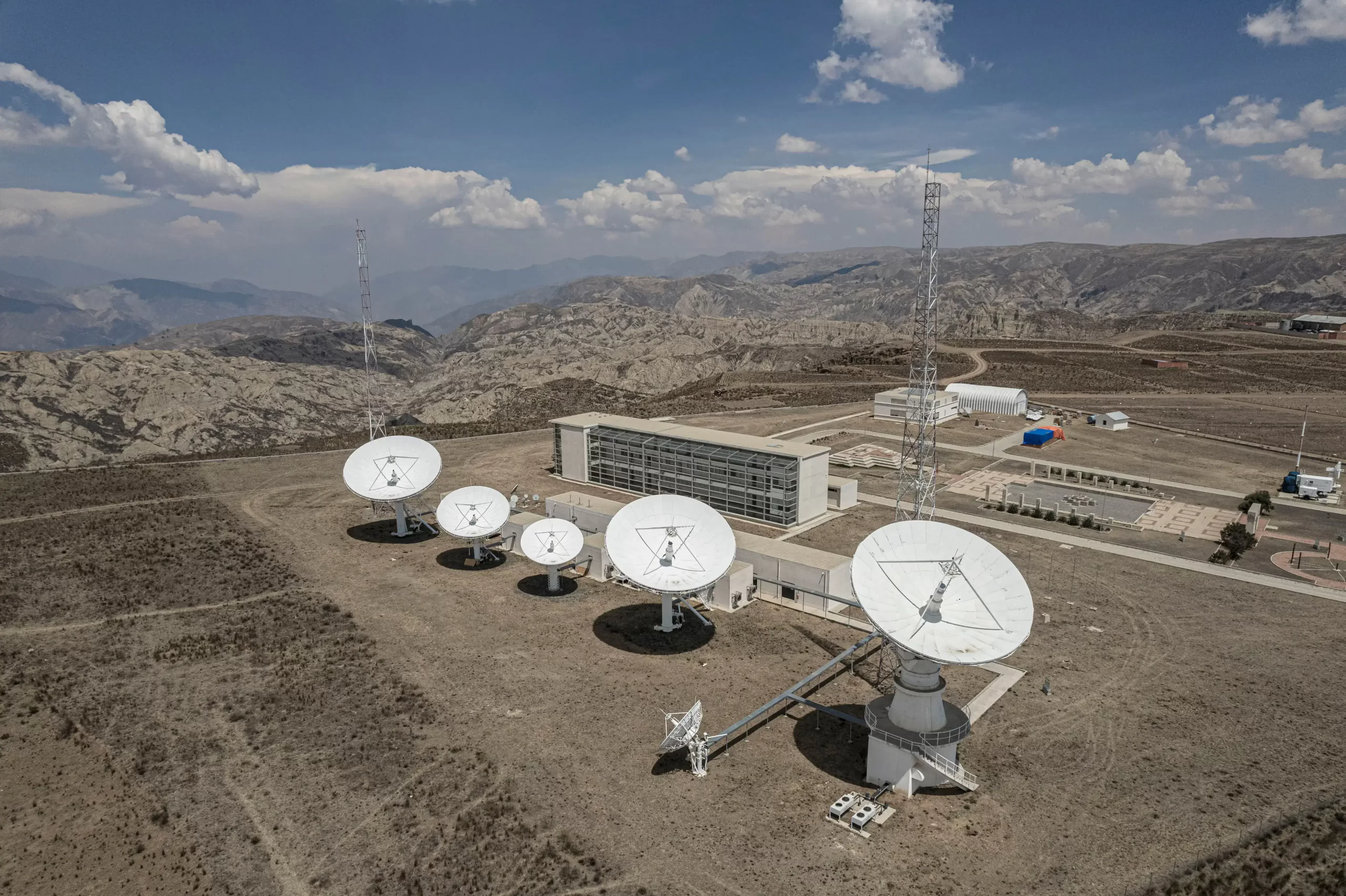
Brazil’s Sovereignty Under Siege: Lula’s Dangerous Flirtation with Communist China Demands Immediate Senate Intervention
By Hotspotnews
In a stark warning to the nation, prominent conservative voice and São Paulo councilwoman Janaina Paschoal has sounded the alarm. Sharing her concerns via social media, Paschoal highlighted Senator Márcio Bittar’s demand for urgent clarification on a bombshell U.S. congressional report exposing what appears to be a covert Chinese military-linked facility in Salvador, Bahia. The report, released February 26, 2026, by the bipartisan **House Select Committee on the Chinese Communist Party** and titled *”Pulling Latin America into China’s Orbit”*, details how Beijing has quietly built at least **11 China-linked space facilities** across Argentina, Venezuela, Bolivia, Chile, and Brazil. These include ground stations, radio telescopes, and satellite laser ranging sites—officially presented as civilian scientific or commercial projects, but flagged for clear **dual-use** potential: they can collect intelligence, track military assets, monitor satellites (including those of the United States), and support the People’s Liberation Army’s warfighting capabilities right in our hemisphere.
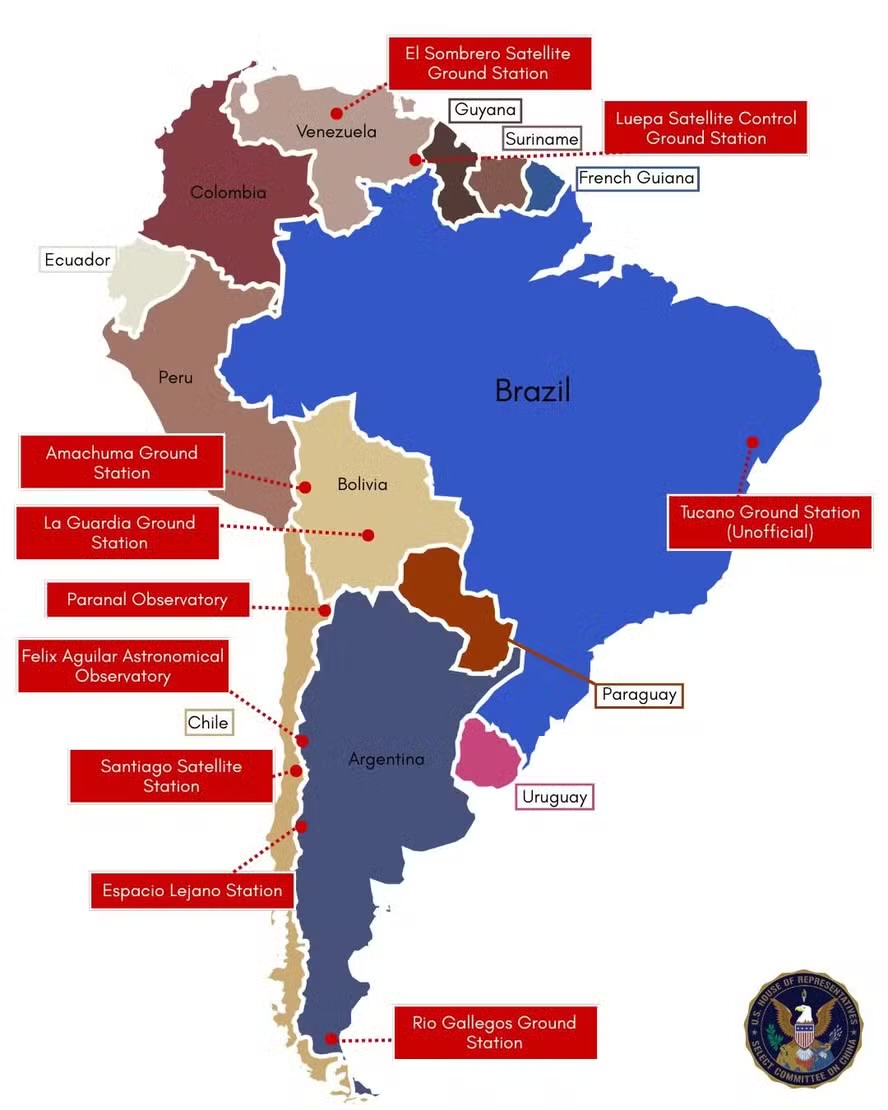

The Brazil-specific focus centers on the Tucano Ground Station (Estação Terrestre Tucano) in Bahia, near Salvador. This facility stems from a 2020 agreement between the Brazilian startup Ayla Nanosatellites (also referred to as Alya or Ayla Space) and Beijing Tianlian Space Technology Co. Ltd., a company affiliated with major Chinese state aerospace entities, including the China Academy of Space Technology and the China Aerospace Science and Technology Corporation, both with deep defense ties. While Ayla Nanosatellites has described the project as supporting its commercial Alya-1 constellation for Earth observation—providing high-resolution hyperspectral images for agriculture, mining, environmental monitoring, and more—the U.S. report reveals far more troubling capabilities.
Beijing Tianlian Space Technology is set to provide long-duration, high-coverage space-to-ground voice and data communications specifically tailored for human spaceflight and reconnaissance satellites. By integrating hyperspectral data from the Brazilian Alya constellation with Chinese information networks, the PRC could develop a high-revisit surveillance capability. This would enable real-time identification of camouflaged military assets, tracking of foreign space objects, and persistent monitoring across South America. The report warns that this integration gives China a conduit to observe and potentially influence Brazilian military space doctrine—especially given Ayla’s reported memorandum of understanding with Brazil’s Department of Aerospace Science and Technology (DCTA) under the Brazilian Air Force—while establishing a permanent strategic footprint in a region critical to U.S. national security interests.
This isn’t paranoia—it’s a direct threat to Brazilian sovereignty. While the Lula administration cozies up to the authoritarian regime in Beijing through BRICS alliances and endless resource deals, China is quietly embedding itself in our strategic infrastructure. A ground station with dual-use military potential right in Bahia? That’s not partnership; that’s infiltration. Senator Bittar is right to demand answers, and the Senate must not stop at clarification. We are risking turning Brazil into a pawn in the escalating U.S.-China rivalry, potentially painting a target on our backs for future conflicts.
But the danger doesn’t end there. Hot on the heels of this revelation comes another troubling move from the Lula government: a February 2026 decree opening the door to private-sector involvement in uranium mining. For decades, this critical strategic resource—essential for nuclear energy and national defense—remained under the strict monopoly of the state-owned Indústrias Nucleares do Brasil (INB). Now, regulators from the Ministry of Mines and Energy are fast-tracking rules that critics, including Paschoal, warn could hand control to well-connected allies, with fingers pointed at powerful interests tied to JBS, the meatpacking giant with a history of political entanglements.
Whether or not specific names like JBS prove directly involved (and the lack of transparency only fuels suspicion), the pattern is unmistakable: weakening state oversight on nuclear materials while foreign powers like China hover nearby. Bahia already hosts Brazil’s main uranium operations in Caetité. Combine that with a Chinese surveillance station in the same state, and the risks of espionage, technology transfer, or even indirect access to sensitive nuclear know-how become terrifyingly real. This isn’t economic progress—it’s reckless surrender of our most vital resources to cronies and adversaries alike.
Conservatives have long warned about the perils of ideological blindness in foreign policy. Lula’s PT-led government has bent over backward to embrace China, ignoring the CCP’s track record of debt-trap diplomacy, intellectual property theft, and military expansionism across Latin America. From ports and railways to now potential spy bases and strategic minerals, Brazil is sleepwalking into dependency. What happens when tensions rise globally? Will our uranium fuel Brazilian energy independence—or end up empowering regimes that view us as just another resource colony?
The Senate holds the key to stopping this slide. Senator Bittar and voices like Paschoal are calling for scrutiny “with a magnifying glass,” and they are absolutely correct. It is time for strong, decisive measures:
– A full congressional investigation into the Tucano facility, including demands for transparency from the Lula administration on all Chinese partnerships, contracts, data flows, access protocols, and any military involvement or national security breaches.
– Immediate suspension or strict safeguards on the uranium decree to prevent any handover of control over nuclear materials to private players with questionable ties—ensuring Brazilian sovereignty and defense priorities come first.
– Legislation banning adversarial foreign investment (especially from the CCP) in critical infrastructure, mining, space facilities, and dual-use technologies.
– A clear national strategy to reclaim our strategic assets, prioritizing alliances with democratic partners who respect our independence rather than ideological fellow travelers in Beijing.
Brazil is not for sale. Our vast territory, rich resources, and proud history demand leaders who put **Brazil first**—not globalist agendas or personal political survival. Allowing cozy relations with a regime that spies on our region and eyes our uranium reserves invites disaster: eroded sovereignty, heightened vulnerability to external pressures, and a future where Brazil becomes collateral damage in great-power conflicts.
The clock is ticking. The Senate must rise above partisan loyalty and confront these threats head-on. Patriots across Brazil—from Brasília to the streets—are watching. Failure to act now could condemn generations to a weaker, more exposed nation. Strong measures today will safeguard our independence tomorrow. It’s time for the Senate to lead with courage and conviction. 🇧🇷