


BREAKING: U.S. Immigration Authorities Nab Brazilian Gang Kingpin Tied to Designated Terrorist Organizations
By Hotspotnews
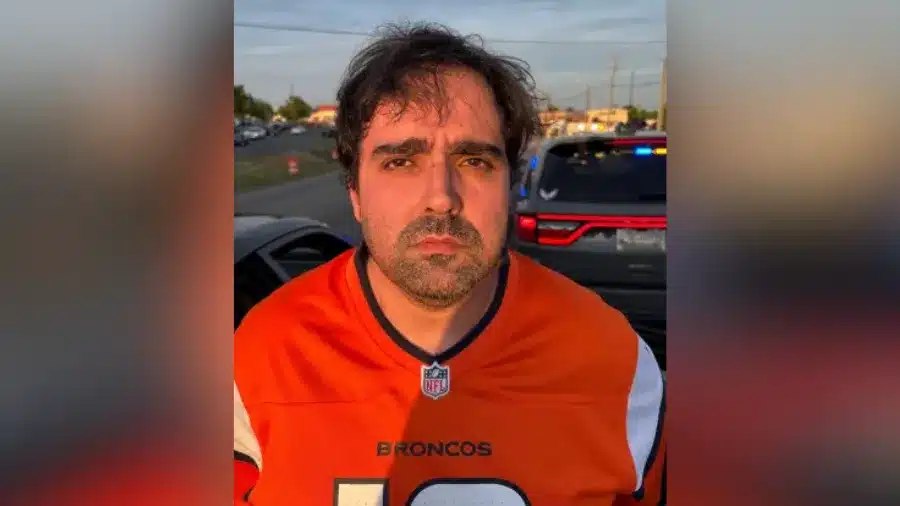
In a clear victory for law enforcement and a stark reminder of the deadly costs of unchecked illegal immigration, U.S. Homeland Security Investigations (HSI) agents have arrested a high-ranking member of Brazil’s most violent criminal factions, the Primeiro Comando da Capital (PCC) and the Comando Vermelho (CV). Felipe Linares de Oliveira Dell Aquilla, known on the streets as “Don,” was taken into custody on June 5, 2026, in Mooresville, North Carolina, after a dramatic traffic stop that exposed the dangerous underbelly of transnational crime operating inside American communities.
This arrest, announced by the Department of Homeland Security on June 15, 2026—just hours ago—underscores the urgent need for robust border security and aggressive interior enforcement. For years, critics of open-border policies have warned that lax immigration controls and sanctuary-style approaches allow hardened criminals from around the world to slip into the United States, where they continue their predatory activities far from their home countries. The case of “Don” proves those warnings were not alarmism—they were prophecy.
Dell Aquilla was no small-time operator. Brazilian authorities had issued an Interpol Red Notice seeking his arrest for criminal association and extortion. As a former commander within both the PCC and Comando Vermelho, he sat at the apex of organizations responsible for thousands of murders, drug trafficking empires, and brutal power struggles across South America. Just weeks ago, the United States rightly designated these Brazilian gangs as Foreign Terrorist Organizations (FTOs), acknowledging their sophisticated operations, use of extreme violence, and growing international reach. Treating them as the terrorists they are marks a long-overdue shift toward recognizing that these are not mere “street gangs” but organized threats to civilized society.
The circumstances of the arrest read like a thriller with real-world stakes. During a routine traffic stop, Dell Aquilla fled at high speed, crashed his vehicle amid other cars, and attempted to escape on foot. Agents recovered multiple cell phones, laptops, cash, and a 9mm pistol from the wreckage—tools of the trade for a fugitive maintaining criminal networks. Even more disturbing, intelligence and subsequent interviews revealed that he had been holding his own wife hostage as he plotted an escape route to Mexico. This level of ruthlessness is the hallmark of the organizations he served.
HSI agents from Greensboro and Charlotte, working alongside local law enforcement from the Iredell County Sheriff’s Office and Mooresville Police Department, executed the takedown efficiently. Dell Aquilla now faces state charges for attempting to elude arrest and federal scrutiny that includes illegal possession of a firearm as a non-citizen, potential kidnapping charges, and an ICE detainer that will ensure he faces deportation proceedings. This coordinated action demonstrates what effective policing looks like when federal, state, and local authorities prioritize public safety over political correctness.
The broader context cannot be ignored. Under previous administrations that prioritized catch-and-release policies, mass parole programs, and resistance to interior enforcement, criminals like Dell Aquilla found the United States a welcoming environment. Transnational gangs have exploited weak borders to expand operations northward, bringing extortion rackets, drug distribution, and horrific violence into American cities and suburbs. The PCC and Comando Vermelho, much like MS-13 and other imported criminal enterprises, thrive where enforcement is weak and illegal immigration is treated as a mere administrative inconvenience rather than a national security crisis.
Conservatives have long argued that sovereignty begins with secure borders and the willingness to deport those who violate our laws. This arrest validates that principle. Designating these groups as terrorist organizations equips law enforcement with stronger tools—asset seizures, enhanced penalties, and intelligence sharing—that should have been deployed years earlier. It also sends a clear message: America will not be a safe haven for foreign criminals.
Local communities, especially in North Carolina, deserve protection from the spillover effects of failed immigration policies. Families should not have to worry about cartel-affiliated or gang-linked individuals operating in their neighborhoods, whether through drug markets, extortion, or random violence. Incidents like this one highlight why Americans continue to demand an immigration system that puts citizens first: vetting entrants rigorously, enforcing visa overstays, removing criminal aliens promptly, and ending the revolving door at the border.
As details of Dell Aquilla’s activities continue to emerge in this breaking case, this arrest should serve as a catalyst for stronger action. Congress and the administration must double down on interior enforcement, fully fund ICE operations, and reject any attempts to shield criminal aliens under the guise of compassion. The rule of law is not optional. When federal agents successfully hunt down and arrest terrorists-in-training like “Don,” it reaffirms that America’s security apparatus can work—provided it is given the resources, authority, and political backing it requires.
This arrest is good news for law-abiding Americans. It should also be a wake-up call to anyone still defending porous borders: the threats are real, they are here, and only determined enforcement will keep them in check.


