


Lula’s Team Sees a U.S. Plot in Every Mirror — and Brazil Pays the Price
By Hotspotnews
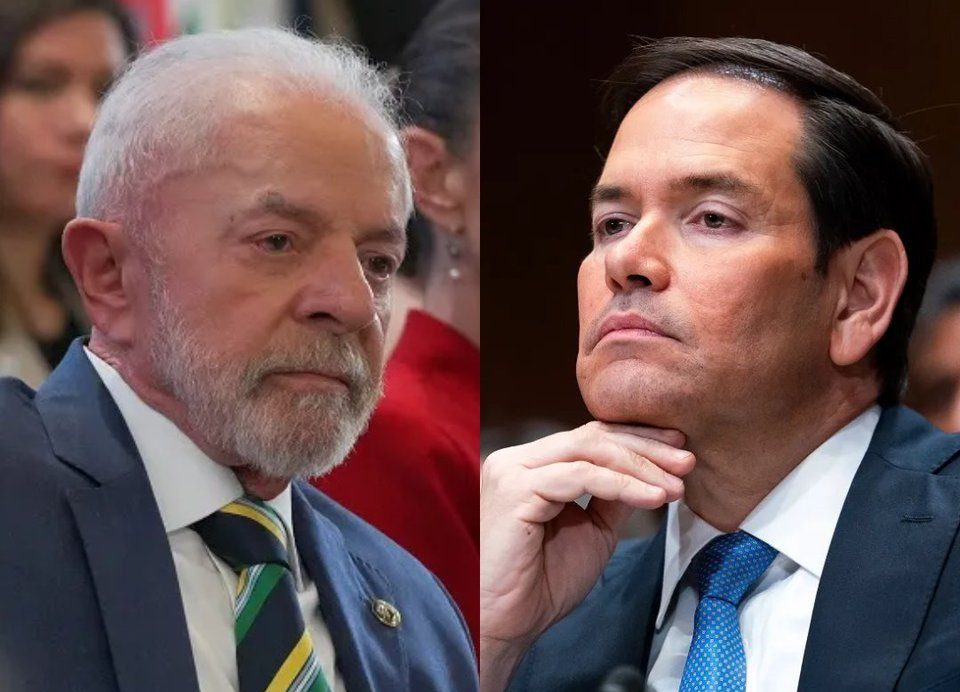
Once again, President Luiz Inácio Lula da Silva’s inner circle has reached for the oldest play in the progressive handbook: when domestic difficulties mount and relations with Washington sour, declare foreign interference. According to reporting by Valdo Cruz on G1, aides interpret a recent U.S. State Department video restating the Monroe Doctrine and affirming American primacy in the Western Hemisphere as proof that Secretary of State Marco Rubio is orchestrating a campaign to block Lula’s 2026 reelection and install right-leaning governments across South America.
The assumption is naive. It is also damaging to Brazil’s national interest.
The video in question is not a secret cable or a leaked strategy paper targeting Brazilian elections. It is a public piece of hemispheric messaging that places the Trump administration’s policy in the long tradition of U.S. insistence on primacy in its own neighborhood—particularly against extra-hemispheric powers such as China and Russia. It references concrete actions, including the capture of Nicolás Maduro. Reading into it a detailed plot to tip Brazil’s October vote requires a conspiratorial leap that ignores both the text of the message and Brazil’s own agency.
Lula’s team treats assertive U.S. policy as existential threat while downplaying the country’s structural vulnerabilities. China already absorbs roughly 30 percent of Brazilian exports—primarily soybeans, iron ore, and oil—delivering large surpluses but locking Brazil into a classic commodity-for-manufactures relationship. The U.S. share of Brazilian exports has fallen to historic lows amid successive tariff rounds. Continuing to frame every friction as an anti-Lula “power move” does not reverse those tariffs, expand market access, or attract high-value investment. It hardens positions on both sides and accelerates Brazil’s drift toward greater dependence on a single authoritarian buyer.
This is not statesmanship; it is deflection. Brazil’s challenges—fiscal pressures, productivity stagnation, security problems in major cities, and the need to move up the value chain—are primarily domestic. Blaming Washington for electoral headwinds or commercial setbacks substitutes grievance for governance. It also hands ammunition to critics who argue that PT foreign policy prioritizes ideological solidarity with leftist or authoritarian regimes over pragmatic engagement with the world’s largest economy and Brazil’s traditional partners in the West.
A serious government would recognize that the United States, for all its inconsistencies and protectionist impulses under the current administration, remains a source of technology, capital, and diversified markets that China does not fully replace. Mending workable channels—on trade, critical minerals, security cooperation, and investment—does not require ideological surrender. It requires maturity: the ability to distinguish legitimate differences from invented plots, and to put Brazilian exporters, workers, and long-term competitiveness ahead of campaign narratives.
Instead, the current approach risks leaving Brazil more isolated precisely when multipolarity demands skillful balancing. Over-interpreting a doctrine video as electoral warfare may fire up the base, but it does nothing to lower tariffs, open new markets, or reduce commodity concentration risk. For a country of Brazil’s size and potential, that is not strategy. It is self-inflicted weakness dressed up as defiance.
Brazil’s interests are best served by sober realism, not permanent confrontation. Lula’s advisers would do the country a greater service by focusing on results at home and pragmatic deal-making abroad, rather than seeing American power plays in every official statement from Washington.


