




Trump Administration’s Threat to Strip Zohran Mamdani of U.S. Citizenship Sparks Outrage
In a move that has ignited fierce debate, the Trump administration has raised the possibility of stripping Zohran Mamdani, the Democratic mayoral candidate for New York City, of his U.S. citizenship. The controversial proposal, rooted in allegations of misconduct during Mamdani’s naturalization process, has been condemned as a politically motivated attack on a progressive Muslim politician. As the 2025 mayoral race intensifies, the controversy underscores broader tensions over immigration, free speech, and democratic norms in the United States.
Who is Zohran Mamdani?
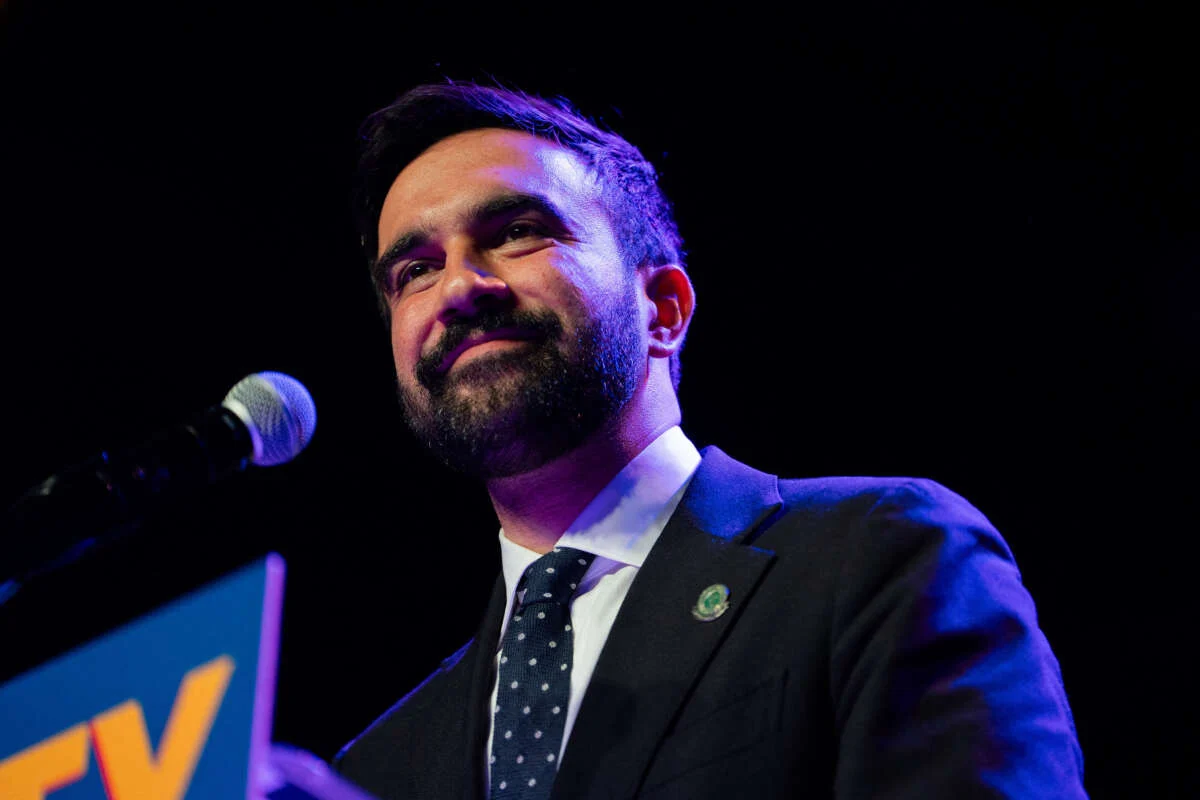
Zohran Mamdani, a 33-year-old democratic socialist and New York State Assembly member, made history in June 2025 by winning the Democratic primary for NYC mayor, defeating former Governor Andrew Cuomo. Born in Uganda to ethnic Indian parents, Mamdani immigrated to the U.S. at age seven and became a naturalized citizen in 2018. His platform, which includes universal childcare, free public transit, and resistance to federal immigration enforcement, has positioned him as a rising star among progressives. However, his vocal support for Palestinian rights and criticism of Israel have drawn scrutiny from conservative critics.
The Allegations
The push to investigate Mamdani’s citizenship began with Rep. Andy Ogles, a Republican from Tennessee, who called for denaturalization proceedings. Ogles alleged that Mamdani concealed support for “terrorism” during his naturalization process, citing a rap song Mamdani wrote that referenced the Holy Land Foundation, a group convicted in 2008 for supporting Hamas. Ogles also pointed to Mamdani’s refusal to condemn the phrase “globalize the intifada,” a slogan tied to pro-Palestinian activism, as evidence of extremist sympathies. White House Press Secretary Karoline Leavitt fueled the controversy, stating that such claims, if substantiated, would justify a review of Mamdani’s citizenship status.
On July 1, 2025, President Donald Trump escalated the rhetoric during a press conference at a newly opened migrant detention center in Florida. Trump falsely suggested Mamdani might be in the country illegally, branding him a “communist” and threatening arrest if he obstructs Immigration and Customs Enforcement (ICE) operations. The remarks followed Mamdani’s pledge to resist ICE deportations in New York City, a sanctuary city.
Mamdani’s Response
Mamdani swiftly denounced the administration’s actions as an assault on democracy. In a public statement, he accused Trump of targeting him for his Muslim identity and progressive policies, particularly his opposition to ICE’s “terrorizing” presence in NYC. “This is not about my citizenship—it’s about silencing New Yorkers who stand up for justice,” Mamdani said. He emphasized his legal status as a U.S. citizen and vowed to continue his campaign undeterred.
The Legal Landscape
Denaturalization, the process of revoking citizenship from a naturalized U.S. citizen, is a rare and complex procedure governed by federal law. Citizenship can be revoked only if it was obtained through fraud, willful misrepresentation, or concealment of material facts, such as affiliations with terrorist organizations or certain criminal activities. The process requires approval from a federal district court, with the government bearing a high burden of proof. Historically, denaturalization has been used sparingly, often targeting war criminals or human rights abusers. Between 1990 and 2017, the U.S. averaged just 11 cases annually.
Legal experts have expressed skepticism about the viability of a case against Mamdani. The rap song, written before his 2018 naturalization, does not clearly constitute material support for terrorism under U.S. law, and refusing to condemn a political slogan is protected speech under the First Amendment. Without evidence of criminal activity or deliberate fraud during the naturalization process, the allegations appear legally flimsy. However, the Trump administration’s recent expansion of denaturalization guidelines, outlined in a June 2025 Department of Justice memo, signals a more aggressive approach, raising concerns about due process.
Political Motivations
The controversy surrounding Mamdani is widely seen as politically driven. Critics argue that the administration is exploiting Mamdani’s Muslim identity and progressive stance to appeal to its base ahead of the 2026 midterms. The rhetoric has been laced with Islamophobic undertones, including Ogles’s derogatory reference to Mamdani as “little Muhammad” and far-right activist Laura Loomer’s claim that he is a “jihadist Muslim.” Donald Trump Jr. invoked the 9/11 attacks to question Mamdani’s loyalty, amplifying fears about “uncontrolled migration” despite his legal citizenship.
Mamdani’s opposition to ICE aligns him with progressive figures like Rep. Alexandria Ocasio-Cortez, making him a prime target for Republicans seeking to suppress left-wing influence. The New York Young Republican Club even cited the 1954 Communist Control Act to call for his deportation, reviving Cold War-era tactics. The administration’s broader immigration crackdown, including efforts to redefine birthright citizenship and prioritize deportations, provides further context for the attack on Mamdani.
Implications and Public Reaction
The threat of denaturalization has galvanized Democratic support for Mamdani, with prominent figures like Governor Kathy Hochul and Senators Chris Murphy and Chris Van Hollen condemning the administration’s tactics as racist and authoritarian. The controversy risks polarizing the mayoral race, pitting Mamdani’s progressive base against Trump-aligned Republicans and independent candidate Eric Adams. While a denaturalization case is unlikely to succeed legally, the process could disrupt Mamdani’s campaign and drain resources, even if it fails in court.
Public reaction has been sharply divided. Progressive commentators have framed the move as an attack on democracy, while conservative voices argue it reflects necessary scrutiny of national security risks. The Islamophobic rhetoric has sparked alarm among Muslim Americans, who fear further marginalization, but it has also mobilized immigrant and progressive communities to rally behind Mamdani.
A Broader Pattern
The Mamdani controversy fits into a larger pattern of the Trump administration’s immigration policies, which have prioritized deportations and expanded denaturalization efforts. By targeting a high-profile figure like Mamdani, the administration may be testing the waters for broader actions against naturalized citizens, particularly those with dissenting views. However, the legal and political risks of such a strategy are significant, as courts have historically resisted overreaches and public backlash could strengthen progressive resolve.
The Trump administration’s threat to strip Zohran Mamdani of his U.S. citizenship appears more performative than legally substantive, driven by political opportunism and prejudice rather than credible evidence. While the allegations are unlikely to hold up in court, the controversy highlights the administration’s willingness to weaponize immigration policy against political opponents. As Mamdani continues his campaign, the episode serves as a stark reminder of the challenges facing progressive leaders in an increasingly polarized America.
**Sources**: The Guardian, The New York Times, Al Jazeera, Newsweek, Reuters, BBC News, The Wall Street Journal, U.S. Code (8 U.S.C. § 1451), Department of Justice Memo (June 2025).


