





Congress Faces Showdown Over Sentencing Bill as Lula’s Government Braces for Major Defeat
By Hotspotnews
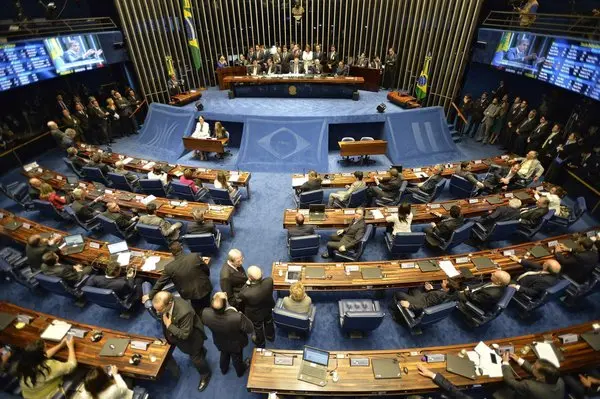
Brazil’s Congress is set to reconvene in a joint session on Thursday, April 30, 2026, to vote on overriding President Luiz Inácio Lula da Silva’s veto of the so-called Dosimetry Bill (PL da Dosimetria). The legislation, which proposes significant changes to how penalties are calculated for crimes against democratic institutions, is widely expected to deliver a sharp political blow to the Planalto Palace.0
The bill, passed by Congress in late 2025 during a period of heightened tension between the executive and legislature, aims to reform sentencing guidelines for offenses such as attempts to abolish the democratic rule of law and coup-related crimes. Key provisions include:
- Applying only the most severe penalty when multiple related crimes are committed, eliminating cumulative sentencing.
- Allowing sentence reductions of up to two-thirds for acts committed in the context of a crowd, provided the individual was not a leader or financier.
- Granting eligibility for regime progression after serving just one-sixth of the sentence, even in cases of recidivism for these specific crimes.
Critics and supporters alike note that the changes could dramatically shorten prison terms for those convicted in connection with the January 8, 2023, events in Brasília. Notably, former President Jair Bolsonaro, sentenced to over 27 years for his alleged role in a coup plot, could see his effective time in a closed regime reduced to roughly two years.1
Strong Opposition Momentum in the Chamber
The opposition enters the vote with considerable confidence, particularly in the Chamber of Deputies. Leaders anticipate securing well over 300 votes to overturn the veto—potentially surpassing the 291 votes that approved the original bill in December 2025. With a solid majority in the lower house, the right-wing bloc views this as an opportunity to score a decisive victory ahead of the 2026 general elections.0
The session, called by Senate President Davi Alcolumbre, will feature secret ballots, adding an element of unpredictability but also potentially shielding some lawmakers from public scrutiny.
Government Strategy Shifts to the Senate
Facing near-certain defeat in the Chamber, the Lula administration is focusing its lobbying efforts on the Senate, where it retains more influence. Overriding a presidential veto requires an absolute majority in both houses: 257 deputies and 41 senators. If the Senate holds firm, the veto could survive despite the lower house’s opposition.0
Government leaders, including congressional leader Randolfe Rodrigues, argue that the bill represents targeted leniency—“casuísmo”—designed primarily to benefit January 8 defendants and Bolsonaro, rather than a broad reform of the penal system. They emphasize respect for the Supreme Federal Court (STF) rulings and warn against weakening accountability for attacks on democratic institutions.
However, frustration is growing within Lula’s own base in the Senate over perceived inaction by government articulators. Some senators report minimal outreach, and tensions linger from prior disputes involving Alcolumbre.0
Broader Political Context and Potential Fallout
The vote comes as Lula pushes other priorities, such as labor reforms including the end of the 6×1 work schedule. Allies worry that a high-profile loss could energize the opposition while risking further friction with Congress. Some government insiders hope the override, if it occurs, will spark public backlash and strengthen their narrative against perceived impunity.
Opposition forces, aligned with Bolsonaro supporters, are framing the push as a stand against overly harsh judicial decisions. The secret ballot and timing—months before major electoral battles—heighten the stakes for all sides.
Regardless of the outcome, the Dosimetry Bill has already reignited debates over justice, accountability for the 2023 events, and the balance of power among Brazil’s branches of government. The joint session on April 30 promises to be a pivotal test of political strength in the lead-up to 2026.


