

Despite Extensive Rap Sheet, Senate Signals Approval for Lula’s Pick Jorge Messias in Latest Brasília Pizza Deal
By Hotspotnews
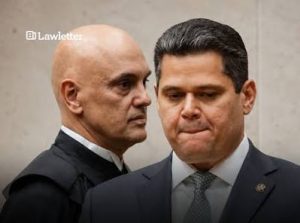
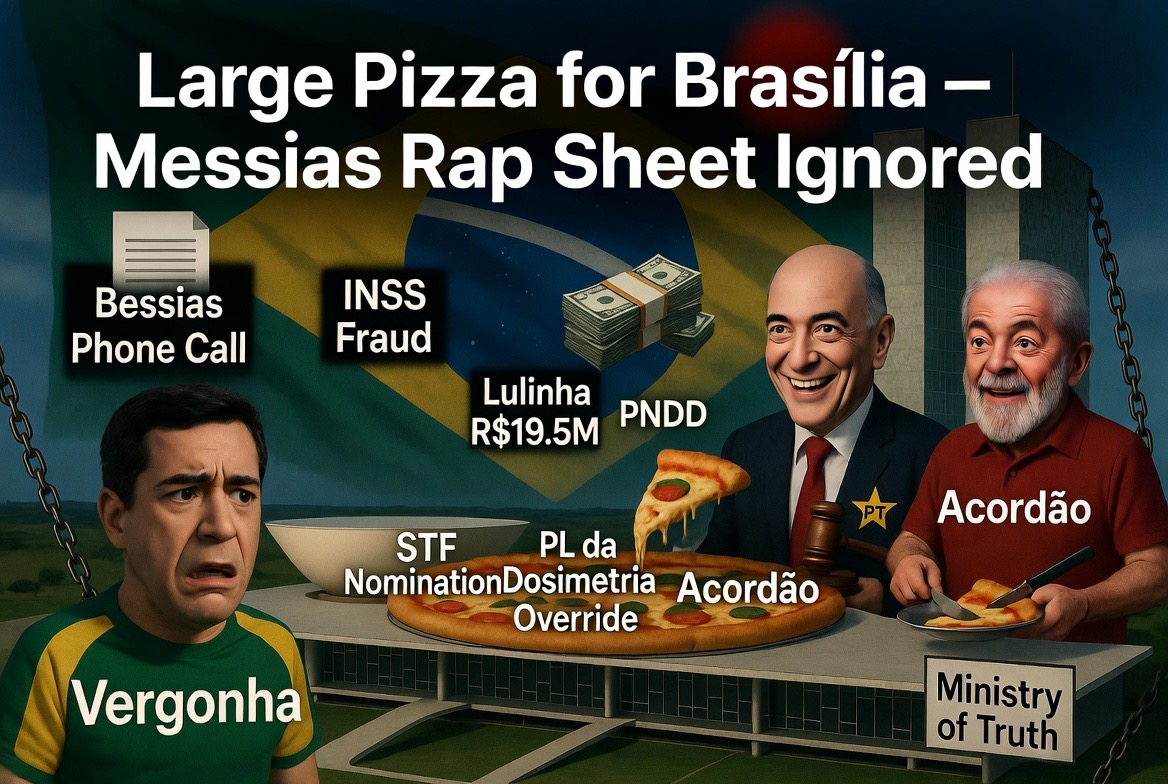
In yet another brazen display of Brasília’s rotten deal-making culture, the Senate is barreling ahead with Jorge Messias’s confirmation process for the Supreme Federal Court (STF)—even as his lengthy rap sheet of political maneuvers, omissions, and partisan loyalty raises serious questions about his fitness for the nation’s highest court. With the sabatina locked in for April 29 and a joint congressional session the very next day on April 30 to potentially override Lula’s veto on the PL da Dosimetria, Congress is once again cooking up a large pizza: Lula gets his loyalist on the STF, centrists and opposition figures get a symbolic shot at sentencing relief for January 8 cases, and the Brazilian people get another serving of impunity and backroom horse-trading.
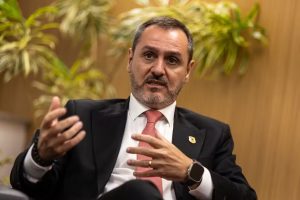
Messias, Lula’s Attorney General, carries a public record that opponents say disqualifies him from the impartiality demanded by the Constitution. Yet government allies project 48–52 votes in the Senate plenary—well above the 41 needed for approval—signaling that scandals, character flaws, and selective justice will once again take a backseat to political expediency.
Here is the extensive rap sheet critics have compiled against Messias:
- The Infamous “Bessias” Episode (2016 Lava Jato Scandal): Messias became a household name when he was the “messenger boy” in the leaked phone call between then-President Dilma Rousseff and Lula. Dilma mentioned sending “Bessias” (a garbled reference to Messias) with Lula’s term-of-office document “if necessary” to grant him privileged forum status amid Lava Jato investigations. Critics view it as clear evidence of an attempt to obstruct justice and shield a powerful ally. Messias has dismissed it as a “fictional character” invented by Lava Jato to destabilize the government, but the episode remains a symbol of his willingness to participate in high-stakes political protection schemes.
- Omission and Alleged Prevarication in the Massive INSS Pension Fraud (“Farra do INSS”): As head of the AGU, Messias is accused of knowing about billion-real frauds involving illegal discounts on retirees’ benefits for over a year—including schemes tied to unions linked to Lula’s own brother, Frei Chico. Internal alerts and CGU reports were reportedly ignored. Instead of acting decisively, the AGU under his watch directed the suspension of lawsuits against the INSS, effectively shielding the government and implicated allies. Only after the scandal exploded in the media and via the CPMI do INSS did visible action begin. Opposition senators and legal analysts have labeled this deliberate prevarication, arguing it shows a willingness to look the other way when PT-linked interests are at stake.
- Creation of the Procuradoria Nacional da União de Defesa da Democracia (PNDD): On his very first day as AGU, Messias established this controversial unit to combat “disinformation.” Detractors call it a “Ministry of Truth” that has selectively targeted critics of the government—filing dozens of complaints against conservative voices, journalists, and opposition figures while ignoring similar issues from the government side. The PNDD has been accused of weaponizing public resources against free speech, turning the AGU into a partisan censorship arm rather than a defender of the Constitution.
- Unwavering PT Loyalty and Partisan Record: Messias has a decades-long trajectory as a “faithful cadre” of the PT. He served key roles under Lula and Dilma, defended the party through Petrolão, Lava Jato, and Dilma’s impeachment, and has publicly criticized “ultraliberalism” under Bolsonaro while praising strong state intervention. He has defended controversial STF actions and pushed narratives that Lava Jato “criminalized politics.” Opponents argue his nomination is pure reward for loyalty, not merit—especially given his youth, which could allow him to serve up to 30 years on the Court, entrenching ideological bias for a generation.
- Super Salaries and Perception of Elite Privilege: As a procurador da Fazenda Nacional, Messias received over R$713,000 in contingency honorários in 2025 alone—on top of his ministerial salary—part of a broader AGU payout of R$6.1 billion that year. Critics point to this as emblematic of the same privileged public-sector perks the system is supposed to scrutinize.
Despite this record, the political machine rolls forward. Rapporteur Senator Weverton Rocha has signaled a favorable report, and the back-to-back April 29/30 calendar screams classic “acordão.” Lula’s family scandals—most notably the intensifying probes into son Fábio Luís “Lulinha” and the INSS fraud web—continue to mount, yet self-interested senators appear ready to rubber-stamp another loyalist onto the STF.
This is not justice; it is the entrenchment of a judicial-political cartel that protects insiders while ordinary Brazilians pay the price through eroded institutions and selective accountability. Conservatives and patriots have every right to be horrified. The STF has already stretched constitutional limits and targeted dissenters; installing Messias only deepens the rot.
The Brazilian people deserve better. Voters must remember these senators’ names in 2026. Those who enable this shameful theater—scandals, rap sheets, and all—have forfeited any claim to represent honest citizens. They choose short-term power deals over the rule of law and national renewal.
The upcoming votes will test whether any spine remains in Congress. If Messias sails through and the dosimetria effort collapses into another half-baked pizza, it will confirm what many already know: too many in Brasília are complicit in a system that shields the elite while the nation suffers. Enough is enough. These men cannot be rewarded with re-election. The horror unfolding this week is a wake-up call—ignore it at Brazil’s peril.