


Divided Government in Washington and the Outlook for U.S.-Brazil Relations
By Hotspotnews
The 2026 midterm elections shifted control of both the House and the Senate to the Democrats, ending two years of unified Republican government. For the remainder of President Trump’s term, domestic legislation will be difficult to pass. In such periods, presidents typically place greater weight on foreign policy and national security tools that do not require new congressional approval. This change in incentives has particular relevance for Brazil, a country whose relationship with the United States combines deep economic ties with recurring political friction.
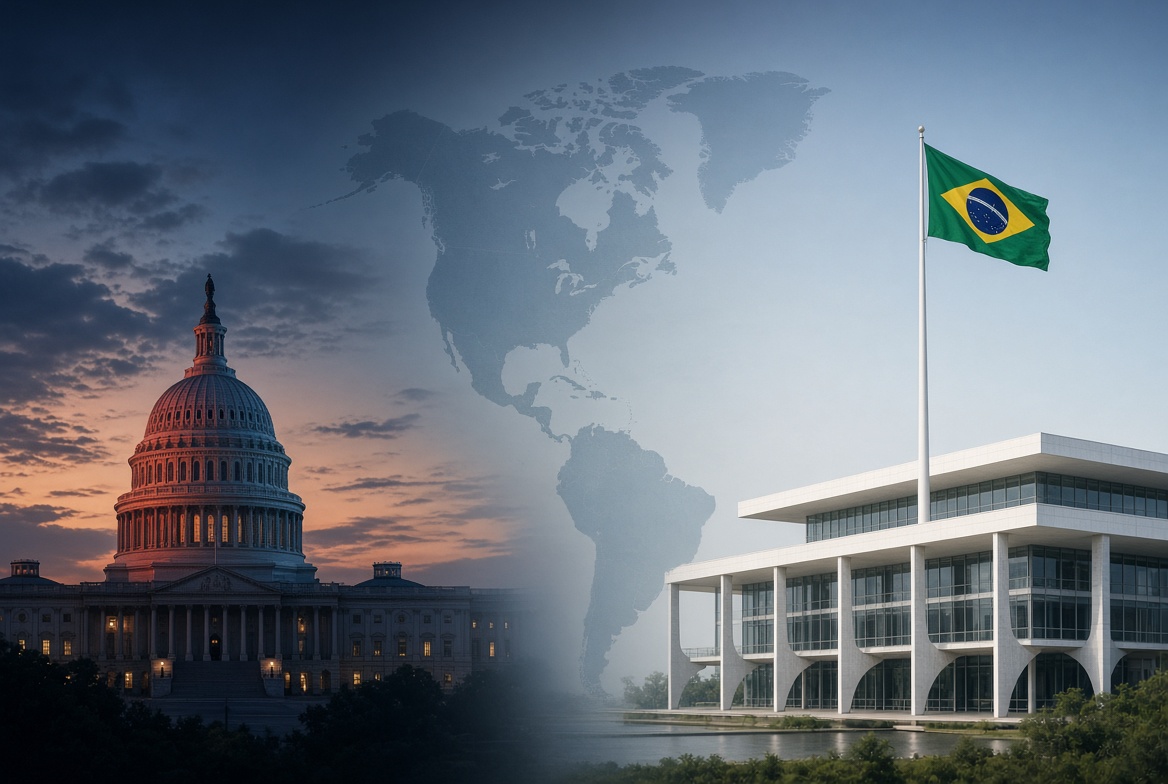
Brazil is the largest economy and most populous country in Latin America, and bilateral trade and investment remain substantial. Brazilian agricultural exports, energy products, and manufactured goods move in significant volumes to the U.S. market, while American firms maintain important positions in Brazilian industry, finance, and technology. These commercial links have usually proven resilient to political disagreements. At the same time, the two governments have differed on regional strategy, the role of outside powers in South America, and the proper approach to governments in Venezuela and Cuba. Under President Lula, Brazil has also strengthened ties with China and emphasized South-South cooperation, developments viewed with concern in parts of the Trump administration.
With a Democratic Congress limiting the administration’s legislative options at home, foreign-policy issues in the Western Hemisphere may receive relatively more attention. The president retains broad authority to direct sanctions policy, designate organizations for special treatment under existing statutes, adjust certain trade measures, and set diplomatic priorities. In practice, this could translate into sharper public criticism of Brazilian positions on regional security questions, closer coordination with governments in the region that share Washington’s concerns about left-leaning political networks, and greater use of executive tools to influence specific Brazilian entities or individuals. None of these steps would require a formal break in relations, yet they can raise the political temperature and complicate routine cooperation.
Brazilian policymakers face a more fragmented American landscape. The White House is likely to be less inclined to seek broad legislative deals and more inclined to act unilaterally on matters it regards as security-related. At the same time, the new Democratic majorities in Congress may offer alternative channels. Some Democratic lawmakers have historically been more open to engagement on climate, sustainable development, and trade facilitation, areas where Brazilian interests sometimes align with their own. Others will focus primarily on oversight of the administration’s Latin America policy. Brasília will therefore need to navigate both an assertive executive branch and a Congress that can amplify or restrain that assertiveness.
Economic interdependence continues to act as a moderating force. Large-scale disruption of trade would impose costs on both sides, and neither government has a clear interest in escalating commercial disputes into a broader confrontation. Brazil’s size and its importance as a supplier of food and energy give it leverage that smaller countries lack. Still, the political relationship is likely to remain more transactional. Areas of practical cooperation—counternarcotics, some scientific exchanges, and certain commercial dialogues—can continue, while strategic disagreements over the direction of the region receive more sustained attention from a White House that has fewer domestic outlets for its energy.
The net effect is unlikely to be a dramatic rupture. It is more probable that U.S.-Brazil relations will operate on two tracks: a relatively stable economic relationship alongside a more pointed and less predictable political dialogue. How far the second track develops will depend on the specific choices made in Washington and the responses chosen in Brasília. Divided government in the United States does not dictate a single outcome, but it does shift the balance of incentives toward greater reliance on executive action in foreign affairs—and Latin America is one of the arenas where that shift is most visible.


