




Congress Is Not Absolute and Not as Powerful as the President
By Hotspotnews
The United States Constitution does not establish Congress as the supreme branch of government. It creates a system of separated powers in which the President and Congress each possess distinct authorities, along with mechanisms to check one another. While Congress holds important tools that can constrain the executive, it does not hold absolute power, nor does it generally outweigh the President across the full range of governing responsibilities.
The Constitution vests the executive power in the President and assigns specific roles that operate independently of congressional approval. The President serves as Commander-in-Chief of the armed forces, with authority to direct military operations and deployments. The pardon power for federal offenses rests solely with the President. The power to recognize foreign governments and to conduct the nation’s diplomacy also belongs primarily to the executive. These authorities allow the President to act in national security and foreign affairs without first securing new legislation. In practice, this means that when Congress is controlled by the opposition, a President can still set priorities, impose certain sanctions, pursue diplomatic initiatives, and manage the operations of the executive branch.
Congress’s strongest powers lie elsewhere. It alone can appropriate federal funds, pass legislation, confirm senior officials and judges, and conduct oversight. These tools give Congress substantial leverage over spending and the domestic agenda. A hostile Congress can slow or block new laws, attach conditions to appropriations, delay nominations, and investigate administration actions. Yet these powers are not unlimited. Congress cannot compel the President to reverse executive decisions in areas of exclusive presidential authority, nor can it spend money or enact statutes without either presidential signature or a veto-proof majority. The power of the purse constrains but does not command the executive.
Under divided government, the practical balance shifts rather than reverses. When the opposition controls both chambers, the President’s ability to advance major domestic legislation declines sharply, and funding disputes become more frequent. At the same time, the President’s independent powers in foreign policy and national security become relatively more important, because those domains require less new statutory authorization. Historical experience shows that presidents facing an opposition Congress do not become subordinate; they adjust by relying more heavily on executive tools while Congress uses its own authorities to limit, investigate, and negotiate.
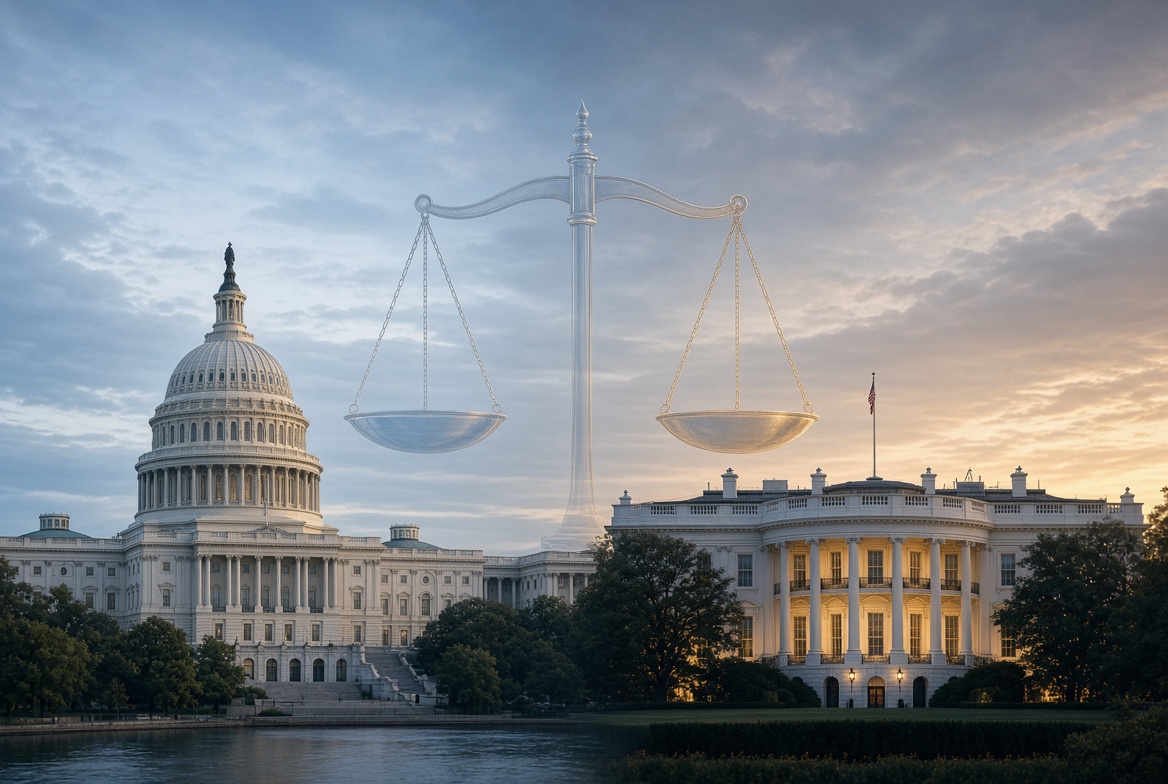
The Constitution therefore rejects the idea that either branch is absolute. Congress possesses formidable checks, particularly over money and lawmaking, but it does not hold superior power over the President as a general matter. The President retains significant independent authority, especially in foreign affairs and as head of the executive branch. The resulting system produces tension and bargaining rather than dominance by one side. That tension is a feature of the design, not evidence that Congress outranks the President.


