


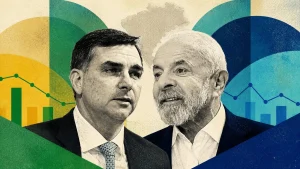



Flávio Bolsonaro Speaks from Exile: A Call for Resistance and the Battle for Brazil’s Institutions
By Hotspotnews
In a moment of profound political tension following the 2026 presidential election, Senator Flávio Bolsonaro delivered his first major public statement from the United States. Speaking after leaving Brazil with his family, he rejected the narrative of flight and instead framed his departure as a deliberate act of resistance. “I did not leave Brazil. I left for Brazil,” he declared, positioning himself as a leader of the opposition operating from abroad.
The message quickly resonated among conservative circles. Federal Deputy Gil Diniz of São Paulo responded with a lengthy video of support, declaring, “We are with you, Flávio Bolsonaro. You have my support, as do all citizens of good will. Count on us.” The video, marked with urgent graphics and repeated emphasis on Bolsonaro’s statement from exile, underscored a broader determination within the right to refuse demoralization after the electoral defeat.
Context of the Departure
Flávio Bolsonaro, the PL candidate who secured nearly 60 million votes in the second round, departed Brazil shortly after the official results confirmed Luiz Inácio Lula da Silva’s victory. He cited concerns over escalating judicial actions and the instrumentalization of institutions against political opponents. In his remarks, he referenced a private conversation with his father, former President Jair Bolsonaro, in which the elder statesman reportedly warned of the trajectory being pursued against the family.
Rather than accept silence or negotiation under pressure, Flávio chose to continue political activity from the United States. He made clear that the move was not an abandonment of the Brazilian people but a strategic decision to preserve a free voice capable of speaking truths that might otherwise be suppressed.
The Core Message: Congress as the Trench
Central to the statement was a practical strategy for the coming years. Flávio identified the National Congress—particularly the Senate—as the primary arena of resistance. He announced his intention to support Senator Rogério Marinho, the opposition leader and former campaign coordinator, for the presidency of the Senate.
This choice is significant. It signals a preference for a clear, ideologically aligned leadership over transactional arrangements that have historically diluted conservative influence. Flávio described potential negotiations that would trade institutional power for limited concessions involving his father’s legal situation as unacceptable. Such deals, he argued, undermine the broader fight for institutional integrity and the rule of law.
By elevating the Senate presidency contest, the statement elevates the importance of legislative majorities built during the 2026 elections. Allies of the broader conservative camp secured substantial representation, creating an opportunity to check executive overreach, scrutinize appointments, and defend constitutional norms from within the system.
A Broader Vision of Opposition
Flávio’s remarks went beyond immediate tactics. He affirmed his readiness to contest the presidency again—potentially well before 2030—and committed to regular communication with supporters. Drawing parallels to historical figures who led resistance from abroad, he rejected the idea that physical presence inside Brazil is the sole measure of political legitimacy.
The message carries a dual purpose: to reassure a mobilized base that the fight continues, and to pressure remaining institutional actors to resist accommodation with the incoming administration. It rejects both despair and premature compromise.
The Response from the Base
Deputy Gil Diniz’s video exemplifies the reaction among committed conservatives. Long-form, direct-to-camera, and unapologetically partisan, it treats Flávio’s statement not as a setback but as a rallying point. Similar expressions of solidarity have appeared across conservative networks, emphasizing loyalty, institutional resistance, and the defense of those facing what they view as selective prosecution.
This response reflects a consistent theme on the Brazilian right: electoral defeat does not equal surrender of principles or the abandonment of allies. The emphasis remains on preserving organizational strength, protecting free speech, and using every available constitutional lever.
Looking Ahead
The coming months will test whether this strategy of legislative resistance can constrain policy excesses and maintain a credible opposition. The Senate presidency election will serve as an early indicator of cohesion among conservative and center-right forces. Success would strengthen the institutional firewall; failure would invite further centralization of power.
Flávio Bolsonaro’s statement from exile does not claim easy victories. It acknowledges the difficulty of the period ahead while refusing to concede the moral or political high ground. For those who view the recent election outcome as the product of institutional imbalance rather than a pure popular mandate, the message is clear: the opposition has not been defeated—it has relocated its center of gravity and redefined the terms of engagement.
The real test will be whether this clarity translates into disciplined action inside Brazil’s remaining independent institutions. For now, the conservative response has been one of solidarity and resolve.


