



Flávio Bolsonaro’s High-Level Washington Meetings Signal Strong U.S.-Brazil Alliance Against Crime and Socialism
By Hotspotnews
Washington, D.C. – In a clear demonstration of deepening ties between conservative leaders, Brazilian Senator Flávio Bolsonaro held pivotal meetings with top American officials this week, advancing a shared agenda of national security, border integrity, and the fight against transnational criminal organizations.
On Tuesday, May 26, Flávio Bolsonaro, a leading pre-candidate for Brazil’s 2026 presidential election from the Liberal Party (PL), met privately with President Donald J. Trump in the Oval Office. The hour-and-forty-minute discussion focused on strengthening bilateral cooperation and addressing the growing threat posed by Brazilian drug gangs. Accompanied by his brother, federal deputy Eduardo Bolsonaro, and influential commentator Paulo Figueiredo, Flávio emphasized the need for the United States to formally designate Brazil’s most violent criminal factions—Primeiro Comando da Capital (PCC) and Comando Vermelho (CV)—as foreign terrorist organizations.
These gangs have turned parts of Brazil into battlegrounds, exporting violence, fentanyl precursors, and chaos across the Americas. Trump, who has made dismantling cartels and securing borders a cornerstone of his administration, reportedly received the request favorably, reinforcing the “America First” and “Brazil First” partnership that defined his previous term.
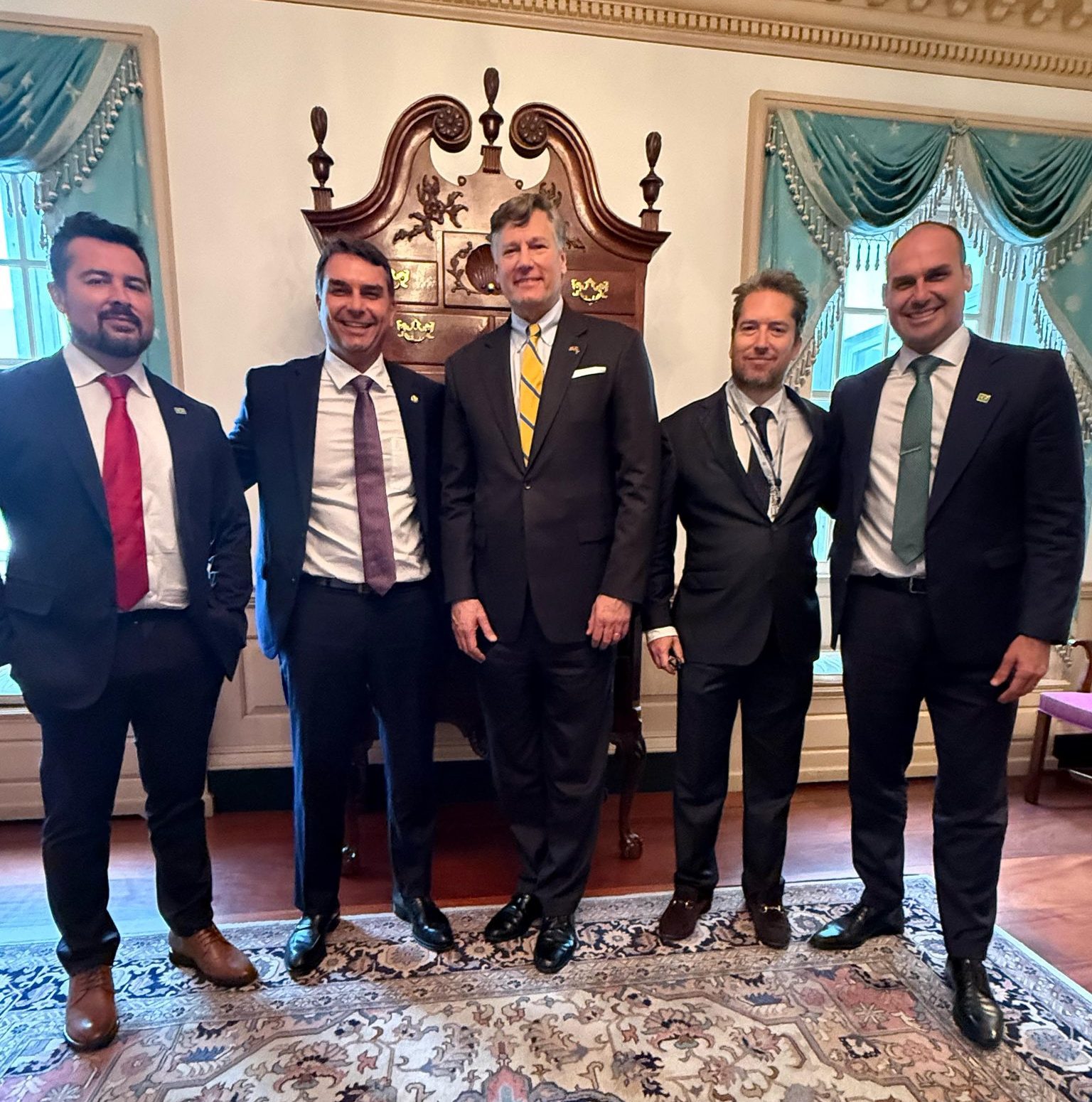
The following day, Wednesday, May 27, Flávio continued high-level engagements at the U.S. Department of State. He met with Deputy Secretary Christopher Landau—Secretary Marco Rubio’s top deputy—and Senior Advisor Darren Beattie for Brazil policy. The conversations built directly on the Trump meeting, exploring concrete opportunities for security collaboration under a potential future Bolsonaro administration.
Sources close to the meetings highlighted a unified conservative vision: treating these criminal networks not as mere street gangs but as the terrorist entities they are—organizations that destabilize democracies, fuel migration crises, and threaten U.S. citizens through narcotics trafficking and urban warfare. Discussions also touched on broader strategic alignment, including economic partnerships and resistance to leftist ideologies that have weakened institutions across Latin America.
Strategic Consequences for Brazil and the Hemisphere
These meetings carry profound implications. For Brazil, Flávio Bolsonaro’s successful outreach positions him as the natural heir to his father Jair Bolsonaro’s legacy of law-and-order governance. By securing face-time with President Trump and senior State Department officials, Flávio signals to Brazilian voters that a conservative return to power will restore strong alliances with the free world rather than cozying up to globalist forums or socialist regimes in Venezuela, Cuba, or China.
Designating PCC and CV as terrorist organizations would unlock powerful tools for the United States: asset freezes, travel bans, enhanced intelligence sharing, and potential military support in dismantling these networks. It would also send an unmistakable message that the era of treating narco-terrorists with kid gloves is over.
Regionally, the meetings strengthen the conservative axis in the Americas at a critical moment. With leftist governments struggling with economic collapse, mass emigration, and rising crime, the Trump-Bolsonaro alignment offers a proven alternative: secure borders, free-market policies, and uncompromising defense of sovereignty. It counters the influence of BRICS expansionism and reminds allies that enduring partnerships are built on shared values of liberty, family, and national strength—not bureaucratic globalism.
Flávio Bolsonaro’s Washington visit is more than diplomacy; it is a bold statement that Brazil’s conservative movement remains a vital force. As the 2026 election approaches, Brazilians tired of crime, corruption, and cultural decline now have a clear choice: continued weakness under the left, or a renewed alliance with America’s strongest leader to restore order and prosperity.
The coming months will reveal whether these discussions translate into decisive action—but the foundation laid this week in Washington offers real hope for a safer, freer hemisphere.


