


Florida Primaries Deliver a Clear Message: The Sunshine State Remains Firmly Republican
By Hotspotnews
On August 18, 2026, Florida voters headed to the polls for a primary that once again underscored the state’s conservative tilt. While national media fixated on a few progressive upsets within the Democratic Party, the broader results reaffirmed what Floridians have known for years: this is still a Republican state, and its voters continue to reject the leftward drift that has overtaken much of the Democratic Party.
U.S. Rep. Byron Donalds, the Trump-endorsed candidate, secured the Republican nomination for governor with nearly 48 percent of the vote, comfortably outpacing Lt. Gov. Jay Collins and a crowded field. On the Democratic side, former Republican-turned-Democrat David Jolly took the nomination. In the U.S. Senate contest to fill the remainder of Marco Rubio’s term, incumbent Sen. Ashley Moody crushed her Republican challengers with roughly 80 percent. Across the board, Republican primaries reflected a preference for proven conservative leadership over more fringe alternatives.
The Democratic results told a different story. State Rep. Angie Nixon, aligned with the Democratic Socialists of America, defeated retired Army Lt. Col. Alex Vindman in the Senate primary. That outcome highlighted the growing influence of the party’s progressive wing even in a state that has steadily shifted rightward over the past decade. Florida Democrats nominated candidates further left than the state’s overall electorate, a pattern that has contributed to repeated losses in statewide races.
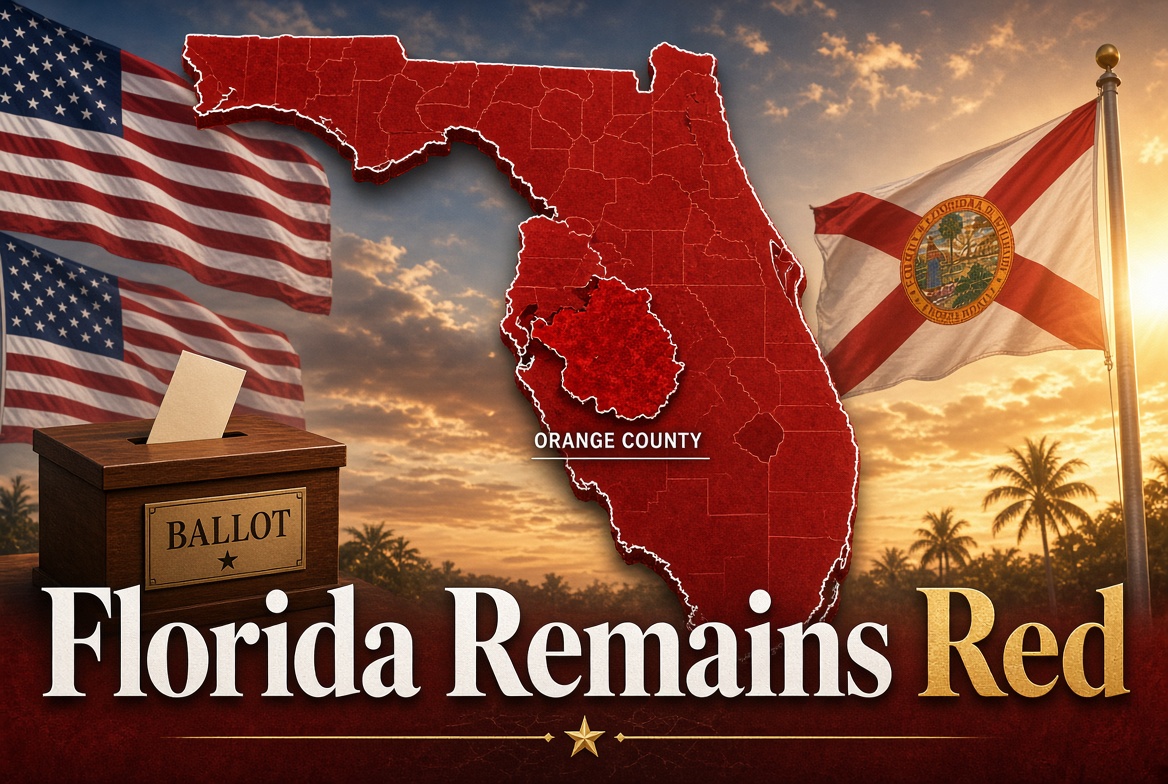
Orange County, home to Orlando, remains one of the bluer pockets in an otherwise red state. In the nonpartisan race for county mayor, Clerk of Courts Tiffany Moore Russell finished first with about 32 percent, followed by businessman Chris Messina at roughly 28 percent. The two will face off in a November runoff to succeed term-limited Mayor Jerry Demings. Former Congresswoman Stephanie Murphy, despite heavy spending, finished third. In the Democratic primary for Clerk of Courts, Roberta Walton Johnson prevailed over former Property Appraiser Rick Singh. These local results reflect Orange County’s more urban, Democratic-leaning registration, where Democrats still hold a plurality.
Yet Orange County does not define Florida. Statewide registration and voting patterns show Republicans maintaining a durable advantage. Donalds’ strong showing, Moody’s dominant win, and the broader success of Republican candidates in congressional and state races demonstrate that the conservative majority remains intact. Florida has elected Republican governors for years, delivered the state for Donald Trump, and consistently sent more Republicans than Democrats to Tallahassee and Washington. Demographic changes, in-migration from high-tax blue states, and a cultural preference for limited government and traditional values have only strengthened that foundation.
Critics on the left will point to progressive primary wins and urban counties like Orange as evidence of a shifting landscape. The data say otherwise. When the general election arrives in November, Florida voters will once again face a clear choice between mainstream conservative governance and a Democratic Party that continues to nominate candidates further from the center. History and recent results suggest the Republican edge will hold.
Florida is not California or New York. It remains a state where Republican primaries matter more, where conservative policies on taxes, education, and public safety resonate with a majority of voters, and where the political center of gravity still sits firmly on the right. The 2026 primary did not change that reality. It reinforced it.