





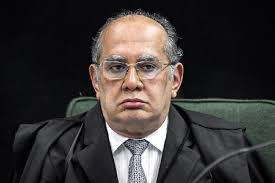
Gilmar Mendes’ Latest Salvo: An Attempt to Discredit Mendonça and Shield the Powerful in the Banco Master Scandal
In a striking public intervention on national television, Supreme Court Justice Gilmar Mendes took aim at his colleague André Mendonça, accusing him of committing a “gross error” in handling aspects of the high-profile Banco Master investigation. The comments, delivered during a June 22 appearance on the Roda Viva program, represent more than routine judicial disagreement. They appear calculated to cast doubt on the integrity of the probe at a critical moment, when the case threatens to expose deep networks of financial fraud potentially reaching influential figures across Brazil’s political and institutional landscape.
The Banco Master scandal centers on alleged massive fraud at the now-liquidated bank, involving its controller Daniel Vorcaro and associates. The investigation, transferred to Mendonça’s oversight after Justice Dias Toffoli stepped aside amid mentions of his name in seized materials, has produced arrests, preventive detention orders, and ongoing scrutiny of complex financial schemes. Mendonça, as relator, has maintained a steady hand: authorizing investigative steps, upholding key precautionary measures, and insisting that any collaboration agreement must be serious, voluntary, and genuinely useful to justice rather than a tool for selective protection.
Mendes framed his criticism around procedural propriety. He argued that a relator should not engage with or even be exposed to preliminary discussions of plea deals, which are properly the domain of prosecutors and police. He pointed to Mendonça’s acknowledgment in open court of being approached by Vorcaro’s lawyers with what was described as a “selective delação” proposal—one that appeared designed to spare certain powerful names. Mendes portrayed this as an impropriety that risked repeating perceived excesses from past operations.
Yet this framing strains under scrutiny. Mendonça has been transparent and consistent. In courtroom exchanges, he explicitly rejected the selective approach offered to him, stating clearly that he had no interest in deals that cherry-pick targets. He emphasized that he did not access the substantive content of proposals and reiterated that his focus remains on what the evidence demands, not on engineering outcomes or protecting anyone. Preventive detentions upheld by the Second Panel—including for Vorcaro family members—were justified on concrete risks of interference and the gravity of the alleged crimes, not as leverage for testimony. Mendonça described the scheme as bearing “contours of a mafia,” underscoring the organized nature of the alleged wrongdoing rather than downplaying it.
Far from crossing lines, Mendonça has operated within the bounds of a relator’s responsibilities: overseeing the case file, ensuring procedural regularity, evaluating requests from parties, and guarding against deals that could compromise the investigation’s credibility. Brazilian law requires judges to homologate final agreements but does not prohibit relators from receiving information about ongoing discussions or rejecting tainted proposals outright. Mendonça’s actions demonstrate precisely the impartial rigor conservatives demand in high-stakes corruption cases—rejecting half-measures that could let key players off the hook while advancing a thorough accounting of the facts.
Mendes’ intervention stands in contrast. As the Court’s longest-serving justice, he has long positioned himself as a defender of institutional prerogatives. His timing—publicly questioning a colleague’s conduct in the middle of a sensitive probe that could implicate elites—invites questions about motive. Rather than strengthening public confidence through collegial dialogue behind closed doors, the televised broadside risks sowing division and providing ammunition to those who would prefer the investigation slowed or discredited. In scandals of this magnitude, attempts to undermine the relator often serve interests other than pure procedural purity.
Conservatives have rightly criticized judicial overreach and “ministrocracia” in recent years. True accountability, however, requires robust investigations unhindered by internal sabotage or selective procedural complaints. Mendonça has shown no evidence of bias or overstep. He has rejected efforts to turn the process into a bargaining chip for the powerful and has defended evidence-based measures against attempts to equate them with past controversies. His approach prioritizes substance over spectacle and results over narrative protection.
The Banco Master case demands exactly this kind of steady, uncompromised oversight. Gilmar Mendes’ public critique does little to advance justice and much to distract from the core task: following the evidence wherever it leads, without fear or favor. Mendonça has stayed on the right side of that line. Brazilians watching the scandal unfold should hope he continues to do so—free from attempts to discredit the work from within the Court itself.


