



When the Chief Prosecutor Becomes the Problem: Gonet’s Errors in the Banco Master Scandal
By Hotspotnews
Brazil’s institutions are once again being tested by a simple question: does the law apply equally at the top? On September 1, 2026, a Federal Police report extracted from the phone of Daniel Vorcaro, former controller of Banco Master, became public. The document does not merely describe a banker seeking influence. It places Procurador-Geral da República Paulo Gonet inside the same informal circle. The subsequent response from the PGR itself has only deepened the institutional wound.
The mistakes
The first error is the relationship itself. Through lawyer Ciro Soares, who later acted in Vorcaro’s defense, messages attributed to Gonet reached the banker in March 2025. They were not dry official notes. They expressed longing (“Já estou com saudades de você”), affection, and anticipation of cigars and Macallan whisky at a London event organized around the bank. Gonet then asked whether his son Pedro could join. Vorcaro approved the expenses with the line “Pedro e Ciro ok.” The 2025 London forum was later cancelled; the PF report does not confirm money actually changed hands. The appearance, however, is already damaging: the head of the accusatory institution accepted, or at least sought, hospitality from a man whose financial operations would soon be treated as a multi-billion-real fraud case.
The second error is timing and context. These exchanges occurred while the investigation into Banco Master’s alleged R$12 billion credit-portfolio scheme was advancing toward the November 2025 Operation Compliance Zero arrests and the Central Bank’s liquidation of the institution. Later messages recovered from Vorcaro show him asking others to “reinforce with Paulo and Andrei” so that subordinates at the PGR and Federal Police would not commit “sacanagem.” Whether Gonet ever acted on such requests is a separate question. The fact that an investigated party believed the PGR was a reachable channel is itself a failure of distance.
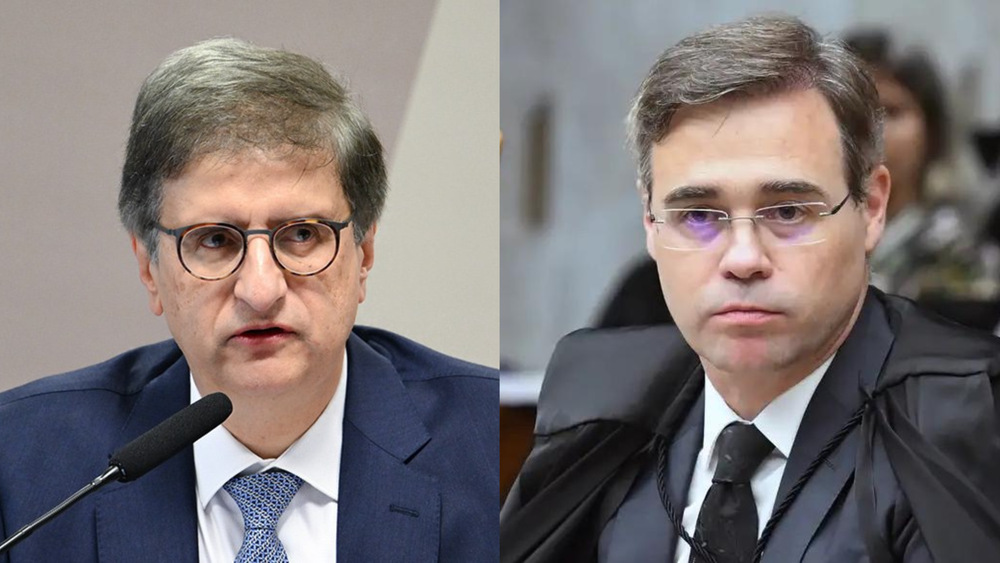
The third error is the official reaction. Instead of recusing himself from any decision touching the Master file, Gonet personally signed the PGR manifestation asking the Supreme Court to declare the entire PF report null. His argument is procedural: Minister André Mendonça lacked competence to order the police to identify interlocutors without a request from the Public Ministry or the police themselves, and an inquiry touching another STF minister belongs to the plenary, not a single rapporteur. That legal point may be debated. What cannot be debated is the optics. The same official cited in the messages is now asking that the evidence of those messages be discarded on technical grounds. That is the opposite of the zeal, probity and decorum required of the PGR under Complementary Law 75/93.
The fourth error is structural. Gonet also presides over the Conselho Nacional do Ministério Público, the body constitutionally charged with disciplining members of the Public Ministry, including its own president. A citizen or lawyer who wants the PGR investigated must file with an organ headed by the PGR. That is not independence. It is a closed circuit.
Measures taken so far
On September 1, Minister André Mendonça lifted secrecy on the PF report and forwarded it to the PGR. Gonet answered the same day with the request for nullity. Mendonça has already signaled that the material should go to the STF plenary for a public, transparent session; the date now depends on President Edson Fachin.
Separately, lawyer Wallace Oliveira protocolled a Reclamação Disciplinar at the CNMP against Gonet. The filing asks for investigation by the National Corregedoria, Gonet’s impediment in the Master case, and precautionary removal until the facts are clarified. The petition was registered on September 1, 2026. Whether the CNMP can act against its own president without recusal or substitution remains an open institutional question.
No criminal investigation of Gonet has been announced. He is cited, not formally named as a target. That distinction matters legally. It does not erase the appearance problem.
Possible consequences
If the PGR remains the decision-maker on a file in which he is personally mentioned, public confidence in the independence of the accusatory power will continue to erode. The comparison with Minister Dias Toffoli, who left the Master relatoria after earlier revelations, is already being drawn. A PGR who does not take the same step invites the charge of double standard.
The CNMP complaint, even if initially blocked or delayed by the presidency conflict, puts the Corregedoria and the plenary of the Council under pressure. A refusal to examine the facts would confirm the worst reading: that the institution that lectures others on accountability refuses it for itself.
Politically, the episode arrives in an election year. Conservatives who have long argued that Brazilian high institutions protect their own now have a concrete, documented case. The risk for the government and for the PGR is not only legal. It is the perception that the machinery of justice bends when the names are sufficiently important.
The correct institutional path is straightforward: Gonet should recuse himself from any further act in the Master investigation, the CNMP should assign the disciplinary file to the Corregedoria without his participation, and the STF plenary should examine the PF material in open session. Anything less will look like the system defending itself rather than the law.
No one is above the control that the Public Ministry demands of everyone else. That principle is not left or right. It is the minimum condition for a republic.
#BancoMaster #PauloGonet #PGR #CNMP #STF #EstadoDeDireito #Accountability #Brasil
Sources: G1 reporting on the PF report and timeline of messages; Folha de S.Paulo and Valor Econômico coverage of Gonet’s nullity petition; Estadão and O Globo accounts of the London event planning and the “saudades” messages; CNN Brasil and Gazeta do Povo on the son’s travel authorization; CBN analysis of recusal and removal rules for a PGR; CNMP internal rules on disciplinary complaints.


