


Iranian Transcript of Lula Meeting Sparks Diplomatic Questions and Domestic Backlash
By Hotspotnews
Antalya, Turkey / Brasília — Iranian authorities released a detailed account of a private meeting between Brazilian President Luiz Inácio Lula da Silva and Iranian President Masoud Pezeshkian on the sidelines of COP31 that attributes markedly stronger anti-U.S. language to the Brazilian leader than Brazil’s own official readout. The discrepancy has fueled political criticism at home and raised questions about Brazil’s positioning amid the ongoing U.S.-Iran conflict
Two Versions of the Same Meeting
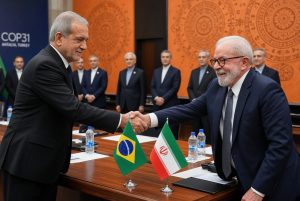
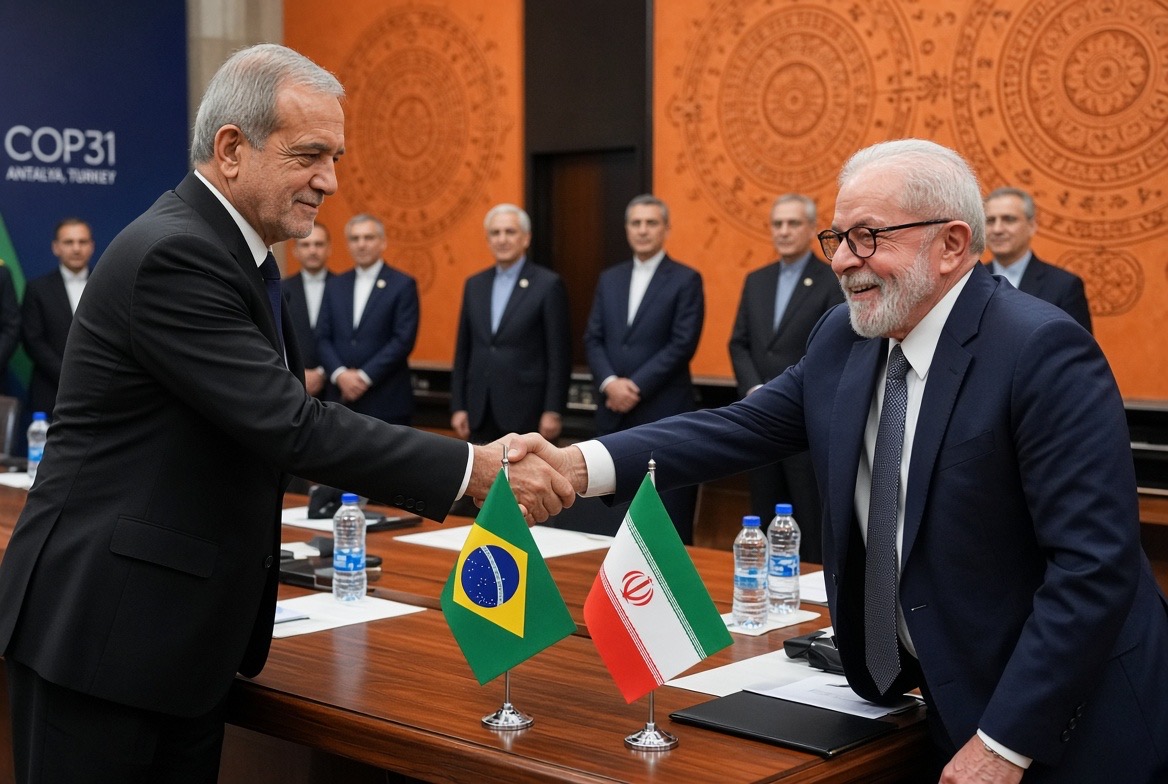
On November 12, 2026, in Antalya, the two presidents held a bilateral meeting. Brazil’s Planalto Palace issued a measured statement: the leaders discussed the Middle East war, Pezeshkian updated Lula on peace talks mediated by Qatar and Pakistan, Lula recalled Brazil’s role in the 2010 Tehran Declaration, encouraged a peaceful solution, defended Iran’s right to civilian nuclear energy, expressed concern over the war’s impact on global fuel and food prices, called for free navigation in the Strait of Hormuz, and signaled interest in expanding trade—particularly Brazilian imports of Iranian fertilizers. Bilateral trade had reached roughly $3 billion in 2025. Lula posted a similar summary on X.
The Iranian presidency’s transcript, reported by Brazilian outlets including Metrópoles, attributes sharper remarks to Lula. According to that account, he said: “From our point of view, in this war an injustice was committed against Iran and the United States is guilty and responsible for this aggression.” He was also quoted describing American officials as “accustomed to lying,” stating that “the lies of the Americans have no limits,” and calling for efforts to “correct and discredit the false narratives” about Iran. The transcript further records expressions of “deep solidarity with Iran,” a description of the bombings (including those that killed Supreme Leader Ali Khamenei) as “very hard and bitter,” and remarks linking the conflict to higher energy prices that have hurt Brazil and other countries. Brazilian officials have not confirmed any of these statements.
Official English-language statements from the Iranian presidency about the meeting remain more restrained, focusing on expanded cooperation, trade, and multilateral dialogue.
Probable Consequences
The gap between the two accounts creates several practical risks.
Diplomatic strain with Washington. The United States is Brazil’s largest trading partner and a critical source of investment and technology. Attributing to Lula the language of U.S. “aggression” and habitual lying, even if unconfirmed, gives the Trump administration ready material for criticism. Brazil has already faced U.S. tariffs and political friction; visible alignment with Tehran on the war could complicate ongoing economic negotiations or invite secondary-sanctions scrutiny on any expanded fertilizer or other trade with Iran.
Domestic political exposure. Opposition figures and conservative media have already framed the Iranian readout as Iran “exposing” Lula. In a polarized Brazilian environment, the episode supplies a clear narrative of the president saying one thing publicly and another privately to an adversary of the United States. Expect sustained attacks in Congress, social media, and the 2026–2027 political cycle, especially if U.S. officials comment publicly.
Credibility and consistency costs. Brazil has long sought a non-aligned or multi-aligned posture. Publishing a mild official note while an interlocutor releases a far more critical transcript undermines message control. It also risks reducing Brazil’s usefulness as a potential interlocutor: partners may question whether private Brazilian assurances match public positions.
Limited material fallout in the short term. Fertilizer imports from Iran remain a practical interest for Brazilian agriculture, and the volumes involved are modest relative to total trade. Absent concrete new agreements or U.S. secondary sanctions, the economic impact is likely to stay contained. The larger damage is reputational and political rather than immediate commercial.
Is This an Embarrassment?
Yes, for the Lula government and, by extension, for Brazil’s diplomatic image. The embarrassment stems less from the content of the remarks—Lula has previously criticized the U.S.-Israeli strikes on Iran—than from the loss of control over the narrative and the resulting contrast between the Brazilian and Iranian accounts. Governments routinely use private meetings to speak more frankly; the problem arises when the other side decides to publicize the frank version and the host government neither confirms nor firmly denies it.
In international relations, such episodes are not rare, but they are rarely cost-free. For a president who has invested heavily in projecting Brazil as a responsible, autonomous global player, the optics of an unconfirmed transcript that places Brazil on the side of “injustice” rhetoric against the United States are unhelpful. The Planalto’s silence so far leaves the Iranian version as the more detailed public record, allowing critics to define the story.
Whether the consequences remain largely rhetorical or translate into tangible U.S. pressure will depend on how Washington chooses to respond and how Brasília handles the discrepancy in the coming days. For now, the episode has already handed Lula’s opponents a clear line of attack and given Iran a propaganda victory at Brazil’s expense.
Sources for the article
- Iranian transcript / stronger quotes attributed to Lula:
Metrópoles (Sam Pancher) – “Lula disse ao presidente do Irã que país foi injustiçado na guerra com EUA” (13 Nov 2026). This is the primary Brazilian report detailing the Iranian version and noting that Planalto has not confirmed the statements.
https://www.metropoles.com/mundo/lula-disse-ao-presidente-do-ira-que-pais-foi-injusticado-na-guerra-com-eua - Brazilian official readout (milder version):
- G1: “Lula discute guerra e Estreito de Ormuz com presidente do Irã” (12 Nov 2026) – based on Planalto communication.
https://g1.globo.com/politica/noticia/2026/11/12/lula-discute-guerra-e-estreito-de-ormuz-com-presidente-do-ira-veja-balanco-das-reunioes-na-cop31.ghtml - Estadão, Folha de S.Paulo and UOL published parallel reports summarizing the same official note (focus on Hormuz, fertilizers, civilian nuclear rights, mediation by Qatar/Pakistan, and the 2010 Tehran Declaration).
- G1: “Lula discute guerra e Estreito de Ormuz com presidente do Irã” (12 Nov 2026) – based on Planalto communication.
- Iranian official framing of the meeting:
Tehran Times and related IRNA-linked coverage (13 Nov 2026) describe the talks as focused on expanding cooperation, trade, and regional peace, while some accounts (including secondary reports citing IRNA) include stronger anti-U.S. language from the Iranian side. - Context and photos: Official images by Ricardo Stuckert/PR widely published by G1, Estadão, Folha and others. Lula’s own public comments and X post aligned with the milder Brazilian note.
#Lula #Irã #COP31 #Pezeshkian #DiplomaciaBrasileira #EstreitoDeHormuz #BrasilEUA #Planalto
#Lula #Iran #COP31 #Pezeshkian #BrazilIran #Hormuz #USIranWar #Diplomacy:
#Lula #Irã #Iran #COP31 #Pezeshkian #Brasil #Brazil #Diplomacia #Hormuz


