




Judicial Tyranny in Brazil: Alexandre de Moraes Escalates War on Bolsonaro Family to Silence Dissent
By Hotspotnews
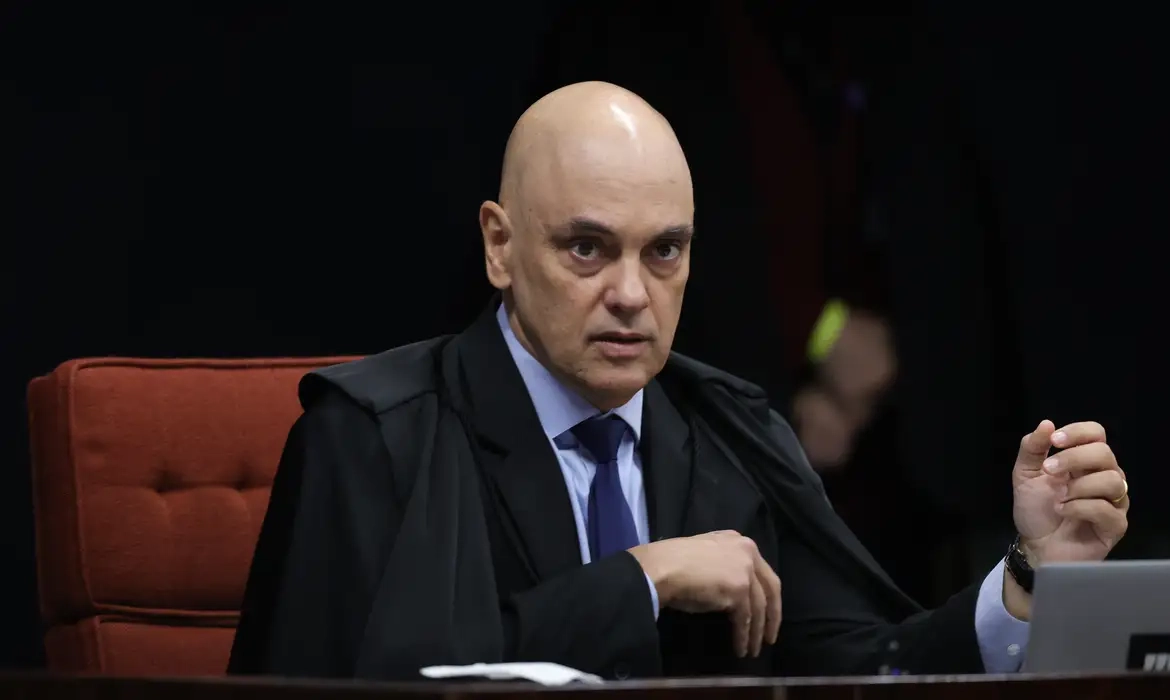
In a brazen display of politicized justice that should alarm every defender of democracy, Brazilian Supreme Federal Court Justice Alexandre de Moraes has once again weaponized the judiciary against former President Jair Bolsonaro and his family. This latest move reeks of desperation from a court faction determined to crush conservative voices and bury any investigation into alleged abuses of power under Brazil’s leftist establishment.
Specific Legal Charges: “Coação no Curso do Processo” (Article 344 of the Brazilian Penal Code)
Eduardo Bolsonaro faces the charge of “coação no curso do processo” — coercion in the course of legal proceedings — under Article 344 of Brazil’s Penal Code. The law states: “To use violence or serious threat, with the aim of favoring one’s own or another’s interest, against an authority, party, or any other person who functions or is called to intervene in a judicial, police, or administrative proceeding, or in arbitral judgment.”
The penalty ranges from 1 to 4 years of reclusion plus a fine. Prosecutors from the PGR (Procuradoria-Geral da República), under Paulo Gonet, accuse Eduardo of orchestrating international pressure while in the United States. This allegedly included lobbying for economic sanctions, tariffs on Brazilian exports, visa suspensions for STF ministers and officials, and potential Magnitsky Act applications. The goal, per the accusation, was to create “instability and fear” to influence or disrupt the Supreme Federal Court’s proceedings in the “golpe de Estado” (coup attempt) case — Action Penal 2.668 against his father, Jair Bolsonaro.10
The STF’s First Panel accepted the denunciation unanimously in November 2025, making Eduardo a formal defendant (réu). Judgment by the panel is scheduled for June 16, 2026, after Moraes released the case. Prosecutors claim these actions went beyond speech, constituting “grave threats” with specific intent to favor family interests in an ongoing judicial process. Moraes has also probed expanding the inquiry to include Jair and Senator Flávio Bolsonaro for possible coordination.8
Where Is the Error? (Critical Analysis in the Conservative View)
The fundamental error lies not in Eduardo’s actions, but in the expansive and selective interpretation of Article 344 by Moraes and the PGR. Traditional application of this article typically involves direct violence or concrete threats (e.g., physical intimidation or explicit blackmail against a judge or witness in a specific case). Here, it stretches to cover public political advocacy and diplomatic lobbying — urging a foreign government (the United States under President Trump) to apply legitimate economic and human rights pressure on a perceived authoritarian judiciary.
This is a novel, dangerous precedent:
- No actual violence or direct threat: Eduardo’s statements were public calls for accountability regarding alleged judicial overreach, election concerns, and “crimes against humanity” — protected political speech under any reasonable democratic standard.
- Moraes as both victim and judge: The justice accusing coercion is the same one targeted by the alleged “threats” and serving as rapporteur. This violates basic impartiality principles.
- Selective enforcement: Leftist figures and international activists routinely call for sanctions or pressure on Brazil without facing similar charges. This is classic lawfare — criminalizing dissent to protect institutional power.
- Chilling effect on advocacy: If lobbying a foreign ally against perceived tyranny becomes “coercion,” then opposition politics itself is criminalized. Eduardo’s defense rightly frames this as legitimate exposure of abuses, not obstruction.
For millions of Brazilians who supported Jair Bolsonaro’s pro-family, anti-corruption, and economically responsible agenda, this represents yet another chapter in a sustained campaign of political persecution. While leftist figures face little scrutiny for their own alleged overreaches — including questions surrounding election integrity, pandemic policies, and potential human rights violations — the right is hounded relentlessly. Eduardo’s call to highlight these issues is not obstruction; it is a patriot’s duty to demand accountability in the face of institutional capture.
Moraes’ critics argue this latest gambit is pure coercion: punish the son to pressure the father, and silence anyone daring to expose judicial overreach. Brazil’s Supreme Court, once a pillar of the republic, now appears to function as an unelected politburo, picking winners and losers based on ideology. True democrats everywhere should recoil at the sight of a sitting justice expanding inquiries not to uncover truth, but to consolidate power and intimidate opposition.
The Bolsonaro family has endured raids, investigations, and character assassination for years. Yet their resilience inspires a movement that refuses to bow to authoritarian tactics disguised as legal process. As this case heads to judgment on June 16, Brazilians must ask: When will the judiciary answer for its own excesses? When will genuine rule of law return to a nation where dissent is increasingly treated as treason?
The fight is far from over. Supporters of liberty in Brazil and around the world are watching closely. Attempts to criminalize political speech and international advocacy only underscore the weakness of those clinging to power through selective prosecution. Jair Bolsonaro and his family stand not just for themselves, but for the millions who reject this slide into judicial dictatorship.


