

Lula Surrenders to Putin: Brazil Rolls Out the Red Carpet for a Russian GRU Super-Spy While Trump Exposes the Betrayal
By Hotspotnews
In a stunning display of ideological weakness and strategic incompetence, Brazilian President Luiz Inácio Lula da Silva’s government has once again chosen Moscow over Washington. Just days ago, Lula’s Justice Ministry authorized the expulsion of Sergey Cherkasov, a confirmed Russian GRU military intelligence operative who spent more than a decade living under a stolen Brazilian identity as “Victor Muller Ferreira.” This decision effectively hands the spy back to Vladimir Putin’s regime on a silver platter, despite urgent American warnings and a clear record of espionage against the West.
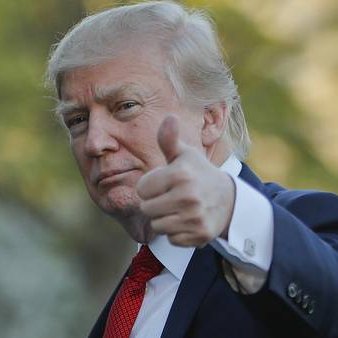
9This is not mere diplomacy gone wrong. This is a deliberate act of appeasement by a leftist government that has long flirted with authoritarian regimes while undermining its most vital strategic partner: the United States. Donald Trump, back in the White House and laser-focused on restoring American strength, has rightly called out the outrage. His administration expressed deep concern that Brazil’s move undermines the global fight against foreign interference and erodes the shared commitment to protecting democratic institutions from hostile actors. Trump sees it for what it is: a dangerous signal that leftist governments in Latin America will prioritize ideological solidarity with dictators over Western security.
Cherkasov’s story reads like a Cold War thriller updated for the 21st century. For over twelve years, this Russian agent operated as an “illegal” — the most elite and deniable category of spy. Using forged Brazilian documents, including a fraudulent birth certificate, he built an elaborate cover story. He attended graduate school at Johns Hopkins University’s School of Advanced International Studies in Washington, D.C., where he gathered intelligence on American citizens, foreign policy discussions, and key institutions. He maintained covert communications with his GRU handlers throughout. After leaving the United States, he attempted to infiltrate the International Criminal Court in The Hague, Netherlands — almost certainly to sabotage investigations into Russian war crimes in Ukraine. Dutch intelligence exposed him in 2022. He was deported to Brazil, where he was convicted of identity fraud and imprisoned.
The United States charged him with acting as an illegal agent of a foreign power, visa fraud, bank fraud, and wire fraud. American authorities wanted him held accountable on U.S. soil. Instead, Lula’s government — which had already rejected a prior U.S. extradition request in 2023 — has now cleared the path for his return to Russia. Reports indicate the expulsion order was published in Brazil’s official gazette, with no serious effort to coordinate with Washington or extract meaningful concessions from Moscow. The message is unmistakable: Brazilian sovereignty and Western alliances take a backseat to Lula’s globalist fantasies and his cozy relationship with BRICS partners, including Putin’s Russia and Xi Jinping’s China.
This is classic Lula. The same man who has spent years cozying up to socialist dictators, downplaying threats from Beijing and Moscow, and positioning Brazil as a leader of the anti-American “Global South.” His foreign policy is not neutral — it is actively hostile to the idea of a strong Western alliance. By shielding foreign spies who violate Brazilian law for over a decade and then quietly shipping them home to their masters, Lula’s administration reveals its true priorities. National security? Irrelevant. Alliance with the United States — Brazil’s largest trading partner and a bulwark against regional chaos? Secondary to ideological posturing.
The consequences are already rippling outward and will only grow more severe.
On the security front, returning Cherkasov to Russia is a gift to Putin’s intelligence apparatus. A trained operative with deep knowledge of Western institutions, U.S. academic networks, and Brazilian cover operations will be debriefed, rewarded, and likely redeployed. Future Russian “illegals” will take note: Brazil is a soft target where fake identities can be manufactured and where the government will eventually send you home rather than let you face American justice. This weakens the entire Western intelligence-sharing network. Every compromised asset or future infiltration attempt now carries less risk for Moscow.
Diplomatically, the damage to U.S.-Brazil relations is immediate and profound. Trump does not tolerate weakness or gamesmanship from supposed allies. Expect a hard-nosed response. Tariffs on Brazilian exports, restrictions on technology transfers, and a reevaluation of military and intelligence cooperation are all on the table. America First does not mean subsidizing countries that coddle our enemies. Brazil risks being treated as a strategic liability rather than a partner. Under previous administrations, such behavior might have been met with lectures and wrist-slaps. Under Trump, it will be met with consequences that actually hurt.
Economically, Brazil stands to lose far more than it gains. The United States remains one of Brazil’s top export markets for agricultural products, aircraft components, and raw materials. Alienating Washington at a time when Trump is aggressively pursuing reciprocal trade deals and punishing nations that undermine American interests is economic self-sabotage. Lula’s team may celebrate short-term applause from leftist international forums, but Brazilian farmers, manufacturers, and workers will feel the pain when U.S. markets become less accessible. Meanwhile, Russia offers little in return beyond cheap rhetoric and empty promises of “multipolarity.”
Geopolitically, this move accelerates the dangerous trend of Latin American leftists turning their countries into ideological outposts for autocracies. China already has deep economic footholds across the region through debt-trap infrastructure and influence operations. Russia uses energy deals and propaganda to sow division. By returning a high-value GRU asset, Lula signals that Brazil is open for business — or at least open to influence — from America’s adversaries. This emboldens further meddling in Brazilian institutions, elections, and society. It also hands ammunition to every critic who argues that leftist governments cannot be trusted with sensitive security matters.
Domestically in Brazil, the decision exposes the rot at the heart of Lula’s coalition. While the president postures as a defender of sovereignty, his actions reveal a government more interested in protecting foreign criminals and appeasing Moscow than in upholding the rule of law or defending Brazilian citizens from espionage. The Brazilian people deserve better than a leadership class that treats national security as a bargaining chip in ideological games. Right-leaning voices inside Brazil are already sounding the alarm, correctly identifying this as another chapter in a long pattern of weakness that has damaged the country’s international standing.
Trump’s intervention changes the equation. By publicly condemning the move and framing it as a direct threat to Western security, the American president has drawn a bright line. Nations that want the benefits of partnership with a strong America must act like partners. Handing Russian spies back to the Kremlin is not partnership — it is surrender. Lula may believe he can play both sides forever, courting dictators while expecting American forbearance. That era is over.
The broader lesson is clear. Extreme leftist governments, whether in Brasília or elsewhere, consistently prioritize ideology and anti-Western resentment over hard power realities. They lecture about “multipolarity” while their policies invite predation from actual authoritarians. Trump’s America is rejecting that fantasy. Strength, reciprocity, and unapologetic defense of Western interests are back on the table.
Brazil now faces a stark choice. It can continue down the path of ideological drift, becoming a reliable weak link that adversaries exploit and serious nations avoid. Or it can recognize that true sovereignty requires strong alliances with like-minded powers that actually share its long-term interests — not fleeting solidarity with regimes that view it as a useful pawn.
Lula’s latest surrender has made that choice clearer than ever. The world is watching. Trump is watching. And consequences are coming.