





Lula’s Betrayal of Brazilian Fishermen: Surrendering the Seas to Chinese Communist Control
By Hotspotnews
In the coastal communities of Alagoas, Santa Catarina, and beyond, Brazil’s proud fishing families are under siege—not from the ocean’s unpredictable wrath, but from their own government’s selective tyranny. President Luiz Inácio Lula da Silva’s regime unleashes IBAMA enforcers to raid small wooden boats, seize meager catches of tainha and other traditional species, and impose crippling quotas and closed seasons. These hardworking Brazilians, many from generations-old artisanal traditions, return empty-handed, their livelihoods crushed under mountains of bureaucracy and fines. Yet just offshore, a vast armada of Chinese vessels operates with virtual impunity, vacuuming up the very marine resources that belong to Brazil. This is not environmental protection; it is deliberate national sabotage in service to Beijing’s global ambitions.
The scenes are heartbreaking and infuriating. Federal agents descend on beaches, inspecting nets and holds, enforcing arbitrary limits that ignore local abundance and real-time science. In Santa Catarina, protests erupt as the tainha season is shuttered prematurely after hitting bureaucratic quotas, while families face economic ruin. These are not industrial polluters—they are small-scale operators feeding their communities through honest, time-honored labor. Lula’s administration, however, treats them as the enemy, deploying the Brazilian Institute of Environment and Renewable Natural Resources (IBAMA) as an occupying force against its own citizens.
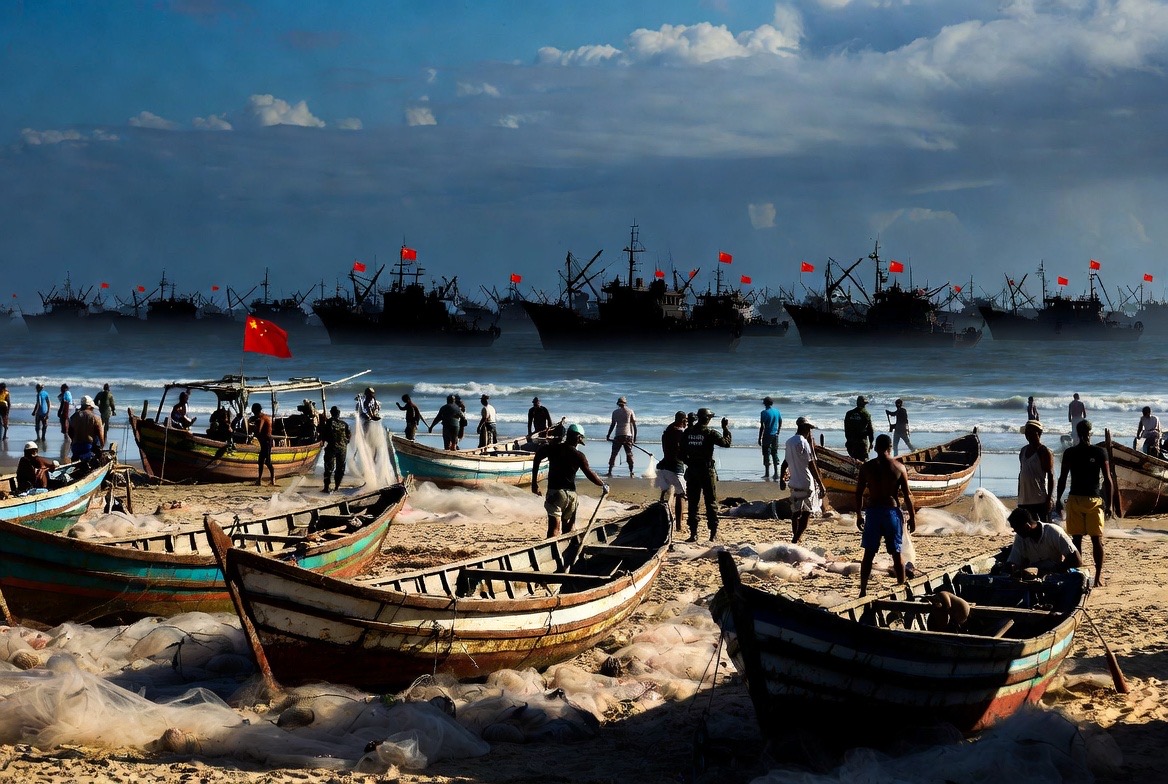
Now contrast this domestic crackdown with the unchecked dominance of China’s distant-water fishing fleet—the largest and most aggressive on the planet, with thousands of vessels, many state-subsidized and tied directly to the Chinese Communist Party’s strategic goals. This fleet doesn’t just fish; it projects power, monopolizes global seafood supplies, and depletes stocks worldwide through illegal, unreported, and unregulated practices. Off South America’s coasts, hundreds of Chinese squid jiggers and trawlers swarm like locusts, often lingering near Brazil’s Exclusive Economic Zone. They routinely disable tracking systems to “go dark,” slip into sovereign waters, and haul in massive catches using methods that devastate ecosystems and ignore international boundaries.
China’s control over these operations is no accident. Beijing views the world’s oceans as a strategic domain for food security, economic coercion, and geopolitical leverage. Its fleet relies on forced labor, human rights abuses aboard vessels, and aggressive tactics that intimidate coastal nations. While Brazilian fishermen must install tracking devices under threat of losing their licenses or face vessel seizures, Chinese ships evade enforcement through sheer numbers, political protection from the CCP, and Lula’s accommodating stance. Brazil has raised concerns in bilateral talks, yet the incursions persist amid booming trade ties—China remains Brazil’s top partner, with Lula eagerly signing agreement after agreement on everything from agriculture to infrastructure, often at the expense of national sovereignty.
This hypocrisy exposes Lula’s priorities: appease his globalist allies in Beijing while strangling patriotic Brazilian enterprise. Under his watch, China gains ever-greater market access for Brazilian exports even as its fleets plunder the seas that sustain coastal towns. The result is a slow-motion handover of maritime resources. Local stocks dwindle under relentless foreign pressure, forcing Brazil toward imports—potentially from Chinese-controlled supply chains. Families lose income, communities erode, and dependence on the CCP deepens. True conservation demands protecting both fish and fishermen, not sacrificing one for the other while foreign predators feast unchecked.
Brazil’s fishermen embody conservative virtues—faith in God, devotion to family, and fierce independence rooted in honest work. They are not the problem; big-government overreach aligned with communist interests is. Lula’s policies weaken national borders at sea, invite economic colonization, and betray the people who built these coastal economies. Enough is enough. Brazil must reclaim its waters: enforce sovereignty rigorously against all violators, starting with the Chinese armada; slash the crushing regulations on domestic producers; and pursue leadership that puts Brazilians—not Beijing—first. The awakening on Alagoas beaches and Santa Catarina docks signals a growing resolve. The nation that tamed the Amazon will not surrender its seas to foreign control.


