


Lula’s Desperate Bending: Trading Brazil’s Riches to Save His Narco Involvement
By Hotspotnews
In the sweltering heat of Brasília’s political summer, a once-defiant Luiz Inácio Lula da Silva finds himself cornered. The man who spent decades railing against Yankee imperialism and building cozy bridges to Beijing is now quietly offering Washington the one thing America craves most: unfettered access to Brazil’s strategic mineral wealth. All in exchange for a discreet American hand in strangling the narco-armies—PCC and CV—that have turned parts of Brazil into ungovernable fiefdoms. What we are witnessing is not clever diplomacy. It is the slow, humiliating unraveling of a socialist fantasy: a leader who promised sovereignty and multipolarity, only to discover that when your own streets are ruled by machine-gun-toting traffickers, the only real leverage left is what you can sell to the superpower you spent years mocking. And the bitter truth? Lula’s frantic scramble to block U.S. terrorist designations on these gangs reeks of something far darker than mere policy disagreement—it looks suspiciously like protecting vested interests tied to the very narco networks bleeding the country dry. Welcome to Lula’s endgame—and it isn’t pretty.
In the grand theater of global power plays, few spectacles are more pathetic than a leftist strongman suddenly discovering the virtues of American muscle when his own house is on fire. Enter Luiz Inácio Lula da Silva, the aging socialist darling of São Paulo’s salons, now reduced to dangling Brazil’s crown jewels—its vast reserves of niobium, lithium, and rare earths—in front of Donald Trump’s administration like a street vendor hawking knockoff watches.
The latest twist in this farce? Lula’s team is reportedly itching to weave discussions of these “critical minerals” into high-stakes talks aimed at stopping the U.S. from slapping terrorist labels on Brazil’s homegrown narco-empires: the Primeiro Comando da Capital (PCC) and Comando Vermelho (CV). These aren’t misunderstood youth collectives; they’re ruthless criminal syndicates that control prisons, ports, neighborhoods, and drug corridors stretching into the United States itself. Yet Lula’s government recoils at the idea of calling them what they are—terrorists—because heaven forbid anyone suggest Brazil has lost control of its territory to armed thugs.
Instead, the brilliant strategy from Brasília is to remind Washington: “Hey, you need our niobium for your fighter jets and pipelines, our lithium for your electric-vehicle fantasies, our rare earths to keep the Chinese from choking your defense industry. So how about you help us out with these gangs—quietly, bilaterally, no embarrassing designations—and we’ll make sure Uncle Sam gets first dibs on the goodies?”
This is not statesmanship; it’s extortion dressed up as diplomacy. Lula, who spent years cozying up to Beijing, letting Chinese firms sink their claws into Brazilian mining and infrastructure, now pretends he’s got leverage to play hard-to-get with the United States. News flash: most of the world’s rare earth processing still runs through Chinese refineries, and Lula has happily shipped raw materials eastward while preaching “no more colonial extraction.” But when Trump’s team starts eyeing terrorist designations that could freeze assets, disrupt remittances, and actually hurt the gangs feeding off Brazilian blood, suddenly the minerals become bargaining chips.
The irony is delicious. The same administration that sneered at American “imperialism,” that championed multipolarity and BRICS solidarity, now begs for U.S. cooperation against domestic criminals—while trying to extract economic favors in return. It’s the geopolitical equivalent of a failing landlord offering free rent to the sheriff if he’ll evict the squatters terrorizing the building.
What can Lula still offer Trump that he hasn’t already handed over—or promised—to China? Plenty, and it’s the stuff that actually keeps Washington up at night:
– **Niobium dominance** — Brazil owns over 90% of the world’s supply and production. This isn’t some minor byproduct; it’s essential for high-strength alloys in U.S. jets, missiles, and pipelines. China has almost none domestically and imports heavily from Brazil. Lula can offer long-term, preferential export deals, export quotas favoring U.S. buyers, or even restrictions on Chinese access—something Beijing can’t match or replicate.
– **Local processing and joint ventures** — Lula talks a big game about “value addition” at home—no more raw exports like the old iron ore days. The U.S. (via DFC financing, technical help, and IRA-style incentives) can pour in billions for refineries, battery plants, and rare earth separation facilities right in Brazil. Trump gets “friendshored” supply chains outside Chinese control; Lula gets jobs and factories he can brag about. China has extraction deals, but full downstream processing partnerships with Western tech and capital? That’s still on the table—and the U.S. wants it badly for heavy rare earths especially.
– **Geopolitical signaling and limits on rivals** — Brazil can quietly cap Chinese majority stakes in new projects, favor U.S.-backed financing over Beijing’s Belt and Road traps, or sign frameworks that prioritize “Western hemisphere” partners. Lula has already sent low-level reps to Trump’s big critical minerals ministerial while cutting deals with India and South Korea, but he can pivot further: make Trump the preferred buyer in exchange for gang pressure without sovereignty-bruising FTO labels.
Conservatives have long warned that leftist governments like Lula’s would turn nations into narco-states while selling out to communists abroad. Here it is in real time: Brazil’s sovereignty eroding under gang rule at home, Chinese influence creeping in through the back door, and now a panicked pivot to Trump for rescue—complete with a price tag attached.
If the Trump administration bites on this quid pro quo, fine—get the minerals, squeeze the gangs, and remind Lula who’s really in charge. But let’s not pretend this is a win for Brazil. It’s a humiliation: proof that socialist rhetoric crumbles the moment reality bites, and that even the proudest anti-imperialists will crawl to Washington when the narcos come knocking.
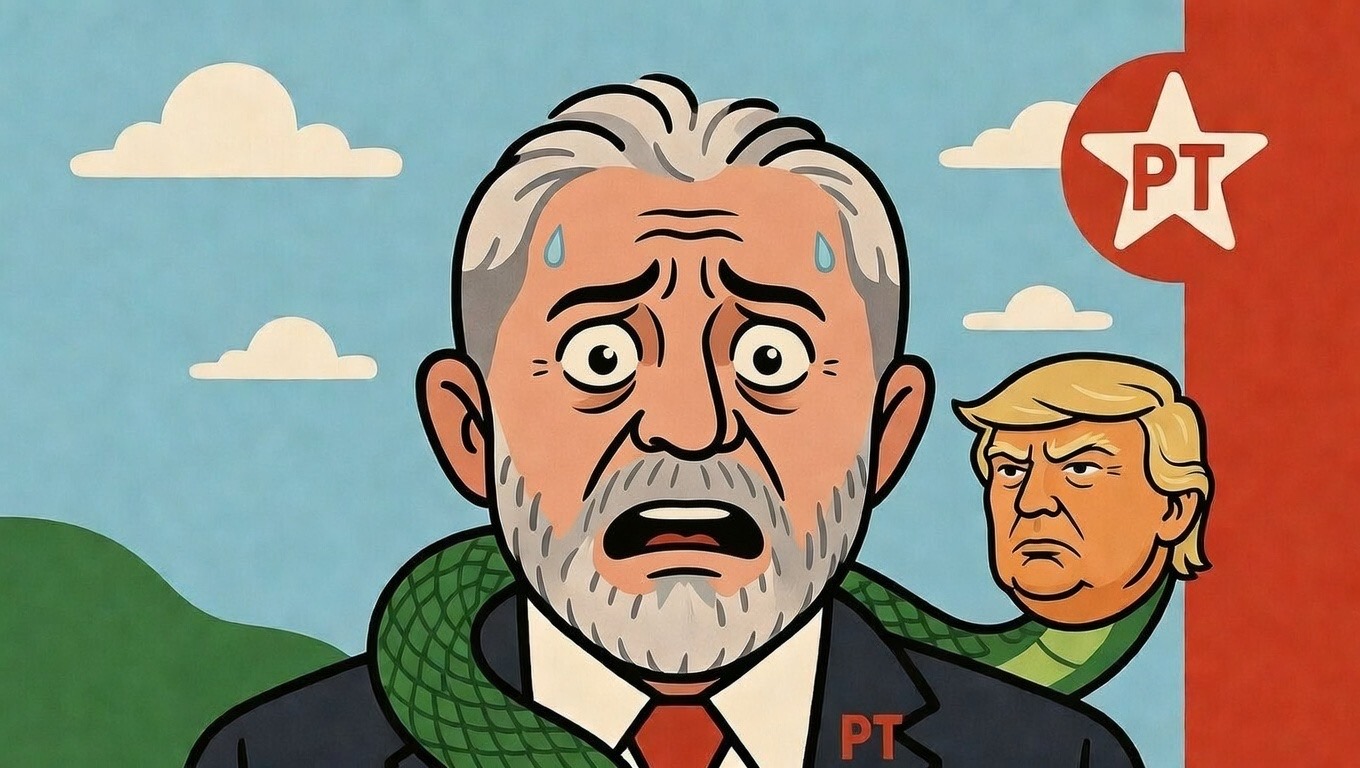
Lula’s legacy? A leader who couldn’t secure his own streets but thought he could outsmart the world by auctioning off his country’s future. Checkmate? Hardly. More like check—and Lula’s king is cornered, sweating, and offering pawns he already half-sold to Beijing.