


Lula’s Jet-Set PF Chief: Why Is Andrei Rodrigues Tagging Along to the G7 on the Taxpayer’s Dime?
By Hotspotnews
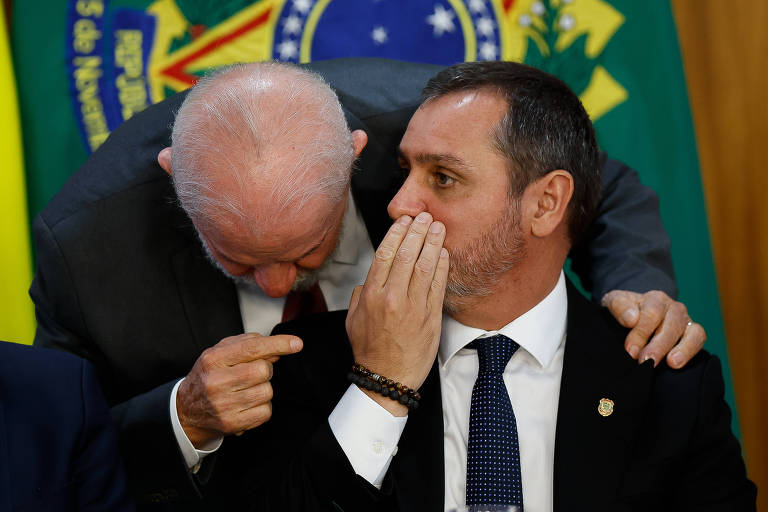
As Brazilians struggle with high taxes, inflation, and crumbling public services, President Lula da Silva once again packed his bags — and Federal Police Director-General Andrei Rodrigues — for another lavish international junket. This time, it was the G7 summit in Évian-les-Bains, France, followed by meetings in Geneva with Interpol. While the official line is “international police cooperation,” conservatives see a clear pattern: a politicized security chief being rewarded with VIP travel as his mandate winds down and tensions with the judiciary escalate.
Rodrigues wasn’t there by accident. He joined Lula for high-profile talks with Interpol’s Brazilian Secretary-General Valdecy Urquiza, pushing for a new South American police coalition, asset recovery, and a potential PF attaché office in Switzerland. Sounds technical — until you remember the timing. Back home, STF Minister André Mendonça had just blindsided the PF leadership with strict “blindagem” in the Banco Master/Compliance Zero probe, deliberately cutting Rodrigues and the top brass out of the loop on raids targeting Lula’s own Senate leader, Jaques Wagner.
How Much Is This Costing Taxpayers?
Exact figures for this specific trip remain opaque (as usual with Lula’s travels), but the pattern is expensive. A similar Lula trip to France in 2025 reportedly cost around R$12 million, with hotel diárias alone exceeding R$6 million. Government travel expenses from January to May 2026 already topped R$675 million — nearly R$300 million on airfares and R$374 million on per diems.
A full presidential delegation with ministers, security, staff, and the PF director doesn’t come cheap: luxury accommodations, private flights, support teams, and logistics. Brazilian taxpayers foot the bill while many families tighten belts amid economic pressures. Is negotiating another Interpol office worth another multi-million real invoice?
Why Now, at the End of His Mandate — When It Could All Be for Nothing?
Andrei Rodrigues was handpicked by Lula early in this term and has remained a loyal operator despite clashes with the STF. His mandate as PF director-general isn’t fixed like a Supreme Court seat — it serves at the president’s pleasure. With Lula’s term heading toward its later stages and polls showing a tight 2026 race, these trips raise a glaring question: If Lula is not re-elected in October 2026, what happens to all this “security cooperation”?
The hard truth is: most of it risks being for nothing. A new president (especially from the opposition) will almost certainly replace Rodrigues within weeks of taking office on January 1, 2027. New leadership brings new priorities, new allies, and often skepticism toward the previous administration’s initiatives. Agreements signed don’t automatically vanish, but momentum dies, funding gets redirected, and high-level personal networks built in Geneva or Évian evaporate. The millions spent on flights, hotels, and delegations become classic sunk costs — elite networking on the public dime with fragile, short-term returns.
This is the reality of Brazil’s personalistic politics. International police ties depend heavily on continuity at the top. Without it, Rodrigues’ globe-trotting becomes little more than optics management and a loyalty reward while domestic security challenges are neglected.
Conservatives have long warned about the capture of institutions. The PF, once hailed during Lava Jato for independence, now appears far too cozy with the executive. A director-general jetting off to France while his own investigators are kept in the dark by a Supreme Court minister isn’t “cooperation” — it’s more evidence of misplaced priorities.
Brazil deserves a Federal Police that serves the law, not the palace. As Rodrigues’ time in the top job draws to a close, these globe-trotting jaunts — with the very real possibility they lead nowhere after 2026 — raise serious questions about costs, accountability, and whose interests are really being protected. Taxpayers aren’t getting transparency or lasting value — just more elite networking.
It’s time for real reform: fixed mandates for key positions like PF director, stricter oversight on international travel, and leadership that puts Brazil first instead of burning through public funds for potentially temporary gains.


