


Lula’s Long Arm: Brazilian Federal Police Caught Intimidating Anti-Government Protesters on Foreign Soil
By Hotspotnews
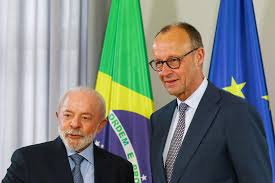
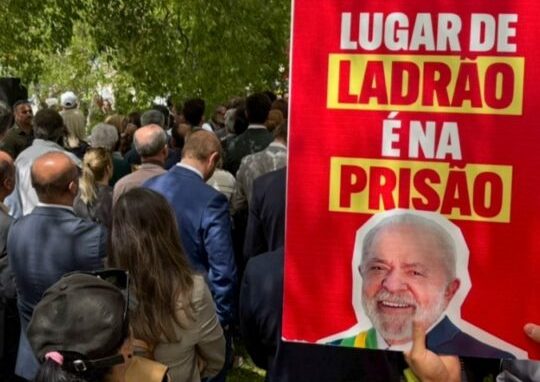
In the heart of Lisbon, Portugal, on April 21, 2026, as President Luiz Inácio Lula da Silva conducted diplomatic meetings, a disturbing scene unfolded outside the Palácio de Belém. Hundreds of Brazilian expatriates gathered in peaceful protest against Lula’s government, waving flags and voicing frustrations over corruption scandals, economic struggles, and perceived judicial overreach back home. What should have been a routine exercise of free speech in a democratic European nation quickly turned ominous.
Independent journalist Sérgio Tavares captured footage showing plainclothes agents—widely identified by protesters as operatives from Brazil’s Federal Police—methodically filming and documenting the identities of anti-Lula demonstrators. Pro-Lula supporters nearby received no such scrutiny. Interviewed on camera, outraged Brazilians described selective monitoring, one-sided intimidation, and what many labeled as political persecution extending far beyond Brazil’s borders. This was no neutral security detail. It appeared to be a targeted effort to silence dissent in a foreign country.
This incident is not isolated. It reflects a pattern of desperation from a Brazilian government facing mounting opposition. Millions of Brazilians now live abroad, forming a vibrant diaspora in Portugal, the United States, and across Europe. Many fled economic hardship or fled what they see as institutional capture under Lula’s Workers’ Party (PT). These expatriates have become a powerful counterforce, amplifying criticism through protests, social media, and remittances that underscore Brazil’s brain drain. Their growing influence threatens the narrative of unchallenged leftist rule.
Critics argue this overseas surveillance echoes the authoritarian tactics of past regimes—yet today’s Brazil maintains the outward trappings of democracy: elections loom in 2026, with figures like Senator Flávio Bolsonaro emerging as a strong conservative contender. Opposition rallies have drawn thousands in Brazilian cities, protesting Supreme Court actions and government policies. Yet institutions like the Federal Police and certain Supreme Court justices, notably Alexandre de Moraes, stand accused of selective enforcement—investigating right-leaning voices for “defamation” or “disinformation” while downplaying scandals on the other side.
The Lisbon episode raises serious questions about sovereignty. Portugal, a proud EU member with its own history of resisting dictatorship, should not tolerate unauthorized foreign agents conducting intelligence operations on its soil. Bilateral police cooperation exists for genuine threats like organized crime—Brazil’s powerful gangs such as the PCC operate globally—but filming peaceful protesters exercising free speech crosses a bright red line. If these agents acted without full coordination with Portuguese authorities (PSP or PJ), it constitutes a blatant violation of diplomatic norms and international law.
Conservatives have long warned of “lawfare”—the weaponization of legal institutions against political opponents. In Brazil, this has manifested in heavy-handed probes into Bolsonaro allies, social media censorship, and now apparent extraterritorial reach. The government frames such actions as defending democracy against “coup plotters” from January 8, 2023. Opponents counter that true threats to liberty come from an entrenched elite abusing power to stifle debate, especially as economic headwinds and unresolved corruption echoes persist.
The Brazilian diaspora is no fringe group; it represents a “huge force,” as many observers note. These citizens abroad vote (where eligible), invest, and highlight Brazil’s challenges to the world. Harassing them only hardens resolve and damages Brazil’s international image. Portugal and other host nations have a duty to protect free expression on their territory and demand transparency—or expulsion—of any rogue operators.
True democracy thrives on robust opposition, not exported intimidation. Peaceful protest, whether in Brasília or Lisbon, is a fundamental right. If Lula’s administration feels threatened by its own people speaking out freely, the solution lies in addressing root grievances at home—through accountability, economic reform, and judicial impartiality—rather than desperate overreach abroad. The wave of dissent will not be silenced by cameras in the shadows. It signals a people demanding better for Brazil’s future.