


Lula’s Misguided Meddling: Brazil’s Leader Should Focus on Home, Not Russia
By Laiz Rodrigues
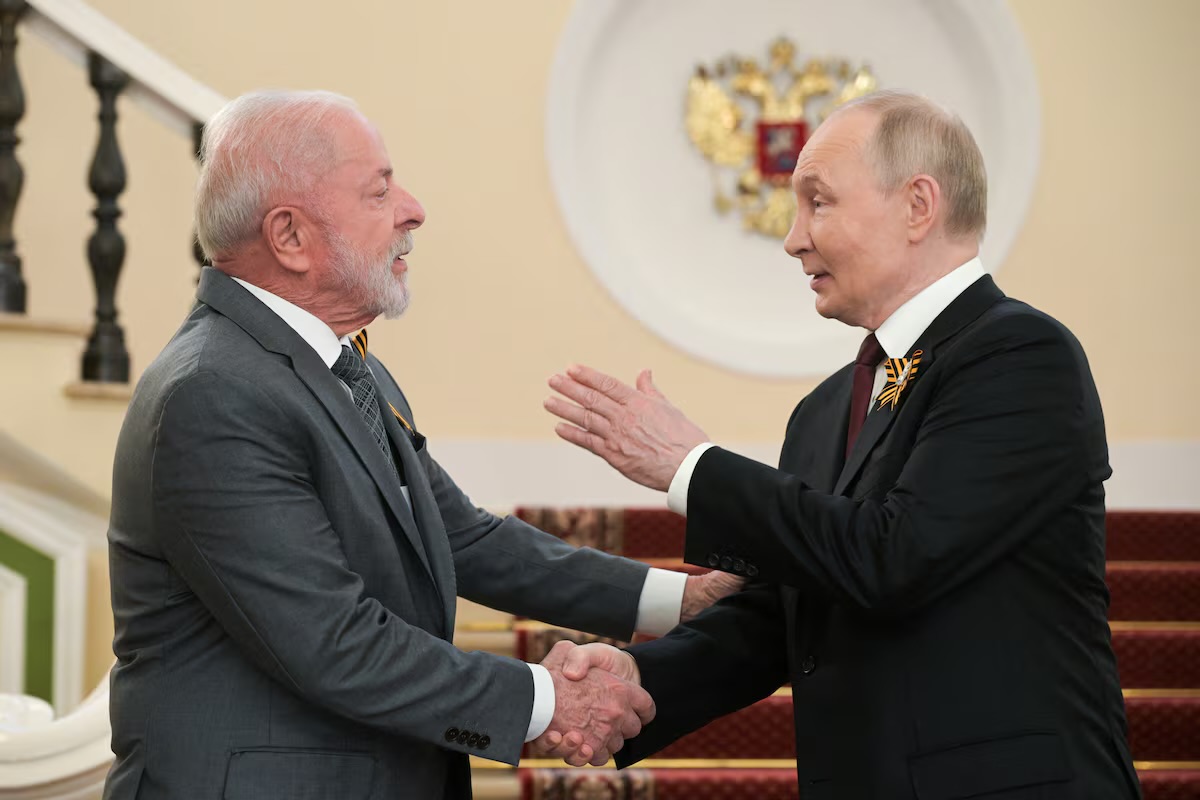
Luiz Inácio Lula da Silva, Brazil’s president, has once again inserted himself into global affairs, this time engaging in a 40-minute phone call with Russian President Vladimir Putin to discuss the Ukraine conflict and BRICS cooperation. While Lula postures as a peacemaker on the world stage, his own country grapples with mounting problems—economic stagnation, crime, and political division—that he seems ill-equipped or unwilling to address. For conservatives, this is yet another example of a leftist leader prioritizing international grandstanding over the urgent needs of his own people.
Brazil’s economy is a mess. Inflation continues to bite, and unemployment remains stubbornly high, with millions struggling to make ends meet. The nation’s agricultural sector, a cornerstone of its economy, faces challenges from global trade disruptions, exacerbated by U.S. tariffs that Lula loudly criticizes but has failed to counter effectively. Crime rates in cities like Rio de Janeiro and São Paulo are soaring, with violent gangs operating with near impunity. Public services, from healthcare to education, are underfunded and overstretched. Yet, instead of rolling up his sleeves to tackle these domestic crises, Lula is busy playing diplomat, offering unsolicited advice on Russia’s war in Ukraine.
Lula’s call with Putin, where he discussed peace efforts and BRICS strategies, reeks of hypocrisy. Brazil’s president has no business lecturing Russia—or anyone else—when his own house is in disarray. His administration has failed to deliver meaningful reforms to stabilize Brazil’s economy or curb its rampant crime. His policies, rooted in socialist rhetoric, have done little to lift ordinary Brazilians out of poverty or provide them with security. Instead, Lula seems more interested in cozying up to authoritarian leaders like Putin, perhaps hoping to burnish his image as a global statesman. This is not leadership; it’s distraction.
Conservatives see through this charade. A leader’s first duty is to his own people, not to some vague notion of global influence. Lula’s Brazil is a nation crying out for practical solutions—lower taxes, deregulation to spur business growth, and a tough-on-crime approach that prioritizes citizen safety. These are the principles that drive prosperity and stability, yet Lula remains fixated on ideological crusades and foreign entanglements. His criticism of U.S. tariffs, while valid in part, ignores the reality that Brazil’s trade woes stem as much from internal inefficiencies as external pressures. Rather than fixing Brazil’s broken infrastructure or addressing corruption, Lula is chasing headlines by meddling in conflicts far beyond his jurisdiction.
The irony is stark: Lula wants to broker peace in Ukraine while failing to bring peace to Brazil’s streets. His discussions with Putin, framed as diplomatic outreach, are little more than posturing. Russia’s war in Ukraine is a complex geopolitical issue, and Lula’s track record gives no reason to believe he has the credibility or competence to influence it. His focus on BRICS, a bloc increasingly dominated by authoritarian regimes, only underscores his misalignment with the values of freedom and accountability that conservatives champion.
Lula’s defenders might argue that global engagement strengthens Brazil’s position, but conservatives know better. A nation’s strength comes from within—through economic freedom, rule of law, and a government that prioritizes its citizens. Lula’s inability to solve Brazil’s problems disqualifies him from playing world leader. If he truly cared about his country, he’d be working overtime to fix its economy, secure its streets, and unite its people, not chasing clout on the international stage.
In the end, Lula’s phone call with Putin is a symptom of a deeper problem: a leader more interested in ideology and ego than in delivering results. Conservatives in Brazil and beyond see this for what it is—a betrayal of the people who elected him. Lula should leave Russia to its own devices and start solving the problems at home. Brazil deserves better.


